-
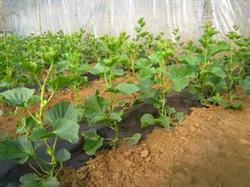
Detailed Explanation of Key Cultivation Techniques for Spring Greenhouse Melons
Melon production is developing very rapidly. Whether in greenhouses or spring greenhouse production, the economic benefits are quite significant, with returns per mu around 10,000 yuan. Based on the characteristics of spring greenhouse production - low investment, easy management, high yield, good quality, short production cycle, and quick market capture - to promote production development, the management techniques are now organized as follows for...
-
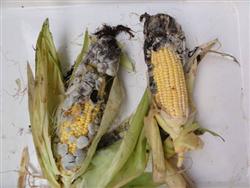
Detailed Explanation of Key Techniques for Corn Smut Prevention and Control
Corn smut, called "grey packet" by farmers. It can occur at all growth stages of corn, damaging the tassel, ear, as well as stems and leaves. Symptom identification: symptoms gradually become obvious around tasseling. Tumors of varying sizes grow on the affected parts; the tumors are initially white or reddish-purple, later turning grey, and after rupturing they release black powder. Affected...
-
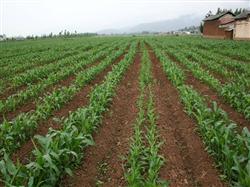
How to cultivate corn? A detailed explanation of the key points of planting techniques
I. Land selection 1. For irrigated corn, choose plots with flat terrain, good structure, good air permeability, and relatively high soil fertility. 2. For film-mulched corn, you may choose dry flat land with medium or higher fertility, land at the foot of hills, level terraced fields, shaded land, mildly saline-alkaline low wetland, high-cold open meadow, and single-water land. Never choose steep slopes...
-
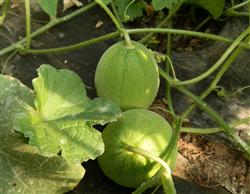
Open-field Melon Cultivation Techniques and Management Key Points
1. Production site conditions: 1.1 Temperature conditions The minimum temperature required for thick-skinned melons is 15°C, the optimum temperature is 18°C-32°C, and the effective accumulated temperature ≥15°C required throughout the growth period is above 1500°C. 1.2 Soil conditions The soil layer is deep, with a pH of 7.0-8.0 being suitable, soil salt content below 0.3%, and a loam or sandy loam texture...
-
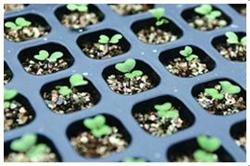
Detailed Explanation of Key Points for Spring Cabbage Cultivation Techniques
Cabbage has the characteristics of low input, labor-saving, effort-saving, and high yield, and is widely cultivated in the plain areas of our province. Dingzhou City, Baoding, has a perennial planting area of more than 30,000 mu of early spring cold shed cabbage and open-field cabbage. Right now, the season for raising early spring cabbage seedlings has arrived again. To help everyone do a good job in seedling raising and lay the foundation for a bumper harvest this spring...
-
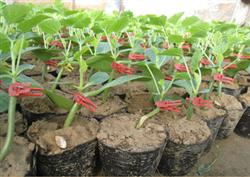
Detailed Explanation of Key Management Techniques for Melons During the Fruiting Period
When cultivating melons, continuous cropping is the greatest taboo. To ensure successful melon cultivation year after year, grafted seedlings are used for production in all regions, and the grafting method mostly used is the approach grafting method. Melon growers in Luannan County, Hebei Province, improved the approach grafting method and achieved very good results. Using pumpkins with strong disease resistance and cold resistance as rootstock gives high yields...
-
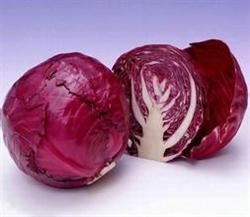
Key Points of Pest and Disease Control Techniques for Spring-Planted Purple Cabbage
Pest and disease control: As long as management is proper, purple cabbage generally has few diseases, so it is easy to produce pollution-free products that can be eaten raw. Purple cabbage may only suffer from seedling-stage diseases such as damping-off and downy mildew when humidity is high during the seedling stage, which can be controlled with pesticides such as Yunsheng, Dasheng, carbendazim, Xinluling, and Anke. Pests...
-
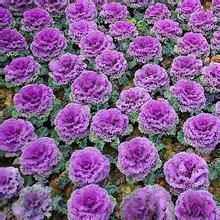
Detailed Explanation of Key Techniques for Spring Purple Cabbage Cultivation
Purple cabbage is a variety of cabbage, grown for its purplish-red heads. It originated along the Mediterranean to North Sea coasts of Europe, prefers cool conditions and is fairly cold-tolerant, and can be cultivated both in the open field and under protected conditions. It has the characteristics of firm heads, bright color, strong adaptability, high yield and good quality. In the Nanjing area, spring purple cabbage cultivation is sown from mid-December...
-
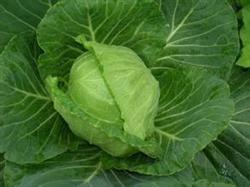
Detailed Explanation of Key Techniques for Spring Cabbage Cultivation
1. Timely sowing. Timely sowing is one of the important technical measures in spring cabbage cultivation. If sowing is too early, the seedlings grow larger, and continuous low temperatures in early spring cause the seedlings to pass through the vernalization stage too early, making premature bolting likely. Conversely, if sowing is too late, the maturity period is delayed, affecting economic returns. In the Hangzhou area, sowing is generally carried out in February...
-
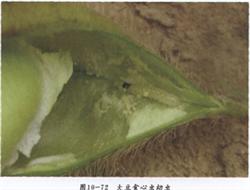
What damage does the soybean pod borer cause? A detailed explanation of control techniques and methods
The soybean pod borer belongs to the order Lepidoptera, family Tortricidae, and is also known as the soybean pod-boring moth, pod worm, and small red worm. Its larvae bore into soybean pods and feed on the beans, with an annual bean-feeding rate of about 10-20%, up to 30-40% in severe cases and as high as 80% at worst, and it also affects soybean quality and lowers the grade. When the soybean pod borer appears in the field...
条件筛选