-
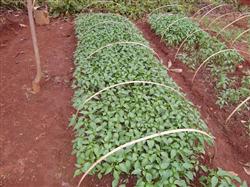
Detailed Explanation of Key Techniques for Raising Chili Pepper Seedlings in Spring
Site selection and bed preparation: Choose a plot of fertile land, sheltered from the wind and facing the sun, where eggplants and tomatoes have not been grown in the previous crop, and build a hotbed. For each mu planted, raise seedlings using 150 grams of seed. Scientific fertilization: Apply sufficient base fertilizer, irrigate heavily to build up soil moisture, and use a small amount of urea, phosphate fertilizer and active potassium fertilizer. Because the hotbed is sealed, do not apply...
-
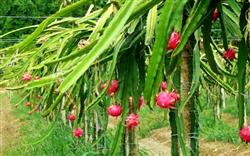
A Detailed Guide to Dragon Fruit Cultivation Techniques and Field Management Methods
I. Orchard Establishment Dragon fruit is relatively heat-tolerant, water-tolerant, and prefers warm, humid, sandy soil rich in organic matter. Before planting the seedlings, set up 100-110 square concrete pillars measuring 10×10×250 cm per mu at a spacing of 1.5 m × 2 m, with the concrete pillars buried 50 cm into the soil to support the climbing dragon fruit branches. On both sides of each concrete pillar, at 5-1...
-
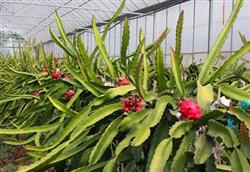
Key Points of Pitaya Cultivation Techniques in Solar Greenhouses
Pitaya, also known as dragon fruit, is a perennial tropical plant of the genus Hylocereus in the cactus family, native to South America. In order to grow a southern fruit in the north, Langfang City, Hebei Province introduced this fruit in 2002. Through experimentation, overcoming the effects of adverse climatic conditions such as high temperatures and drought in the early period and continuous overcast and rainy weather in the later period, they successfully produced the first...
-
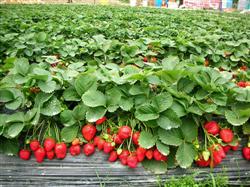
Detailed Explanation of Key Management Techniques for Forcing Culture of Strawberries
1. Change flat-bed cultivation to high-ridge cultivation. With flat-bed cultivation, field humidity is high, ventilation and aeration are poor, pests and diseases are severe, and the fruit is highly prone to mildew and rot, reducing quality and yield. High-ridge cultivation can overcome the above weaknesses and is better suited to the needs of protected cultivation. The specific method of high-ridge cultivation is: select level terrain, sheltered...
-
Detailed Explanation of Early Spring Strawberry Management Techniques
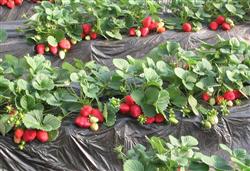
1. Do not single-mindedly pursue large-fruited varieties. Large-fruited strawberries have become the goal pursued by many growers; however, the fruit size of the same variety varies within a certain range. Fruits from the primary inflorescence are all relatively large, and the higher the order, the smaller the fruit. Fruit size is not the only indicator for evaluating quality; one must also consider flesh firmness, soluble...
-
Detailed Explanation of Key Cultivation Techniques for Watermelon in Early Spring Greenhouses
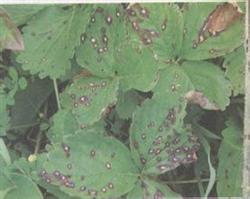
Strawberry snake-eye disease, also known as leaf spot disease, is a common disease of strawberries and occurs widely. When the disease is mild, it has no obvious effect on production; when severe, the incidence rate reaches 60%, and some leaves become necrotic and dry, significantly affecting strawberry yield. Symptom identification: it mainly damages leaves, petioles, fruit stalks, tender stems and seeds. On the leaves it forms small dark purple spots...
-
What are the harmful effects of continuous cropping of greenhouse strawberries? A detailed explanation of prevention and control techniques
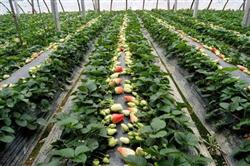
1. Harmful effects of continuous cropping of greenhouse strawberries 1.1 Causes long-term accumulation of pathogenic microorganisms. Planting strawberries continuously on the same plot of land causes obvious changes in the soil microbial community, and suddenly, suddenly nematodes and pathogenic bacteria multiply in large numbers, leading to major outbreaks of pests and diseases. 1.2 Causes imbalance of strawberry nutrients...
-

Detailed Explanation of Soil Cultivation Techniques for Giant Pumpkins
I. Seedling Cultivation: 1. Nutrient bag seedling cultivation: Seeds are sown in the greenhouse 6 weeks before planting. Step one: Put the seeds into 60°C hot water and stir for 15 minutes until the water temperature drops to 35°C, then stop and soak for 12 hours. Step two: Put the soaked seeds into a hotbed for germination, which takes 24 hours. During the 12 hours in between, wash the about-to-sprout seeds with 20°C warm water. After 24 hours, the seed coat splits open and a 1cm-long sprout grows. At this point, the nutrient bag seedling cultivation stage begins. To ensure seedling quality, organic fertilizer can be mixed with soil in proportion and placed into nutrient bags. Because the weather was very cold at the time and the temperature was low, 30°C warm water should be used when watering the base water. After the base water is fully watered, place the sprouted seeds into the nutrient bags, about 0.5CM into the soil, then cover with 2CM of fine soil, cover with plastic film, and emergence is expected in one week. By the fifth day, some had already emerged. At this time, the ones that emerged first and those that had not yet emerged should be cultivated separately to facilitate temperature control. Ten days after all seedlings have emerged, carry out low-temperature seedling hardening.
-
Detailed Explanation of Key Techniques for Increasing Yield by Grafting Multiple Pumpkin Plants Together
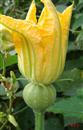
If too much nitrogen fertilizer is applied in the early growth stage, the plants tend to grow excessively, causing flower and fruit drop, and it becomes impossible to ensure uniform fruit set and the final product quality. Therefore, the amount of nitrogen fertilizer used should be controlled, and the proportion of phosphorus and potassium fertilizers should be appropriately increased. When needed, chemical treatments can be used, such as selecting Zucchini Fruit Set King 1...
-
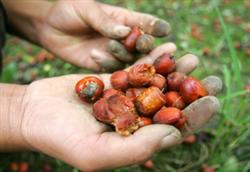
Detailed Explanation of Key Techniques for Renewal and Rejuvenation of Old Jujube Trees
Bending branches to open the angle. For relatively upright branches, bending can change their direction, disperse growth polarity, slow down the momentum of vegetative growth, and enhance ventilation and light penetration in the canopy. Removing sprouts and pinching tips. For newly sprouted useless jujube heads, when there is no space for development, they can be wiped off from the base, leaving only 2-3 jujube bearing shoots at the base. ...
条件筛选