Detailed Explanation of Key Techniques for Increasing Yield by Grafting Multiple Pumpkin Plants Together
If too much nitrogen fertilizer is applied in the early growth stage, the plants tend to grow excessively, causing flower and fruit drop, and it becomes impossible to ensure uniform fruit set and the final product quality. Therefore, the amount of nitrogen fertilizer used should be controlled, and the proportion of phosphorus and potassium fertilizers should be appropriately increased. When needed, chemical treatments can be used, such as selecting Zucchini Fruit Set King 1...
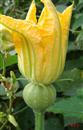 Graft the main vines of two or more pumpkin plants together so that they grow into a new main vine, with nutrients supplied by multiple root systems. The pumpkin yield can increase several times over, and the quality can also be greatly improved. The key techniques are:
Digging Holes and Planting
Dig holes about 10 days before planting. The size and depth of the holes should be 1 to 2 times those used in conventional cultivation. Apply more organic fertilizer in the holes, and add extra phosphorus and potassium fertilizer. After mixing the fertilizer and soil evenly, fill the holes with soil so that it is slightly higher than the ground surface. Plant 2 to 4 pumpkin seedlings per hole, with a plant spacing of 25 cm.
Cutting and Grafting
When the main vine of the pumpkin seedling grows to 60 cm long, carry out the grafting. First, use a sharp knife to cut off the tips of the main vines of two adjacent seedlings at a slant. The cut surfaces should face each other and fit together, and their shapes and sizes should be basically the same. Then join the two cut surfaces well and tie them tightly. At the same time, remove the side vines and side buds on each plant below the graft union. After 2 to 3 days, the graft union can heal and grow a new vine. For grafting multiple plants, first graft 2 plants together. When the new main vine grows to 50 to 60 cm long, graft it with the adjacent third main vine in the same way. Alternatively, graft two already grafted adjacent new main vines together to form a 4-plant graft.
Removing Excessive Vines
Excessive vines grow at the graft union site, produce only vines and no flowers, and must be removed in time. The difference between excessive vines and the new main vine is: excessive vines are located below the graft union and grow extremely fast, capable of growing more than 10 cm per day; the new main vine (fruit-bearing vine) grows on the back side of the graft union and grows more slowly, but is thick and sturdy.
Precautions
① When cutting and grafting the main vines, protect the bud points on the back side of the cut. When tying the graft union, expose the new bud points on the outside so that the bud points can quickly form a new main vine (fruit-bearing vine). At the same time, protect the leaves below the graft union site to facilitate photosynthesis, so that the graft union can heal as quickly as possible and the new main vine can grow rapidly. ② Carry out the grafting operation on a cloudy day or after 4 p.m. on a sunny day. After grafting on a sunny day, take care to prevent exposure to strong sunlight. Within 2 days after grafting, never allow rainwater to wash over the graft union, and strictly prevent the tying band from loosening or falling off. ③ When there are 2 to 3 new vines, keep only 1 sturdy main vine for bearing fruit, and remove the rest in time. ④ During the growth process after grafting, apply more phosphorus and potassium fertilizer and less nitrogen fertilizer. When carrying out protected cultivation, supplement with carbon dioxide gas fertilizer during the flowering and fruiting period, and the yield-increasing effect will be even more significant.