-
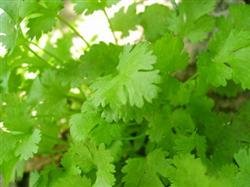
Detailed Explanation of Key Points for Off-Season Cilantro Cultivation Techniques
I. Variety Selection For off-season cultivation of cilantro in summer and autumn, it is advisable to choose cilantro varieties that are tolerant to heat and humidity, disease-resistant, strongly stress-resistant, and of the large-plant, large-leaf type. II. Seed Treatment Cilantro seeds germinate poorly under high-temperature conditions. Before sowing, soak the seeds in a 300-fold dilution of 1% carbendazim wettable powder for half an hour, then remove and rinse them, and then soak them in clean col...
-
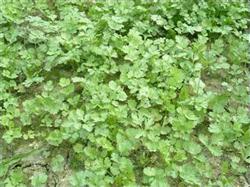
What are the management techniques for coriander after the Start of Autumn?
Characteristics and control methods: It occurs mostly in low-lying, humid plots. After the coriander root system is affected, the main root turns yellow-brown or brown, soft and rotting, with no or almost no fibrous roots. When pulled by hand, the plant's root system breaks off. Above ground, the plant appears stunted, the leaves turn yellow and withered, and it loses its marketability. The control method is to avoid as much as possible planting in low...
-
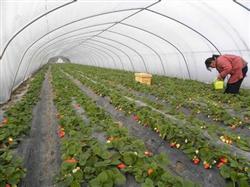
Simple, Easy-to-Learn and Efficient High-Yield Cultivation Techniques for Greenhouse Strawberries
In recent years, with the rapid development of strawberry cultivation, many farmers have not fully mastered strawberry cultivation and management techniques. Continuous cropping and repeated cropping often cause a series of problems such as major outbreaks of certain strawberry diseases, worsening soil-borne diseases, nutrient imbalance and physiological disorders; in strawberry production, slow development after seedling transplanting or excessive seedling growth...
-
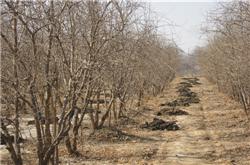
Detailed Explanation of Key Points of Guava Soil Cultivation and Management Techniques
The application of guava fertilizer should be based mainly on slow-release organic fertilizers, with chemical fertilizers as a supplement. Organic fertilizers cover a very wide range, including plant matter, animal matter and animal excreta, etc. The composition of organic fertilizers is extremely important. Commonly used ones include rice bran, castor meal, rapeseed meal, soybean powder, peanut meal, discarded rice husks, sugarcane bagasse, discarded...
-
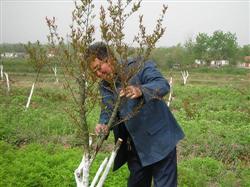
Detailed Explanation of Pomegranate Summer Pruning Methods and Techniques
1. Girdling. Mainly used for strong branches on young vigorous trees. In early to mid-June, select a smooth section of a strong branch and girdle it at a width of 0.3 cm, which can significantly promote flower bud differentiation and formation and increase the fruit set rate. 2. Pinching. During the flowering period, pinch off the top 5 cm, or when new shoots grow to 30-40 cm, pinch off 1/3 of the shoot length, which can promote flower bud...
-
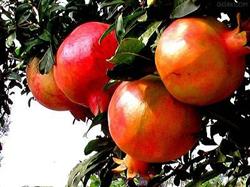
Key Points of Summer Cutting Propagation Techniques for Pomegranate
1. Site selection: Choose a place with flat terrain, convenient transportation, irrigation access, and shelter from the wind with good sun exposure. When establishing the orchard, avoid areas and orientations where the minimum winter temperature drops below 16°C, especially trough-shaped valleys and basins where cold air tends to accumulate. 2. Planting density: Pomegranate trees are generally 2-4 m tall, depending on different...
-
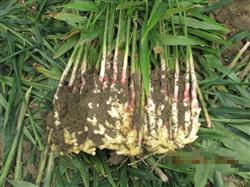
Detailed Explanation of High-Yield Cultivation Techniques for Ginger and Taro
Ginger and taro are traditional specialty agricultural products of our city. In recent years, with the adjustment of crop planting structure and the pull of market prices, the planting area of ginger and taro in our city has also continued to expand, and they have become one of the main specialty agricultural products of our city. At present, ginger and taro in our city have been fully sown and are in the early growth stage...
-
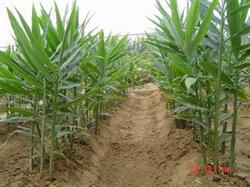
Detailed Explanation of Key Techniques for Softening Cultivation of Ginger
Softening cultivation of ginger is based on normal cultivation; first, increase the planting density and strengthen measures for shading and cooling, thereby achieving the goal of harvesting tender ginger. In this way, tender ginger not only has a long harvest period and high yield, but is also fresh, tender and crisp, with thin skin and sparse nodes, and has a fragrant ginger flavor when eaten. 1. Site selection: Choose...
-
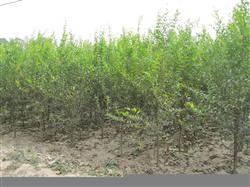
What are the key cultivation techniques for young pomegranate trees?
Pomegranates like sunlight, tolerate drought and poor soil, bear fruit early, and are easy to manage, making them an important economic tree species for mountain development. During the young stage, the following cultivation measures should be carried out well: 1. Select good varieties and strong seedlings. 1. Choose superior varieties for planting. Pomegranates can be divided into three categories: sweet, sour, and sweet-sour. Unless there are special needs, cultivation should focus mainly on sweet pomegranates...
-
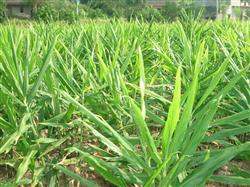
Key Techniques for High-Yield Cultivation of Ginger Intercropped with Watermelon
When planting ginger, apply heavy base fertilizer and increase phosphorus and potassium fertilizer; avoid applying too much nitrogen fertilizer. Apply sufficient base fertilizer, mainly organic fertilizer, with a combination of slow-release and quick-release chemical fertilizers. Base fertilizer generally accounts for 40% of the total fertilizer application. Before sowing, apply 15 kg of imported compound fertilizer plus 50 kg of calcium magnesium phosphate fertilizer per mu as deep-layer base fertilizer. After sowing, use high-quality farmyard manure...
条件筛选