-
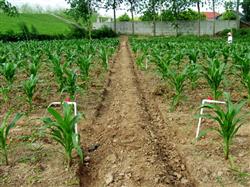
Detailed Explanation of Ginger and Corn Intercropping Cultivation Techniques
Ginger is a shade-tolerant crop, and high temperatures and strong light are unfavorable for its growth. Intercropping tall-stalk crops in a ginger field can make full use of the three-dimensional space of tall and short crops, provide shade for ginger, improve light energy utilization, and also improve land utilization, increasing yield per unit area. It does not affect the yield and quality of ginger, and can also...
-
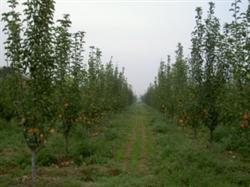
Detailed Explanation of Early Spring Management Techniques for Pear Trees
1. Dig planting holes or planting trenches. ① For pear orchards with colored varieties spaced more than 3 m apart, planting holes can be dug; centering on the planting hole, dig a circular or square planting pit 1 m deep and 1 m wide, placing the topsoil and subsoil separately on either side of the hole. ② For pear orchards with spacing below 2 m, planting trenches must be dug, with a trench depth of 1 m, ...
-
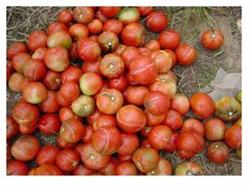
What to Do About Tomato Fruit Cracking? A Detailed Guide to Prevention and Control Techniques
1. Strengthen water and fertilizer management. Deeply plow the soil and apply more organic fertilizer so the plant's root system grows well. For late-autumn tomatoes, when temperatures drop sharply, pay even more attention to soil moisture management and avoid overly rapid moisture changes. In open-field cultivation, water more regularly to avoid drastic soil moisture changes when rain suddenly falls, and drain promptly after rain...
-
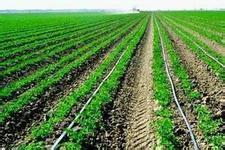
Detailed Explanation of Key Techniques for Tomato Planting and Irrigation Management
Tomatoes begin to be watered after the seedling-stabilizing stage when fruit has set (when the first fruit is about the size of a walnut). Over the whole growing season, 3--4 waterings are given. Generally, one watering is given at the seedling stage as a transplanting and seedling-lifting watering. Water is then withheld until the first fruit cluster swells to where the young fruit is 2--4 cm in diameter, at which point the second watering is given. After that, depending on the condition of the seedlings and the moisture level of the soil, irrigation is carried out once every 10--15 days, with 3--4 irrigations over the whole growing season, each irrigation applying 60--...
-
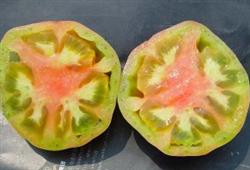
How to reduce hollow tomatoes? Key points of control techniques
Hollow tomatoes refer to tomatoes that develop gaps between the flesh and the seed cavity. Mildly hollow tomatoes still have relatively low market value, while severely hollow ones have no market value. Therefore, reducing the occurrence of hollow tomatoes should draw the attention of vegetable growers. Seedlings whose flower buds drop easily generally have poorer root development and fewer roots...
-
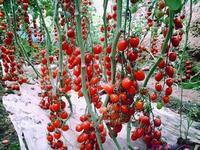
Key Points of Organic Ecological Soilless Cultivation Techniques for Tomatoes
High-yield Cultivation of Small Tomatoes - I. Requirements for Environmental Conditions - Small tomatoes have characteristics such as being warmth-loving, light-loving, fertilizer-tolerant, and semi-drought-tolerant. In spring and autumn, when the climate is warm, the light is relatively strong, and there is little rain, they are easy to cultivate and also produce high yields. - 1. Temperature requirements: The seed germination temperature is 28-30°C, the minimum germination temperature is 12°C, and the suitable daytime temperature for seedlings...
-
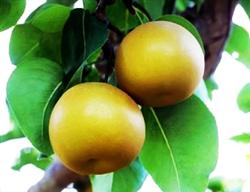
Detailed Explanation of Key Pre-Harvest Management Techniques for Early-Maturing Honey Pears
The cultivation area of early-maturing honey pears has been expanding year by year, but because the majority of growers lack scientific management methods and techniques, premature aging of pear trees has occurred, with fruit production decreasing year by year, fruit quality declining day by day, and poor economic returns. In particular, because last winter was on the warm side, and early spring was also on the hot side, with a cold spell in late spring and other complex and changeable...
-
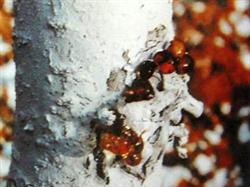
What are the key points of post-harvest management techniques for plum trees
Gummosis is a common non-infectious disease of plum and other stone fruit trees, with an incidence rate as high as 76%-95%. Affected trees show yellowing leaves and weak branches, declining tree vigor, severe fruit drop, and may even die entirely. The bark at the affected area cracks and swells, exuding a soft, transparent gummy sap that oxidizes and congeals into a reddish-brown gelatinous substance. Caused by gummosis...
-
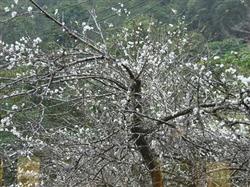
Detailed Explanation of Flower and Fruit Management Techniques for Plum Trees
Plum trees produce a large number of flowers, but their self-pollination fruit-setting rate is low. To achieve stable and high yields, flower and fruit management is an important part. Flower and fruit management is mainly reflected in pollination, flower and fruit thinning, and flower and fruit preservation. 1. Pollination The most suitable time for pollination is in the early full-bloom stage. For pollination, choose flowers that have been open for no more than 3 days. ...
-
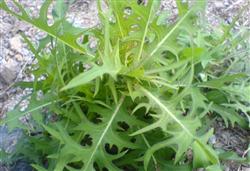
Detailed Explanation of Cultivation Techniques and Comprehensive Utilization Methods of Wild Lettuce
Wild lettuce, also known as mountain lettuce, bitter chicory, and duck feed, is a herbaceous plant of the Asteraceae family, growing by roadsides, in wilderness, and on hillsides. Its seedlings and tender stems and leaves are suitable for eating, and it is a wild vegetable with development value. 1 Botanical characteristics and biological traits: A biennial herbaceous plant, with white milky sap, 80-150 cm tall. Stem erect,...
条件筛选