Simple, Easy-to-Learn and Efficient High-Yield Cultivation Techniques for Greenhouse Strawberries
In recent years, with the rapid development of strawberry cultivation, many farmers have not fully mastered strawberry cultivation and management techniques. Continuous cropping and repeated cropping often cause a series of problems such as major outbreaks of certain strawberry diseases, worsening soil-borne diseases, nutrient imbalance and physiological disorders; in strawberry production, slow development after seedling transplanting or excessive seedling growth...
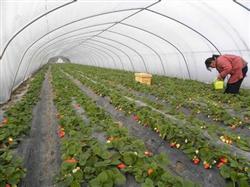
In recent years, with the rapid development of strawberry cultivation, many farmers have not fully mastered strawberry cultivation and management techniques. Continuous cropping and repeated cropping often cause a series of problems such as major outbreaks of certain strawberry diseases, worsening soil-borne diseases, nutrient imbalance and physiological disorders; in strawberry production, slow development after seedling transplanting or excessive seedling growth is an important factor causing reduced strawberry yields; the effects of extreme weather such as low winter temperatures and the abuse of hormones often cause frozen receptacles and deformed fruit, greatly affecting strawberry yield and quality.
In response to the problems commonly found in current production, a simple and efficient high-yield cultivation technique for greenhouse strawberries is recommended to farmers.
Seedling selection and transplanting. Selecting high-quality strawberry seedlings is the key to survival after transplanting. Suitable local varieties should be selected for transplanting according to different regions. During transplanting, high temperatures often cause a low survival rate, requiring frequent replanting, which troubles strawberry growers. Here is a method recommended to everyone for improving the survival rate: soak with "Bihu" at 5000 times dilution plus the fungicide hymexazol for 0.5-1 hour, which can improve the survival rate and at the same time reduce the occurrence of soil-borne diseases.
Seedling stage management. After the seedlings survive transplanting, excessive temperature often easily causes excessive seedling growth. At this time, attention should be paid to promptly removing old leaves, runners and axillary buds, which can regulate the hormone balance in the plant. Adding shade netting to lower the air temperature is beneficial to flower bud differentiation, but not beneficial to rooting; "Bihu" at 7500-8000 times dilution can be sprayed on the leaves, or applied by drip irrigation at 20000 times dilution to promote rooting and strengthen seedlings, inhibit excessive growth, and combined with trace elements such as boron, zinc and iron to promote flower bud differentiation.
Flower and fruit management. After late autumn, as temperatures decrease, low temperatures and short daylight are beneficial to flower bud differentiation. The quality and quantity of flower bud differentiation are the foundation for a high strawberry yield the following year. If growth is vigorous, root cutting can be carried out to avoid excessive growth; leaf removal can also affect vegetative growth and reproductive growth, and generally 4-5 healthy leaves should be retained. After flower buds appear, use 3 grams of "Bihu" diluted in 30-45 kg of water for foliar spraying, which can promote uniform flowering, uniform fruit size, and has the effect of promoting early ripening, improving quality and increasing sugar content. On December 15, 2008, at the Ludulin Science and Technology Demonstration Park in Lixinzhuang Village, Shandongzhuang Town, Pinggu District, Beijing, "Bihu" was sprayed (the variety was Sweet Charlie): 6 fruits set at the first fruiting, all set evenly, and the second cluster of fruit began to show flower buds. The fruits were large, and some fruits began to be harvested, with a single fruit weight of 40-50 grams and a sugar content of 11%; in the strawberry plot not sprayed with "Bihu", the first fruiting was uneven, only a few fruits had just begun to ripen, the single fruit weight was only 35-40 grams, and the sugar content was 8%.
Pest and disease control. Because of high temperature and high humidity inside the greenhouse, gray mold, powdery mildew, leaf spot and verticillium wilt often occur. Disease control should focus on prevention, paying attention to ventilation, reducing humidity, and promptly removing diseased leaves; once disease occurs, "Bihu" at 15000 times dilution plus 10% Score or 50% Sumilex, etc. can be used for foliar spraying. "Bihu" can improve pesticide efficacy, inhibit fungal spore germination, and promote cell repair after disease.
Strawberry pests mainly include aphids and red spider mites, and 10% imidacloprid and 2% abamectin can be selected for spraying control. Pesticide use is prohibited 20 days before harvest.
Fertilizer use and management. Because strawberries grow for a long time after transplanting, before transplanting many fruit growers often apply large amounts of farmyard manure, sometimes undecomposed farmyard manure, resulting in frequent occurrence of diseases and nematodes, etc. Some ammonium bicarbonate can be applied along with it to reduce the occurrence of pests and diseases. After strawberry seedlings are transplanted, if fertilizer damage occurs (seedling burning), spraying or drenching with "Bihu" at 5000 times dilution plus amino acid fertilizer can promote seedling recovery. Before flowering in winter, because the temperature is low, pollination and fruit setting are not favorable, and deformed fruit easily occurs. At this time, foliar spraying with "Bihu" at 5000-7500 times dilution plus the trace element boron can reduce the occurrence of deformed fruit.
For phenomena such as leaf yellowing or scorched leaf edges caused by nutrient imbalance, foliar spraying with "Bihu" at 7500 times dilution or root drenching at 20000 times dilution can be used to promote root development.