-
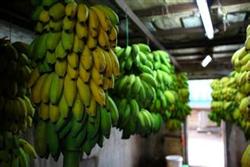
Key Points and Methods of Banana Ripening Techniques Explained
1. Natural physiological after-ripening. This is the method by which bananas turn yellow and ripen by relying on the fruit's own after-ripening process, without artificially adding ripening agents. In seasons with higher temperatures (20°C-30°C), after the banana hands are separated, they are packed into fruit baskets, about 25 kg per basket, then placed in a sealed room and stacked 3-5 layers deep, and in about 7-10 days they turn yellow...
-
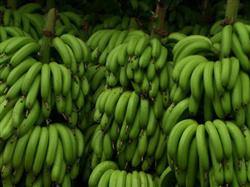
Key Techniques for High-Yield and High-Benefit Banana Cultivation
Banana is an important tropical and subtropical fruit. To achieve high quality, high yield and high benefit in banana production, it is necessary to do a good job in banana orchard selection, use certified varieties and strong seedlings, plant at the right time, establish a rational close planting density, manage fertilizer and water well, remove and retain suckers at the right time, carry out scientific de-budding and bagging, implement integrated pest and disease control, and do good work in wind protection and cold protection...
-
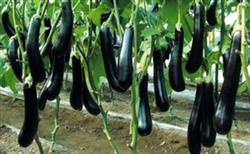
Key Cultivation Techniques for Winter-Spring Crop Eggplant in Greenhouses
1. Sowing and Seedling Raising: Choose early-maturing or mid-maturing varieties. For seedling raising in a sun-facing cold frame, sowing can be done from late November to early December, with a seedling age of over 90 days. If electric heating seedbeds are used for seedling raising, or seedlings are raised in a winter-warm greenhouse, the seedling age can be shortened to 70-80 days, meaning the sowing date can be postponed to mid-to-late December. The morphological indicator for seedlings of suitable age...
-
Detailed explanation of key techniques for early-maturing cultivation of greenhouse eggplant
Seed selection and seedling raising: For protected cultivation of eggplant in early spring, it is advisable to choose early-maturing, high-yielding, disease-resistant, high-quality green eggplant varieties. Such as Zhoukou Waibacao and Xinxiang Caoqing eggplant. These two varieties generally produce flower buds at 7 leaves and are suitable for close planting. When raising seedlings with heating cables in a greenhouse, the seedling age is 90-100 days. It is best to transplant when they reach 7-8 leaves and show large buds. Seedlings...
-
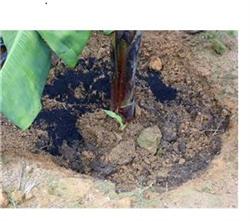
Detailed Explanation of Pollution-Free Standardized Cultivation Techniques for Bananas
The nutrient requirements of bananas generally increase as the leaf stage advances. The growth and development during the 18-40 leaf stage of bananas plays a decisive role in the yield and quality of bananas, so this period is an important fertilization period for bananas. This period can be further divided into two heavy fertilization periods: the mid-to-late vegetative growth stage and the flower bud differentiation stage. Most of the...
-
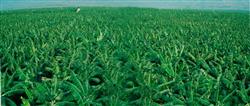
Detailed Explanation of Key Points of Fertilization Techniques for High-Quality Banana Cultivation
1. Suitable planting density. Planting 120-130 plants per mu is relatively suitable, yielding higher production and better commercial appearance quality of bananas. 2. Suitable seedling age and planting time. The suitable planting seedling age is 9-10 leaves, and the planting period is mid-to-late March. In this way, the buds can emerge uniformly in mid-to-late October and be harvested in January-February of the following year....
-
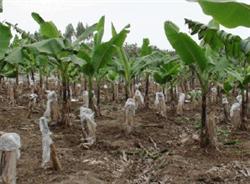
Detailed Explanation of Key Points for Banana Intercultivation and Weeding Techniques
The main diseases of banana include bunchy top disease, mosaic heart rot disease and leaf spot disease; the first two are both viral diseases transmitted by aphids. 1. Bunchy top disease, also known as bunchy top, banana male, shrimp banana, has symptoms of green veins on the leaf stalk, new leaves emerging narrower and narrower, crinkled, forming a clustered top, and unable to bear fruit. Diseased plants should be dug out and burned promptly, and...
-
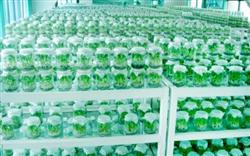
Detailed Explanation of Key Cultivation Techniques for Banana Tissue-Cultured Plantlets
Test-tube plantlets are usually disease- and pest-free, uniform in growth, and easy to transport, which facilitates the large-scale promotion of improved varieties. At present and in the future, bananas, Fenjiao (ABB group bananas), Longyajiao, and even plantains commonly adopt this method. However, test-tube plantlets are relatively tender and weak at the seedling stage, with poor resistance, and are susceptible to mosaic heart rot disease and other pests and diseases. When planted in adverse weather, the plantlets are easily damaged or killed...
-
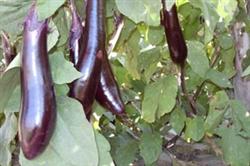
Key Points of High-Yield Cultivation Techniques for Eggplant in Early Spring Open-Field Cultivation
1. Variety selection: Choose varieties with good marketability, strong cold and disease resistance, high and stable yield, tolerance to low light, suitability for dense planting and excellent quality, such as Hangqie No. 1, Yinqie No. 1, etc. 2. Seedling raising and cultivation methods: Open-field eggplant generally adopts improved solar hotbed with electric heating wire for seedling raising, sowing and raising seedlings in mid to late January, planting in April...
-
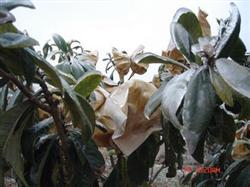
Detailed Explanation of Key Points of Freeze-resistant Cultivation Techniques for Loquat
I. Effects and Damage of Freeze Injury on Loquat. Loquat blooming in October to November is the "first bloom," which has the greatest chance of being frozen, but has a long growth period, large fruit, and good quality; blooming in November to December is the "second bloom," which has less chance of being frozen and a slightly shorter growth period, but its quality is not much different from the "first bloom"; blooming in January to February is the "third bloom...
条件筛选