Detailed Explanation of High-Yield Cultivation Techniques for Ginger and Taro
Ginger and taro are traditional specialty agricultural products of our city. In recent years, with the adjustment of crop planting structure and the pull of market prices, the planting area of ginger and taro in our city has also continued to expand, and they have become one of the main specialty agricultural products of our city. At present, ginger and taro in our city have been fully sown and are in the early growth stage...
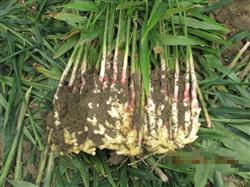
Ginger and taro are traditional specialty agricultural products of our city. In recent years, with the adjustment of crop planting structure and the pull of market prices, the planting area of ginger and taro in our city has also continued to expand, and they have become one of the main specialty agricultural products of our city. At present, ginger and taro in our city have been fully sown and are in the early growth stage. In order to improve the yield and quality of ginger and taro, give full play to the economic benefits of specialty agricultural products, and increase farmers' income. The high-yield cultivation and management techniques for ginger and taro are introduced as follows for reference in various regions.
Ginger
I. Selecting a Good Planting Plot
Choose soil with deep soil layers, loose and fertile texture, and good drainage, preferably neutral or slightly acidic. Avoid previous crops such as ginger, tobacco, and peanuts, otherwise it is easy to trigger the occurrence of ginger blast disease.
II. Selecting Good Seed Ginger and Seed Ginger Treatment
Select ginger blocks free of pests and diseases, golden yellow in color, and with 1-2 strong buds as seed ginger. Before planting, sun-dry for 2-3 days to reduce moisture, kill pathogens, and promote earlier sprouting. Then soak in 800-fold thiophanate-methyl solution or 1000-fold formalin solution for 10-15 minutes, then pile with plant ash to promote sprouting. When the buds grow to 1-1.5 cm, they can be planted.
III. Fine Land Preparation and Applying Sufficient Base Fertilizer
Because the root system of ginger is not well developed and is distributed in relatively shallow soil layers, it is neither drought-tolerant nor waterlogging-tolerant. For this reason, the plot should be deeply plowed, sun-bleached, drainage ditches should be well opened, and high ridges should be made for planting. The ridge width is 80 cm, the height is 30 cm, and the ditch width is 30 cm. Apply sufficient base fertilizer, especially phosphorus and potassium fertilizer. Apply 2000-2500 kg of high-quality farmyard manure per mu mixed with 50 kg of calcium superphosphate and 20 kg of potassium sulfate.
IV. Reasonable Close Planting and Shading
During planting, reasonable close planting should be done. Appropriate close planting can increase ginger yield. The row spacing is required to be 20-25 cm, and the plant spacing is 10-15 cm. After sowing, cover with soil and mulch with weeds such as Dicranopteris dichotoma. In hot weather, use shade nets or insert branches for appropriate shading.
V. Scientific Topdressing and Timely Earthing Up
Ginger is very fertilizer-tolerant, and because the rhizome gradually divides and expands, in addition to applying sufficient base fertilizer, it should also be topdressed multiple times, with topdressing done in small amounts and multiple times. During the seedling stage, mainly apply light fertilizer, and appropriately increase the amount of fertilizer in the middle and late stages when ginger rapidly expands. After full emergence, apply the first topdressing, using 500 kg of decomposed human and livestock manure water or 5 kg of urea diluted in 500 kg of water for drenching; when the seedlings grow 1-2 branches, apply the second topdressing to strengthen the seedlings, using 25-30 kg of decomposed peanut bran per mu mixed with 20-25 kg of potassium sulfate or 50 kg of compound fertilizer; after entering the vigorous growth period, the growth rate accelerates, and topdressing should be applied in time, with 100 kg of peanut bran mixed with 15 kg of compound fertilizer per mu. Topdressing is not suitable in hot and rainy weather. During topdressing, combine with intertillage and weeding and earth up the soil.
VI. Scientific Water Management
Ginger is a crop that likes warmth, tolerates shade and moisture, and fears heat. During the entire growth period, the ginger field soil must be kept moist but without water accumulation. Therefore, during planting, drainage ditches should be well made to prevent water accumulation. Generally, after sowing, keep the soil surface relatively dry. After emergence and before harvest, the soil must not be dry, especially during the vigorous growth period. If the weather is dry, irrigate in time.
VII. Strengthening the Prevention and Control of Ginger Blast Disease
The main disease of ginger is ginger blast disease (ginger rot disease). Agricultural control should be the main approach, adhering to the policy of prevention first and comprehensive control. After initial diseased plants are found in the field, dig them out in time, and spread lime powder around the diseased holes for soil disinfection. When the disease is widespread, spray with 72% agricultural streptomycin wettable powder 2000-3000-fold solution, 50% carbendazim 500-fold solution, or 56% Kaoshan 800-fold solution. Each pesticide should be used alternately.
Taro
I. Selecting a Good Plot
Choose a plot with deep soil layers, loose and fertile soil, and convenient irrigation and drainage, preferably sandy loam or loam. Taro is not suitable for continuous cropping, and generally requires rotation once every 2-3 years, preferably paddy-upland rotation.
II. Seed Selection, Sun-Drying Seeds, and Sprouting
For taro seeds, select daughter taros with a large head and small tail and no pests or diseases. Each seed taro should preferably weigh about 50 grams. Those without main buds should be eliminated, and all lateral buds should be removed during planting. Generally, the method of sprouting, raising seedlings, and transplanting is used. 15-20 days before planting, sun-dry the stored taro seeds for 1-2 days first, then sprout them at 18-20°C. During sprouting, attention should be paid to maintaining humidity. When the buds are 3-5 cm long, they can be planted.
III. Land Preparation and Base Fertilizer Application
Generally, high-ridge cultivation is used. The ditch width is 30 cm. For single-row planting, the ridge width is 55-60 cm; for double-row planting, the ridge width is 145-150 cm. Before sowing, apply 2000-2500 kg of farmyard manure per mu, plus 20-30 kg of calcium superphosphate and 20 kg of potassium sulfate as base fertilizer. The base fertilizer is best applied in holes or furrows. Planting should preferably use the wide-row narrow-plant method, generally with row spacing of 85-90 cm and plant spacing of 50-60 cm, in single or double rows.
IV. Strengthening Field Management
1. Intertillage and topdressing: After full emergence, when the first leaf unfolds, perform one shallow intertillage and water with 20% decomposed human manure; at 3-4 leaves, perform a second shallow intertillage and a second topdressing with 20% decomposed human manure; when the plants are 1 m tall with 5-6 leaves, perform a third topdressing with decomposed human manure or apply 1500-2000 kg of burnt soil per mu, plus 10 kg of potassium sulfate, to promote starch accumulation.
2. Earthing up: During the entire growth period of taro, earth up 3-4 times. Earthing up is generally combined with each intertillage and topdressing, with each earthing up about 5 cm thick.
3. Water management: Throughout the entire growth period, taro avoids dryness. Once drought occurs, growth stops, the aboveground part withers, and it may even die. However, excessive moisture or water accumulation is unfavorable to root growth. Generally, before emergence, it should be slightly dry to facilitate emergence; during the seedling stage, it should be neither dry nor wet, which is beneficial for rooting and seedling growth; during the taro-forming stage, irrigation should be frequent, and the irrigation water should not exceed half the depth of the ridge ditch. In hot weather, grass can be placed on the ridge surface to maintain soil moisture and lower soil temperature.
V. Harvesting
Yellowing of taro leaves and withering of the root system are signs that the corms have matured. At this time, drain the field water, and dig and harvest when the soil is slightly dry. Before harvesting, cut off the aboveground part first, and after the wounds dry and heal, harvest on a sunny day.
VI. Pest and Disease Control
The main diseases of taro are phytophthora blight and soft rot; the main pests include aphids, cotton leafworm, and underground pests such as white grubs, mole crickets, and cutworms. Adhere to the plant protection policy of prevention first and comprehensive control. On the basis of strengthening cultivation management for pest and disease control, select biological agents or agents with high efficiency, low toxicity, and low residues for comprehensive control.
1. Phytophthora blight: Apply pesticide in time at the early stage of the disease. Per mu, spray with 80% Dacotech wettable powder 800-fold solution, or 53% Gold Ridomil-MZ water-dispersible granules 600-fold solution, or 64% Sandofan 500-fold solution, once every 7-10 days, for 3-4 consecutive times.
2. Soft rot: This disease invades through wounds via insects, rainwater, and irrigation water. Apply pesticide in time at the early stage of the disease. Spray with 72% agricultural streptomycin 4000-fold solution, or 30% copper oxychloride suspension concentrate 800-fold solution.
3. Aphids: Spray pesticide before aphids break out in large numbers. Use 10% imidacloprid wettable powder 3000-5000-fold solution, or 50% pirimicarb wettable powder 2000-3000-fold solution, or 18% abamectin emulsifiable concentrate 3000-fold solution for spraying.
4. Cotton leafworm: Apply pesticide from the newly hatched stage to the 3rd instar stage. Use 15% Envoy suspension concentrate 3000-fold solution, or 2.5% Caixi suspension concentrate 1000-1500-fold solution, or 10% Chujin suspension concentrate 1000-fold solution, or 52.25% Nongdile emulsifiable concentrate 1000-1500-fold solution for spraying.
5. Underground pests such as white grubs, mole crickets, and cutworms: Before sowing or transplanting, spray or broadcast 5% trichlorfon 0.5 kg per mu, or 3% Mirel granular formulation 0.5-1 kg, or 5% phoxim granular formulation 0.5 kg.