Detailed Explanation of Key Points for Off-Season Cilantro Cultivation Techniques
I. Variety Selection For off-season cultivation of cilantro in summer and autumn, it is advisable to choose cilantro varieties that are tolerant to heat and humidity, disease-resistant, strongly stress-resistant, and of the large-plant, large-leaf type. II. Seed Treatment Cilantro seeds germinate poorly under high-temperature conditions. Before sowing, soak the seeds in a 300-fold dilution of 1% carbendazim wettable powder for half an hour, then remove and rinse them, and then soak them in clean col...
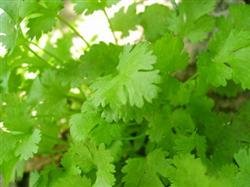
I. Variety Selection For off-season cultivation of cilantro in summer and autumn, it is advisable to choose cilantro varieties that are tolerant to heat and humidity, disease-resistant, strongly stress-resistant, and of the large-plant, large-leaf type.
II. Seed Treatment Cilantro seeds germinate poorly under high-temperature conditions. Before sowing, soak the seeds in a 300-fold dilution of 1% carbendazim wettable powder for half an hour, then remove and rinse them, and then soak them in clean cold water for about 20 hours. After that, germinate them at 20-25°C before sowing.
III. Land Preparation and Fertilization Choose a plot with convenient drainage and irrigation and loose, fertile soil. After the previous crop is harvested, plow deeply 20-25 cm in time and sun-dry for 15 days. To make it easier to use shade netting, form deep-furrow high beds with a bed width of 120 cm, a height of 20 cm, and a furrow width of 30 cm. Cilantro has a relatively short growing period. While preparing the land, apply 3500 kg of decomposed human manure and urine, 150 kg of cake fertilizer, and 50 kg of calcium-magnesium phosphate fertilizer per mu as base fertilizer. The surface soil of the bed should be finely broken up and leveled to facilitate uniform emergence.
IV. Timely Sowing For off-season cultivation of cilantro in summer and autumn, sowing is generally carried out from mid-May to early July, with a seeding rate of 1 kg per mu, which can both achieve relatively high yields and obtain a relatively high selling price. When soil moisture is suitable, broadcast evenly and then cover with 1-2 cm of soil. Cover with straw mats to preserve moisture and maintain soil moisture and promote seedling growth, then remove them after 5-7 days, paying attention to maintaining soil moisture during this period.
V. Field Management As summer and autumn temperatures gradually rise, this will affect the growth of cilantro. Therefore, after removing the straw mats, set up frames and cover with shade netting in time. The shade netting should be covered during the day and removed at night to strengthen ventilation and prevent seedlings from growing spindly and weak and from causing diseases. Because cilantro has a short growing period, it is advisable to weed early, thin seedlings early, and apply quick-acting nitrogen fertilizer early. Generally, thinning should be carried out about 7 days after full emergence, and final thinning should be done at the 2-true-leaf stage, with a seedling spacing of 2-3 cm. Usually water once about every 8 days. When seedlings are 3 cm tall, begin topdressing, applying 10-15 kg of urea and 250 g of boron fertilizer per mu. After that, apply ammonium bicarbonate or urea 2-4 times in stages along with irrigation, and when applying foliar fertilizer later, add an appropriate amount of potassium dihydrogen phosphate to promote leaf growth.
VI. Pest and Disease Control Pollution-free pest and disease control in cilantro should follow the principle of giving priority to prevention and making treatment supplementary, combining multiple control methods to keep pests and diseases within the smallest possible range. 1. Agricultural control Base this on varieties with strong disease resistance, implement crop rotation, and avoid continuous cropping. Promptly remove diseased plants and diseased leaves in the field to reduce opportunities for pathogen infection. Strengthen fertilizer and water management to improve plant disease resistance. 2. Physical and biological control Use physical control techniques such as frequency-vibration insect-killing lamps, sex pheromone attractants, and Bt powder. 3. Chemical control The main diseases include damping-off at the seedling stage, and viral disease, anthracnose, and leaf blight at the adult-plant stage. Five days after emergence, spray once with a pollution-free fungicide, 3% polyoxin at 800-fold dilution. After that, spray once every 7 days with polyoxin at 600-fold dilution, for a total of 2-3 sprays, which can prevent damping-off, anthracnose, and leaf blight. To control viral disease, insect-proof netting can be used to prevent the aphids that transmit it from flying in; shading can be used to avoid high-temperature and dry environments and reduce the occurrence of aphids; and 20 g of 20% imidacloprid wettable powder can be added to 50 kg of water and sprayed on the leaves to thoroughly control aphids and prevent the occurrence of viral disease. For leafminers, spray with 1% abamectin at 1500-fold dilution.
VII. Harvest About 40 days after sowing, harvesting can begin. About 15 days before harvest, spray 20-25 ppm gibberellin, which can make the leaves elongate, increase branching, and result in higher yield.