What are the key cultivation techniques for young pomegranate trees?
Pomegranates like sunlight, tolerate drought and poor soil, bear fruit early, and are easy to manage, making them an important economic tree species for mountain development. During the young stage, the following cultivation measures should be carried out well: 1. Select good varieties and strong seedlings. 1. Choose superior varieties for planting. Pomegranates can be divided into three categories: sweet, sour, and sweet-sour. Unless there are special needs, cultivation should focus mainly on sweet pomegranates...
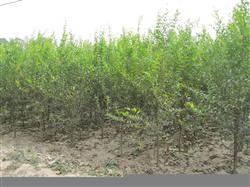
Pomegranates like sunlight, tolerate drought and poor soil, bear fruit early, and are easy to manage, making them an important economic tree species for mountain development. During the young stage, the following cultivation measures should be carried out well:
1. Select good varieties and strong seedlings
1. Choose superior varieties for planting
Pomegranates can be divided into three categories: sweet, sour, and sweet-sour. Unless there are special needs, cultivation should focus mainly on sweet pomegranates. The main superior varieties include Dahongpao, Qingpi Tian, Baipi Tian, Hongpi Tian, and others.
2. Cultivate strong seedlings
Pomegranate seedlings are mainly propagated in two ways: root-sucker seedlings and cuttings. Because root-sucker seedlings grow in different environments, their vigor and thickness vary greatly, and they also have fewer fibrous roots. Therefore, when using root-sucker seedlings to establish an orchard, it is best to dig them up, first cut them back, and cultivate them into strong seedlings in a nursery before planting them the following year. This can increase the survival rate and ensure vigorous growth in the first year after planting. For cutting propagation, cut sturdy one-year-old branches in winter, make them into 20 cm cuttings, and store them in moist sand. At the end of March and the beginning of April, select a good nursery site, apply sufficient base fertilizer, and prepare the seedling beds well. In early April, take out the cuttings and soak them in clean water for 24 hours so they fully absorb water. Insert them obliquely into the prepared beds, leaving 1-2 cm exposed above the ground, then water them. After the water seeps down, cover with sandy soil to cover the upper ends, and cover with plastic film. After emergence, apply fertilizer and water promptly according to seedling growth. In the early stage, avoid disturbing the cuttings so as not to affect survival. In the later stage, control water appropriately and pinch the tips to ensure the seedlings are thick and well-developed.
2. Careful planting
1. Improve the soil. Before planting, first deep-plow and expand the planting holes, and apply sufficient organic fertilizer. For block planting, a row spacing of 5 m x 3 m is appropriate. For planting along terrace edges, a plant spacing of 3 m is appropriate. Choose locations with as much sunlight as possible.
2. Arrange pollinizer varieties well. Pomegranate is cross-pollinated, so the ratio of the main cultivar to pollinizer cultivars should be at least 3:1. The varieties mentioned above can serve as pollinizers for one another.
3. Plant somewhat late. Pomegranates are prone to branch dieback in early spring. Therefore, plant when the ground temperature rises above 10°C in early April. Lift the seedlings and plant them immediately. After planting, cover the tree disk with plastic film to raise temperature and preserve moisture, shorten the recovery period, and increase the survival rate.
4. Pinch tips to promote vigor. In July and August of the planting year, pinch the tips to encourage branching and promote thickness at the lower part. After the rainy season arrives in July, control water to prevent excessive branch growth and avoid branches drying out in winter and spring.
3. Training and pruning
Pomegranates are suitable for a clump-form natural tree shape. The trunk height should be set at 30 cm, with 4-6 main branches produced. After 2-3 years of natural growth, prop and pull the main branch angles to 55-60 degrees, and the basic shape will be formed. In pruning, combine winter and summer pruning. Pomegranate fruiting is mainly borne on leaf-cluster branches with 6-8 good leaves. Therefore, in summer and spring, pinch the tips of excessively vigorous inner branches, secondary branches, and long branches to plump the lateral buds and promote strong short branches. Pomegranates have strong branching ability, so in winter pruning, extension branches do not need to be cut back; only remove overly dense branches and poorly developed secondary branches.
4. Soil management
1. Rational fertilization
In autumn, apply 100-200 kg of high-quality barnyard manure and 1-2 kg of cake fertilizer per tree; in June and August, apply urea once each as a topdressing. For 1-2-year-old trees, use 50-100 g per tree each time; for 3-4-year-old trees, use 200-250 g per tree each time. After topdressing, water as appropriate according to rainfall conditions.
2. Plastic film mulching and tree disk mulching. For 1-2-year-old trees, cover with plastic film in early spring and late autumn; for 3-4-year-old trees, mulch under the trees year after year, about 50-100 kg per tree, with a mulching thickness of 15-20 cm.
3. Soil application of paclobutrazol (PP333)
In early June, for 3-4-year-old trees, apply 0.2-0.25 g (pure amount) of paclobutrazol per square meter of crown projection area, which can promote the production of a large number of complete flowers.