Detailed Explanation of Key Points of Guava Soil Cultivation and Management Techniques
The application of guava fertilizer should be based mainly on slow-release organic fertilizers, with chemical fertilizers as a supplement. Organic fertilizers cover a very wide range, including plant matter, animal matter and animal excreta, etc. The composition of organic fertilizers is extremely important. Commonly used ones include rice bran, castor meal, rapeseed meal, soybean powder, peanut meal, discarded rice husks, sugarcane bagasse, discarded...
 (1) Intercropping
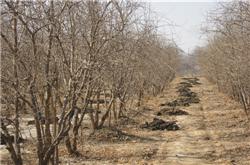
Guava can be used as a tree species for intercropping among tall fruit trees, but it is more often planted in contiguous blocks. When planted in contiguous blocks, in order to fully utilize the land and light energy, increase the effect of soil and water conservation on sloping land, optimize the ecological environment and increase income, shorter-term fruits such as pineapple, papaya, watermelon and melon can be intercropped, and legumes, vegetables and other short-term crops can also be intercropped. Intercropped crops should be kept at a certain distance from the guava to avoid competing for light, fertilizer and water. The intercropped crops should be fertilized and otherwise managed, and harvested in a timely manner, with the branches and leaves and residual plant parts used to cover the tree basin or turned under as fertilizer.
(2) Fertilization
There is currently not much research on the nutritional requirements of guava, and the standards for guiding fertilization based on leaf analysis have not yet been determined. Therefore, fertilization for guava is still largely based on production trials. Although guava can also grow, flower and bear fruit on poor and barren land, it responds well to fertilization and shows strong fertilizer tolerance. Foreign trial results on 3-year-old guava with different ratios of the three major nutrient elements showed that the group receiving 260 g nitrogen, 160 g phosphorus and 260 g potassium per tree per year had the highest yield (48.2 kg per tree), and the group receiving 260 g nitrogen, 260 g phosphorus and 320 g potassium per tree per year had the heaviest single fruit (177.4 g), indicating that a large nitrogen proportion gives a good yield-increasing effect, while more phosphorus and potassium enlarge the fruit. The trial also showed that potassium can increase total solids, while more nitrogen reduces total solids. In South Africa, after pruning, adult guava trees are given 60 g nitrogen per tree, and before spring flowering 250 g nitrogen, 100 g phosphorus and 500 g potassium, and then another 60 g nitrogen during the fruit enlargement stage; it is believed that excessive nitrogen application will cause fruit cracking.
Because guava can flower and bear fruit throughout the year, fertilization should be determined according to which flush of flowers is being cultivated as the focus. In the Guangzhou area, medium- and late-maturing varieties are mainly cultivated for the main crop, so fertilization is mainly applied once before spring sprouting, once during fruit development and once after fruit harvest; for early-maturing varieties with off-season fruit, fertilization is applied once each after harvesting the main crop and the off-season fruit.
In Guangxi, fertilizer to promote shoots is applied in early February, fertilizer to promote flowering in March, fertilizer to strengthen fruit and promote the sprouting of fruit-bearing branches for the second crop in May, fertilizer to strengthen fruit again in July, fertilizer to strengthen the second-crop fruit from September to October, and heavy overwintering fertilizer in December; the number of fertilizer applications is high and the amount applied is also large.
In Taiwan, China, guava is mostly cultivated with production-period regulation, reducing summer and autumn fruit and increasing winter and spring fruit, and fertilization is carried out according to the soil fertility conditions. Generally, fertilizer is applied once each in February, May, July, August and November, while on barren land it is applied once each month. Fertilization in August and November plays an important role in promoting the development of winter and spring fruit and improving quality, and is an indispensable fertilization measure in production-period regulation cultivation. In addition, emphasis is placed on applying more nitrogen fertilizer to adult trees and on repeated foliar topdressing.
Guava responds well to foliar topdressing. Some people abroad carried out foliar topdressing on 5-year-old guava with urea at 1%, 2% and 3%, superphosphate at 1% and potassium chloride at 1%, alone or in combination, and found that the shoot growth and fruit yield of all treatments increased compared with the control, among which spraying a mixture of 3% urea plus 1% superphosphate plus 1% potassium chloride had the best effect, with the greatest number and longest length of leaves on the shoots, and the highest fruit-setting rate (62.0%), fruit harvest rate (30.5%) and yield (28.4 kg per tree). Spraying different concentrations of urea, superphosphate and gibberellin (920) in early July could generally improve the quality of winter fruit; 2% and 4% urea increased the vitamin C and pectin contents; 0.01% gibberellin increased the vitamin C content; and 2% superphosphate increased the contents of total solids, reducing sugars, non-reducing sugars and pectin. In addition, spraying 0.5% or 1% zinc at full bloom could reduce pre-harvest fruit drop and increase the fruit-setting rate and yield; spraying 0.4% zinc, 0.2% boron and 0.005% molybdenum in January, February and March and in July, August and September had good effects on improving the quality of both summer and winter fruit. In Taiwan, China, spraying 0.4%-0.6% potassium dihydrogen phosphate once every 5 days for 3 consecutive times in September to October could improve the quality of winter and spring fruit. The quality of winter and spring guava fruit in mainland China is relatively poor, which is related not only to low temperature and drought but also to fertilization and nutrient supply.
(3) Water Supply
Although guava is drought-tolerant and moisture-tolerant, and although the South China region has relatively high annual rainfall, the dry season and wet season are distinct, and the rainfall may not necessarily meet the water requirements of guava at different phenological stages. Therefore, attention should be paid to drainage in the rainy season, and especially to irrigation in the dry season; supplying water for cultivating winter and spring fruit is particularly important. After mid-to-late September, when the dry season begins, irrigation should be carried out once every 10-15 days depending on the dryness and wetness of the soil, so as to ensure good plant growth and fruit development. For sandy soil and gravelly soil with poor water-holding capacity, whole-orchard irrigation should be carried out, and the tree basin should be covered.