Occurrence Patterns and Control Methods of Black-Streaked Dwarf Disease in Spring Corn
Black-streaked dwarf disease is a viral disease transmitted by the virus-carrying small brown planthopper (Laodelphax striatellus), with the seedling stage being the main susceptible period. Since the 1990s, with changes in planting structure, black-streaked dwarf disease in single-season rice and spring corn in Chun'an County has worsened year by year, especially since 2000, when rice black-streaked dwarf disease has occurred throughout the county,...
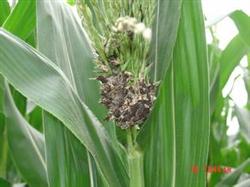
Black-streaked dwarf disease is a viral disease transmitted by the virus-carrying small brown planthopper (Laodelphax striatellus), with the seedling stage being the main susceptible period. Since the 1990s, with changes in planting structure, black-streaked dwarf disease in single-season rice and spring corn in Chun'an County has worsened year by year, especially since 2000, when rice black-streaked dwarf disease has occurred throughout the county, and in some areas has reached epidemic levels. In severely affected areas, the average disease incidence per hill has exceeded 20%, and in severely affected fields it has approached 50%. This disease has become a major disastrous disease in rice and spring corn production. It is expected that black-streaked dwarf disease will continue to show a worsening trend this year, and all localities must give it serious attention and carry out scientific and effective control work.
I. Agricultural Control Measures
1. Prevent scattered sowing; seedling fields should be planted in contiguous blocks.
2. Prevent sowing too early. The sowing time for single-season rice should be set after late May, so that the susceptible period of single-season rice (the 3-5 leaf stage) avoids the peak emergence and migration period of the first generation of small brown planthopper -- around May 20.
II. Pest Control for Disease Prevention Black-streaked dwarf disease is transmitted by the virus-carrying small brown planthopper, so controlling the small brown planthopper can effectively prevent black-streaked dwarf disease.
1. Seed soaking with imidacloprid: Soak seeds for 48 hours by the conventional method, remove and drain off the water, then evenly mix 10 g of 10% imidacloprid wettable powder into 1 kg of seeds (measured as dry seeds), and then proceed with normal sprouting.
2. In severely affected areas, control the small brown planthopper two to three times consecutively during the seedling stage of spring corn and single-season rice, and apply one more control treatment in the early field stage, using 15 g of 10% imidacloprid wettable powder per mu diluted in 45 kg of water for spraying.
Using imidacloprid for seed soaking and spraying to control the small brown planthopper can also effectively control rice thrips and other pests at the same time.