Applying microbial fertilizer to cotton can prevent disease occurrence
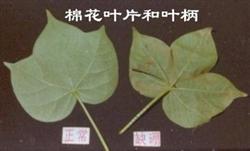
Boron deficiency at the seedling stage: Boron deficiency symptoms can appear in cotton right after emergence, manifesting as thickened and enlarged cotyledons with a darker color, fragile young shoots that break easily, and wilting and drooping in a "" shape (normal leaves stand upright in a "Y" shape); the terminal bud's development stalls, and in severe cases no true leaves emerge, ultimately leading to seedling death. With boron deficiency at the seedling stage, because the terminal bud's growth...
 Chemical fertilizers aim to supply cotton with nutrients, whereas applying microbial fertilizer not only provides nutrients to cotton but, more importantly, increases the beneficial microbial community in the root-zone soil, improves the soil microflora, improves the granular structure, and adjusts the soil's physical, biological and chemical properties to the optimal ratios, thereby achieving the goal of raising soil fertility. Microbial fertilizer application to cotton is divided into seedling fertilizer, base fertilizer and topdressing.
Seedling fertilizer: For cotton using the seedling-transplanting method, when preparing the seedling nutrient soil, 5 kilograms of bio-organic fertilizer can be added per cubic meter of nutrient soil, which helps prevent disease and strengthen seedlings.
Base fertilizer: In cotton fields with a certain fertilizer-retention capacity, use 50 kilograms of bio-organic fertilizer per mu as base fertilizer.
Topdressing: During the flowering and boll stage of cotton, apply 20-25 kilograms of Heijiabai biological fertilizer per mu as topdressing. Cotton fields with poorer soil fertility and a somewhat sandy texture should increase the application rate. In addition, in the middle and late stages of cotton growth, use 1 kilogram of microbial inoculant per mu, mix with 20 kilograms of water, stir evenly and let stand for 1 hour, then take the supernatant and spray it on the leaves together with zinc and boron fertilizers; this can promote cotton plant growth, enhance the cotton plant's resistance, and reduce the occurrence and harm of yellow and fusarium wilt.