Occurrence Patterns and Control Methods of Barley Yellow Mosaic Disease
Barley yellow mosaic disease occurs mainly in the lower Yangtze River basin, in the provinces and municipalities of Hubei, Zhejiang, Jiangsu, Shanghai and Anhui, among which Jiangsu, Zhejiang and Shanghai are the most severely affected. Diseased plants die off prematurely, leading to a lower rate of productive tillers in barley, a marked reduction in seed-setting rate, lower thousand-grain weight, lower flour yield and reduced quality. When barley develops...
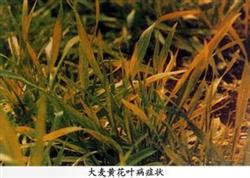
Barley yellow mosaic disease occurs mainly in the lower Yangtze River basin, in the provinces and municipalities of Hubei, Zhejiang, Jiangsu, Shanghai and Anhui, among which Jiangsu, Zhejiang and Shanghai are the most severely affected. Diseased plants die off prematurely, leading to a lower rate of productive tillers in barley, a marked reduction in seed-setting rate, lower thousand-grain weight, lower flour yield and reduced quality.
When barley develops yellow mosaic disease, the plants are stunted, the plant shape is loose, tillering is reduced, root development is poor, and brown roots increase. In the early tillering stage of diseased seedlings, short striped chlorotic spots parallel to the leaf veins appear on the not-yet-flattened young leaves; the chlorotic spots gradually develop and join together, causing the leaves to take on a mosaic appearance. After heading in mildly diseased plants, the symptoms on the upper leaves recede; some severely diseased plants fail to head, and although others can head, the heads are small and contain many empty and shrivelled grains, while chlorotic mosaic symptoms remain on the flag leaf, leaf sheath and even the glumes. When conditions are suitable, barley can show obvious symptoms 1 to 2 months after sowing. The pathogen of this disease is barley yellow mosaic virus, which can be transmitted through the soil-borne fungus Polymyxa graminis and by sap rubbing; so far, no evidence has been found that seeds or insects can transmit the virus.
The occurrence of barley yellow mosaic disease varies greatly among different varieties; generally, six-row barley is relatively resistant, while two-row barley is highly susceptible. Planting susceptible varieties over large areas for consecutive years allows the virus-transmitting vector and the amount of virus inoculum to accumulate year by year, which is an important reason why the affected area of this disease continues to expand and its severity increases year by year. Because Polymyxa graminis releases zoospores to infect and transmit the virus, it requires relatively high soil moisture and a temperature of around 15°C; suitable temperatures and abundant rain in autumn and winter favour the occurrence of the disease. Conversely, when the sowing season is dry with little rain and the temperature is rather low, the disease is mild or occurs late. Autumn sowing in the Jiangsu-Zhejiang-Shanghai area mostly takes place in October-November, when the soil temperature coincides with the soil temperature suitable for zoospores of Polymyxa graminis to invade and transmit the virus; the earlier the sowing, the earlier and more severe the disease, while appropriately late sowing can avoid the peak period of infection and virus transmission by Polymyxa graminis, so delaying sowing can reduce the occurrence of the disease. When barley is severely affected, crop rotation should be practised, and paddy-upland rotation is recommended. The spread of diseased soil should be strictly controlled; deep ploughing of soil in diseased fields or covering heavily diseased fields with disease-free soil can control the occurrence of the disease to a certain extent. Applying more fertiliser to diseased fields can slow the development of the disease and promote the recovery of physiological functions in diseased plants.