Spring Occurrence Patterns and Control Methods of Wheat Sharp Eyespot
Wheat sharp eyespot is a fungal disease mainly spread through the soil. As yield levels have increased, with the promotion of high-yielding varieties and wheat field management involving heavy watering and heavy fertilization, its damage has become increasingly serious. The pathogen of wheat sharp eyespot has a broad host range; besides infecting wheat, it can also infect corn, rice, foxtail millet, sorghum and many other...
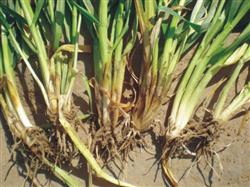
Wheat sharp eyespot is a fungal disease mainly spread through the soil. As yield levels have increased, with the promotion of high-yielding varieties and wheat field management involving heavy watering and heavy fertilization, its damage has become increasingly serious.
The pathogen of wheat sharp eyespot has a broad host range; besides infecting wheat, it can also infect corn, rice, foxtail millet, sorghum and many other crops, as well as grass weeds such as green foxtail, goosegrass, crabgrass and barnyardgrass. It mainly overwinters and oversummers in the soil and in diseased plant residues as sclerotia or mycelium, which are the main sources of infection.
After wheat is sown, if the germinating seeds are infected by the pathogen, the coleoptile turns brown and, in severe cases, rots and dies; after the standing and jointing stages, the diseased plant rate rises markedly; during the booting and heading stages of wheat, the disease develops rapidly; at the flowering and grain-filling stages, the diseased plant rate reaches its peak, the lesions expand and join together into typical cloud-pattern blotches; in the later stage it invades the stem, causing stem rot and even the formation of dead white heads, with few grains set and shriveled, thin kernels.
The control methods are: 1. Agricultural control. Timely weed removal can reduce field humidity and improve ventilation and light penetration in the field; implement formula fertilization, apply topdressing at the jointing stage, and apply nitrogen and potassium fertilizers together as topdressing, which can effectively improve the disease resistance of the plants. Avoid applying nitrogen fertilizer alone, lest the wheat seedlings stay green and mature late, inducing more severe disease damage. 2. Chemical control. Chemical control of wheat sharp eyespot should focus on seed treatment, and severely affected fields should be supplemented with relay spraying in the field in early spring to effectively control the damage of this disease. (1) Spring control: based on the disease situation determined by investigation, spray pesticides early for prevention. At the standing stage of wheat, if the diseased plant rate in the field is 15%-20%, use 20-30 grams of 12.5% hexaconazole wettable powder or 50-100 grams of 15% triadimefon wettable powder or 150-200 milliliters of 5% validamycin aqueous solution per mu, choose any one of them, add 50-75 kilograms of water, and spray the middle and lower parts of the wheat plants; after 7-10 days, spray once more, for a total of 2-3 sprays. At the booting stage, use 50-100 grams of 15% triadimefon wettable powder per mu, add 60 kilograms of water, and spray. If diseases and pests occur at the same time, they can be mixed with pesticides used to control wheat aphids, wheat spiders and others, thereby achieving the purpose of simultaneous control. (2) If sharp eyespot occurs early and severely in the autumn seedling stage, and there is excessive rain in spring, and the disease may break out on a large scale, the control threshold should be applied strictly and the control timing should be appropriately advanced.