Occurrence Patterns and Control Methods of Mango Anthracnose
1. Damage symptoms: It mainly damages mango flowers, fruit, and tender shoots. After tender leaves are infected, many small round brown spots appear, surrounded by a yellow halo, and they gradually expand into round, polygonal, or irregular brown lesions, which later rupture and perforate. Wounds on leaves and young fruit caused by gall midges, leafhoppers, and other pests are also easily infected by this disease. Severely infected...
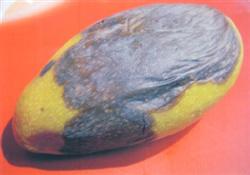
1. Damage symptoms: It mainly damages mango flowers, fruit, and tender shoots. After tender leaves are infected, many small round brown spots appear, surrounded by a yellow halo, and they gradually expand into round, polygonal, or irregular brown lesions, which later rupture and perforate. Wounds on leaves and young fruit caused by gall midges, leafhoppers, and other pests are also easily infected by this disease. Severely infected tender leaves tend to curl, and the leaf tips and margins often become scorched and withered, and diseased leaves drop easily. After branches are infected, black spots form and then gradually dry up. After flower spikes are infected, small spots appear, and they finally turn black and rot, causing flower rot and fruit drop. Fruit can be infected throughout the entire growth period. After young fruit are infected, they become deformed, turn black, and drop. After larger fruit are damaged, dark brown round spots form on the rind, with the center sunken, and the diseased part becomes hard and deteriorated. In humid weather, pink sticky matter grows on the diseased area. In addition to damaging mango during the growth period, this disease continues to cause damage during fruit storage and transport, resulting in large numbers of rotten fruit.
2. Pathogen and occurrence patterns: Anthracnose is a disease caused by fungal infection. After the pathogen overwinters in diseased parts, it is spread by people, livestock, rainwater, wind, and insects, and invades through stomata or wounds on plants or fruit. High humidity is the leading factor inducing anthracnose. When relative humidity reaches above 95% and persists for 12 hours, the pathogen invades, and the incubation period is 2-4 days; it can occur throughout the year. In various parts of Hainan Province, especially in northeastern Qiong, from November each year to April of the following year, with relative humidity above 95% and temperatures of 12-30°C, the disease can occur; especially under weather conditions with temperatures of 16-25°C and relative humidity of 95%-100%, anthracnose is most prone to outbreak and cause disaster, resulting in poor harvests and crop failure. The anthracnose pathogen has the characteristic of latent infection, mostly lurking in the rind and flesh near the fruit stalk, or in the leaf mesophyll near the leaf stalk, at a depth of about 1 mm.
3. Control measures
3.1 Orchard cleaning: In late autumn and early winter, after pruning diseased branches and leaves, burn them in a centralized manner, and spray the whole orchard once with 1:2:100 or 1:1:100 Bordeaux mixture.
3.2 Shaping and pruning: After harvesting fruit in summer, prune and shape the plants in a timely manner to improve light penetration and ventilation conditions.
3.3 Pesticide control: During the flowering period, spray once a week, using 600x chlorothalonil solution, 50% carbendazim 500x solution, 70% thiophanate-methyl 800x solution, 40% Miebingwei 400x solution, 25% prochloraz emulsifiable concentrate 1000x solution (bud stage), and 20% chlorinated copper emulsion 600x solution (rainy days). At the same time, every 7-10 days, spray the leaves once with 0.2%-0.3% monopotassium phosphate, urea, and borax; spraying flower and fruit retention agents 2-3 times consecutively can effectively enhance the disease resistance of the plants. During the fruiting period, spray once every half month, and the following pesticides can be used in rotation: 70% thiophanate-methyl 700x solution, 1:1:100 Bordeaux mixture, 75% chlorothalonil 600x solution, 25% prochloraz emulsifiable concentrate 800x solution, and 20% chlorinated copper oil solution 500x solution. After harvest, soak the fruit in 70% thiophanate-methyl 1000x solution (water temperature 52-54°C) for 15 minutes, remove and place in a ventilated area to dry, pack in cardboard boxes or bamboo baskets, or move to a low-temperature controlled-atmosphere storage facility; alternatively, 15 days before harvest, spray with 25% prochloraz 700-800x solution and soak the fruit for 15 minutes, then package. During the autumn shoot growth period, spray once every half month, and the pesticides used are basically the same as those used during the flowering and fruiting periods.