Weed Occurrence Characteristics and Control Methods in Rapeseed Fields
To obtain high quality and high yield in cultivated rapeseed, in addition to normal management such as timely sowing to secure seedlings, weeding and reducing waterlogging, skillful fertilizer application is the key to high yield. 1. Apply sufficient base fertilizer. Applying sufficient base fertilizer is the foundation for high rapeseed yield and should account for about 60% of the total for the whole growing period. To achieve a yield target of about 250 kg per mu, for medium-fertility...
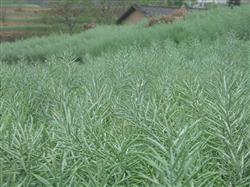 The weed species occurring in rapeseed fields in Jiangsu Province are basically the same as those in wheat fields. The main weeds in dry-crop rapeseed fields include cleavers (Galium aparine), Galium tricornutum, speedwell (Veronica spp.), small goosefoot (Chenopodium album), flixweed (Descurainia sophia), shepherd's purse (Capsella bursa-pastoris), field pennycress (Thlaspi arvense), Cardamine hirsuta, annual bluegrass (Poa annua), wild oat (Avena fatua), knotgrass (Polygonum aviculare), Silene conoidea, creeping thistle (Cirsium setosum), small bindweed (Convolvulus arvensis), etc. In some areas wild oat causes serious damage. Weeds in rice-stubble rapeseed fields are mainly shortawn foxtail (Alopecurus aequalis), Japanese foxtail (Alopecurus japonicus), rigid ryegrass (Sclerochloa dura) and annual bluegrass (Poa annua), with others including Polypogon fugax, cleavers (Galium aparine), Malachium aquaticum, bog stitchwort (Stellaria uliginosa), large vetch (Vicia sativa), bittercress (Cardamine flexuosa), shepherd's purse (Capsella bursa-pastoris), speedwell (Veronica spp.), Lapsana apogonoides, etc. Shortawn foxtail causes the most serious damage, and in some areas rigid ryegrass and annual bluegrass also cause relatively serious damage. The number of weeds in rice-stubble fields is greater than in dry-crop fields.
Occurrence characteristics (1) In rapeseed fields that are ploughed and then sown or transplanted, a weed emergence peak occurs 10 to 30 days after sowing or transplanting; the amount of weed emergence during this period is large and constitutes the main weed population causing weed damage in rapeseed fields. In dry-crop land, broadleaf weeds predominate and the amount of weed emergence is relatively small; in rice-stubble rapeseed fields, grass weeds predominate and the amount of weed emergence is relatively large. (2) In rapeseed fields sown or transplanted on uncultivated stubble, because the surface soil layer outside the sowing or transplanting holes (rows) has not been disturbed, weed seeds on the soil surface have already germinated before sowing or transplanting, forming an early weed community in the field; the emergence peak of weeds germinating in the sowing or transplanting holes (rows) and in the turned-up soil layer appears 10 to 30 days after sowing or transplanting.
Control methods (1) Soil treatment at sowing or transplanting time. For rapeseed fields dominated by grass weeds such as Japanese foxtail (Alopecurus japonicus), 100 to 150 ml of 48% trifluralin emulsifiable concentrate per mu can be applied 3 to 5 days before sowing or transplanting and mixed into the soil; or 45 to 60 ml of 96% S-metolachlor emulsifiable concentrate, or 50 ml of 48% clomazone emulsifiable concentrate, or 75 to 100 ml of 50% acetochlor emulsifiable concentrate can be selected and applied 1 day before or 1 day after transplanting. For rapeseed fields where grass weeds are mixed with broadleaf weeds such as Malachium aquaticum, shepherd's purse (Capsella bursa-pastoris) and mouse-ear chickweed (Cerastium spp.), a mixture of acetochlor and clomazone can be selected and applied before transplanting rapeseed. (2) Post-emergence stem and leaf treatment. For rapeseed fields dominated by grass weeds, 20 to 30 ml of 10.8% haloxyfop-R-methyl per mu, or 35 to 50 ml of 10% quizalofop-p-ethyl emulsifiable concentrate, or 40 to 50 ml of 6.9% fenoxaprop-p-ethyl emulsifiable concentrate can be used for control before the weeds reach the 4-leaf stage. For fields dominated by small vetch (Vicia hirsuta), flixweed (Descurainia sophia), Lapsana apogonoides, hemisteptia (Hemisteptia lyrata) and cranesbill (Geranium carolinianum), 30 to 40 ml of 50% benazolin suspension concentrate per mu can be used, diluted with 40 kg of water for spraying, for control in autumn and winter. For fields dominated by rigid ryegrass (Sclerochloa dura) and annual bluegrass (Poa annua), 20 to 30 ml of 24% clethodim emulsifiable concentrate per mu can be used for control at the 3- to 4-leaf stage of the weeds.