Occurrence Patterns and Control Methods of Sorghum Head Smut
As the sorghum planting area continues to expand and the planting years lengthen, the damage caused by sorghum head smut is becoming increasingly serious, directly affecting the development of sorghum production. I. Degree of damage: In the early 1990s, sorghum head smut occurred only sporadically in a few local areas of the county. By 2000, the affected area in individual townships was about 43 hectares, with a diseased plant rate of 15%, while other planting areas had only mild occurrence. According to a 2004 survey, the affected area in the county was 800 hectares, accounting for 34% of the total sorghum sown area, with an average diseased plant rate of 20.5% in affected fields; in 2005, the affected area in the county was 1333 hectares, accounting for 67% of the total sorghum sown area, with an average diseased plant rate of 31.2% in affected fields. In the sorghum planting area of the Second Brigade of Biesituobie Township, the diseased plant rate reached 70.5%, with a severity of 70%.
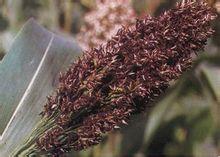
As the sorghum planting area continues to expand and the planting years lengthen, the damage caused by sorghum head smut is becoming increasingly serious, directly affecting the development of sorghum production.
I. Degree of damage
In the early 1990s, sorghum head smut occurred only sporadically in a few local areas of the county. By 2000, the affected area in individual townships was about 43 hectares, with a diseased plant rate of 15%, while other planting areas had only mild occurrence. According to a 2004 survey, the affected area in the county was 800 hectares, accounting for 34% of the total sorghum sown area, with an average diseased plant rate of 20.5% in affected fields; in 2005, the affected area in the county was 1333 hectares, accounting for 67% of the total sorghum sown area, with an average diseased plant rate of 31.2% in affected fields. In the sorghum planting area of the Second Brigade of Biesituobie Township, the diseased plant rate reached 70.5%, with a severity of 70%.
II. Disease symptoms
The disease mainly damages the panicle. Diseased plants are shorter than healthy ones, and the affected sorghum panicle turns into a large gray gall. After the outer membrane ruptures, a large amount of black powder is released, and bundles of scattered thread-like structures are exposed. In some cases, only part of the inflorescence is damaged, or obvious small gray galls form on the tip leaves; after the outer membrane ruptures, the leaf vascular bundles do not split open.
III. Occurrence patterns
Sorghum head smut, caused by the fungus Sporisorium reilianum (syn. Sphacelotheca reiliana), belongs to the Basidiomycota fungi.
1. Transmission routes
The pathogen can be transmitted through seeds and soil. Pathogens scattered in the soil can survive for 1 year, and teliospores buried deep in the soil can survive for 3 years. In this county, teliospores scattered in the soil or in manure are the main source of infection.
2. Disease development process
From 2004 to 2005, fixed-point observations in sorghum fields showed that the suitable sowing period for sorghum was late April, and the emergence period was generally early May. During this period, the soil temperature at 0-20 cm was 18.5-26.2°C, the daily average temperature was 24°C, and daily precipitation was 3.3 ml, which were most favorable for the germination of teliospores of sorghum head smut. After germination, the teliospores invaded sorghum sprouts with binucleate hyphae. The period from seed germination to 1.5 cm was the optimal infection stage. After the seedling stage, the pathogen spores no longer caused infection, and no symptoms of damage were visible at the seedling stage. The invading hyphae entered the interior of the growing cone tissue after 35 days and entered the differentiated flower buds after 60 days. From late July to mid-August, during the heading stage of sorghum, diseased panicles were pulled out before the gray galls appeared and ruptured.
3. Disease factors
① Temperature and humidity: The pathogen of sorghum head smut is closely related to soil temperature and water content. When the soil temperature is 28°C and the soil water content is 15%, the disease incidence is high. During spring sowing, if soil moisture is relatively low or the soil covering is too thick, seedlings emerge slowly and are prone to disease.
② Crop rotation: When sorghum is planted in continuous cropping fields, sorghum head smut occurs severely; the longer the rotation period, the milder the disease.
③ Variety: Different varieties have different levels of disease resistance, and field incidence varies. Excellent sorghum varieties selected from disease-free areas or disease-free fields have relatively mild incidence, while self-saved seeds or seeds selected from affected areas have severe incidence.
IV. Control measures
1. Currently, hybrids resistant to head smut in production include: Heiza 34, Qiza No. 1, etc.
2. Implement crop rotation with other crops for more than 3 years, which can effectively control the occurrence of the disease.
3. Deep plowing in autumn to sterilize the soil can reduce the source of inoculum and lessen the disease in the following year.
4. Seed treatment: Soak seeds in warm water at 45-55°C for 5 minutes, then keep them covered; sow immediately after the seeds germinate, which can both protect seedlings and reduce the disease incidence. For chemical seed dressing, mix 2 g of 25% triadimefon wettable powder with 1 kg of sorghum seed, or mix 35 g of 50% carboxin powder with 5 kg of seed, then sow after dressing.
5. Sow at the appropriate time and improve sowing quality so that seedlings emerge as quickly as possible, reducing the chance of pathogen infection from seedlings.
6. Pull out diseased panicles before the gray galls appear and rupture, and gather them outside the field for deep burial or burning.