Method for Relay Intercropping Cotton with Spring Cauliflower and Summer Lettuce
The real culprit behind this headless cotton phenomenon is a pest called cotton thrips, which is the most serious pest damaging cotton fields, with tobacco thrips being the main species. The adults and nymphs of tobacco thrips are very small, difficult to see with the naked eye, and can only be seen on the underside of leaves with a magnifying glass. It damages cotton seedlings as adults or 1st and 2nd instar nymphs...
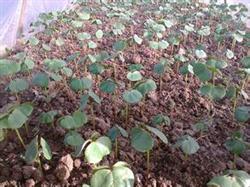 In recent years, our farm has promoted a relay intercropping technique of planting one season of spring cauliflower in winter and spring, transplanting cotton after the cauliflower is harvested, and intercropping one season of summer lettuce in the cotton rows. In addition to reaching a lint yield of about 100 kg per mu, the total output value per mu can exceed 3000 yuan. The relay intercropping technique is introduced as follows:
I. Apply sufficient base fertilizer
Choose plots with relatively high fertility and good drainage and irrigation conditions for planting. After the previous crop is harvested, carry out deep plowing and freezing of the soil; before transplanting the cauliflower seedlings, while preparing the land, apply 2500 kg of high-quality barnyard manure and 75 kg of NPK compound fertilizer per mu; then make beds with a bed width of 133 cm and a ditch width of 33 cm.
II. Seedling raising and post-transplanting management of spring cauliflower
1. Seedling raising: Choose the high-yield, high-quality, cold-resistant Japanese Snow Mountain variety. Raise seedlings in mid-November. After applying sufficient base fertilizer to the seedbed, level it, then draw shallow furrows and sow. After sowing, build small arch sheds and cover with film for insulation. After full emergence, pay attention to ventilation (generally ventilate at 9 a.m. and close at 2 p.m.) to prevent the formation of leggy seedlings. Before a cold wave strikes, cover the shed film with straw at night. On snowy days, promptly clear the snow on the shed. Generally, no topdressing is applied during the seedling stage.
2. Transplanting and post-transplanting management: Choose fine weather in late February and transplant in the morning. When transplanting, apply diluted manure water as the seedling-establishing water. The transplanting row spacing is 43 cm and the plant spacing is 50 cm, planting 2400 plants per mu, with every 3 rows as 1 group. After planting, first lay plastic film, then build small arch sheds. The edges of the plastic film and the base of each seedling must be sealed tightly with wet soil. Half a month after planting, apply 50 kg of ammonium bicarbonate per mu; when heading begins, apply another 30 kg of urea per mu. If drought occurs, carry out furrow irrigation after topdressing to soak through the bed surface. In the late heading stage, keep the bed surface moist and cover the curd surface with vegetable leaves to prevent contamination. During the growth period, spray broad-spectrum fungicides such as thiophanate-methyl 3 to 4 times to prevent diseases such as root rot. If aphids or cabbage caterpillars appear, control them promptly. Remove the sheds after Qingming. In late April, the cauliflower can be marketed successively.
III. Seedling raising and post-transplanting management of lettuce
1. Seedling raising: Choose the high-quality, high-yield, heat-tolerant Sichuan pointed-leaf lettuce variety. In late March, raise seedlings in the open field by broadcasting. Thin the seedlings 2 to 3 times during the seedling stage to cultivate short and sturdy seedlings.
2. Transplanting and post-transplanting management: At the end of April, immediately after the cauliflower harvest is completed, plow the land. After preparing the land, make beds with a bed width of 3.3 m (including ditches). Then draw small furrows 10 cm deep between the rows where cotton and lettuce will be planted and apply fertilizer, applying 75 kg each of NPK compound fertilizer and cake fertilizer per mu. Rake the bed surface level and plant. Plant 4 rows of cotton per bed (equal row spacing), with a plant spacing of 30 cm, planting 2670 plants per mu; except for the ditch rows, interplant 1 row of lettuce in the interval between every two rows of cotton, with a plant spacing of 43 cm, interplanting 1380 plants per mu. After planting, apply diluted manure water as the seedling-establishing water. After the seedlings are established, loosen the soil promptly. After the plants begin to grow vigorously, apply a vigorous-growth fertilizer promptly, using 50 kg of ammonium bicarbonate per mu added to diluted manure water. If drought occurs later, irrigate in a timely manner to keep the soil moist; if there is too much rainy weather, promptly clear the ditches and improve drainage. During the growth period, control diseases such as downy mildew and gray mold 1 to 2 times, each time spraying 80% mancozeb diluted with water. At the same time, control aphids well and prevent the occurrence of viral diseases. In late June, the lettuce can be marketed successively.