Key Technical Points for High-Efficiency Cultivation of Cucumber Intercropped with Kidney Beans
At present, greenhouse-cultivated kidney beans are in the vine-extending and flowering stage. How can we ensure a bumper harvest? Here we suggest vegetable growers grasp the following key measures for management. 1. Topping at the right time. The cultivation environment for greenhouse kidney beans differs from that for open-field kidney beans. Due to the higher temperature inside the greenhouse, growth is faster...
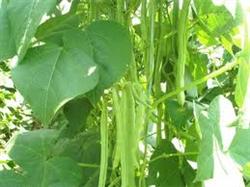 Key tips: In mid-January, sow kidney beans in the wide rows between the cucumber trellis, 15 cm from the cucumber rows, or raise seedlings in nutrient pots and then transplant. The row spacing for kidney beans is 55 cm, and the plant spacing is 50 cm. Choose excellent disease-resistant varieties such as Wujin No. 1 and 851-923 for kidney beans, and plant one seedling per hole.
Intercropping kidney beans in solar greenhouses with cucumbers is a high-yield and high-efficiency cultivation method. In Northeast China, the output value per mu can reach 12,000-13,000 yuan, and it is very popular among vegetable growers. The cultivation points are briefly introduced as follows.
1. Cultivation and Management of Cucumber
1. Seedbed soil preparation. In July, prepare 15 kg of high-quality farmyard manure per square meter. After thorough decomposition, spread it in the greenhouse in mid-September, and carry out shallow tillage or plowing and raking so that the organic fertilizer is evenly mixed into the soil. Before planting, use 60 g per square meter of diammonium phosphate and 30 g per square meter of potassium sulfate as base fertilizer.
2. Selection of good varieties. For cucumber, choose excellent varieties such as Jinzao No. 3, Luning No. 1, and Xin A. Use Yunnan black-seeded pumpkin as the rootstock.
3. Cultivation of grafted seedlings. In early October, first raise cucumber seedlings, and after the cucumber cotyledons have flattened out, sow black-seeded pumpkin. One week later, when the black-seeded pumpkin cotyledons have flattened out and true leaves have just emerged, begin grafting. The natural temperature in mid-October is very suitable for wound healing. After grafting, the seedlings are planted immediately, with a small row spacing of 55 cm, a large row spacing of 85 cm, and a plant spacing of 35 cm. This is conducive to intercropping with kidney beans. After the grafted seedlings are planted, use a small arch shed to shade light and retain moisture. After 4-5 days, remove the small arch shed film for ventilation and hardening of the seedlings. After about half a month, cut the cucumber roots and train the vines onto the trellis, then carry out normal management.
4. Mid-stage management of cucumber. In winter, reduce the frequency of irrigation for the cucumber seedlings. Do not use flood irrigation; instead, use under-film irrigation or micro-irrigation. Before each irrigation, apply 30 g per square meter of nitrogen, phosphorus, and potassium compound fertilizer. After irrigation, pay attention to ventilation to remove moisture. To prevent diseases, fumigate at night with chlorothalonil smoke agent or procymidone smoke agent, which can effectively prevent downy mildew, gray mold, and other diseases. At the same time, to increase yield, foliar fertilizer can also be sprayed appropriately. Cucumbers begin to be harvested at the end of December and come onto the market in large quantities before the Spring Festival.
2. Management During the Symbiotic Period of Cucumber and Kidney Beans
In mid-January, sow kidney beans in the wide rows between the cucumber trellis, 15 cm from the cucumber rows, or raise seedlings in nutrient pots and then transplant. The row spacing for kidney beans is 55 cm, and the plant spacing is 50 cm. Choose excellent disease-resistant varieties such as Wujin No. 1 and 851-923 for kidney beans, and plant one seedling per hole. When the third set of leaves of the kidney beans has formed, top them to promote the sprouting of side branches and control excessive vegetative growth. When the second set of leaves on the side branches has formed, top them again to promote a third round of branching, laying the foundation for high yield. During the symbiotic period, promptly prune the lower leaves of the cucumber that have low photosynthetic function to improve air and light penetration and create favorable conditions for cultivating strong kidney bean seedlings. Cucumber and kidney beans coexist for about 2 months. The timing for pulling up the cucumber vines should be determined flexibly based on factors such as the condition of the cucumber vines, the cucumber price at the time, and the growth of the kidney bean vines.
3. Management of Kidney Beans
After the cucumber vines are pulled up, gather the upper parts of the kidney bean trellis hanging strings closer together to improve light conditions between the trellises. In late March, the kidney beans flower and set pods, and ventilation begins at the same time. According to the growth of the kidney beans, alternately apply appropriate amounts of urea and monopotassium phosphate, combined with foliar fertilization. In mid-April, the kidney beans enter the peak pod-setting stage, with dense branches and leaves. High temperatures often occur in the greenhouse, so ventilation should be increased and suitable temperature and humidity should be regulated to prevent flower and pod drop. The main disease of greenhouse kidney beans is gray mold, which can be controlled with thiophanate-methyl; the main pests are leafminers and whiteflies, and pesticides such as Mieshajing, Abamectin, and Yibianjing, combined with fumigation using whitefly-killing smoke agent, give very good control results. Kidney bean harvest can continue until the end of June.