-
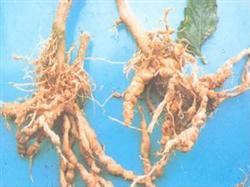
What chemical agents should be used to control tomato root-knot nematode disease?
In recent years, the occurrence of tomato root-knot nematode disease has shown an upward trend, especially in dry sandy loam soil where the disease is severe, causing great losses. Root-knot nematodes have a wide range of hosts; besides damaging tomatoes, cucumbers, sweet peppers and others also suffer severely. Root-knot nematodes often overwinter in the soil as eggs or second-stage larvae with galls, root knots, and diseased plant residues...
-
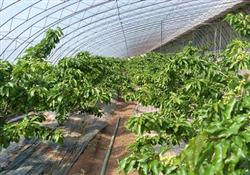
Sweet Cherry Pest and Disease Control Methods and Techniques
(1) Main diseases 1. Cherry brown spot disease: also known as leaf shot hole disease, it is the most important leaf disease of sweet cherry. (1) Symptoms: At the early stage of the disease, small purple spots the size of a needle tip form, then enlarge, and some join together to form round brown lesions, on which small black dots appear, namely conidia masses and perithecia. ...
-
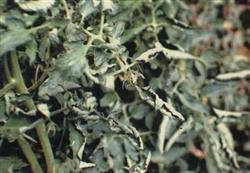
What chemicals should be used to control tomato leaf curl disease?
For physiological leaf curl, the control measures are timely watering and fertilizing after fruit set, and covering with a shade net: cover it during the day on sunny days, uncover it at night, and do not cover it on cloudy days. The symptoms of damage by the broad mite (Polyphagotarsonemus latus) are leaves becoming narrower, stiff and upright, shrunken or distorted and deformed, and finally the growing tip becoming bare. For chemical control, 1.8% Abamectin can be sprayed at a 3000-fold dilution. Hormone...
-
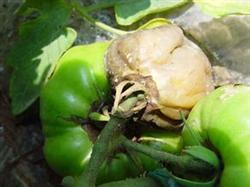
Symptom Identification and Chemical Control Methods for Tomato Sour Rot
The symptoms currently occur only in a few regions. It damages only the fruit, and mostly overripe fruit; fruit with wounds is especially susceptible. The diseased part softens, the skin turns slightly brown, becomes wet-rotten and slightly wrinkled, with fine cracks. When humidity is high, sparse white mold grows on the surface of the diseased part. Finally the diseased fruit leaks water, rots, and has a sour odor. Disease pattern...
-
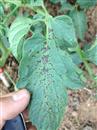
Which fungicides are effective for controlling tomato sesame leaf spot
★Symptoms: Tomato sesame leaf spot, also known as brown spot. It mainly infects leaves, and also infects petioles, fruit stalks and fruits. On leaves, grayish-brown round or nearly round spots 1-10 mm in diameter with distinct edges first appear; the diseased parts become thin and sunken, with a glossy appearance, especially obvious on the underside of the leaf, which distinguishes it from other leaf spot diseases. Large spots sometimes show concentric rings, and under humid...
-
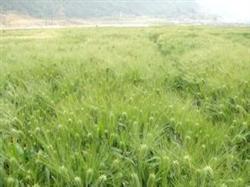
Barley Field Weed Control Methods and Precautions
In the coastal areas of our province, rice-barley rotation is predominant. Due to the need for crop rotation adjustment, a certain area of malting barley must be planted every year. On the basis of optimizing the variety layout, standardized cultivation measures can improve quality indicators of malting barley such as grain shape uniformity, thousand-grain weight and grain protein content. In production, the following key points need to be grasped...
-
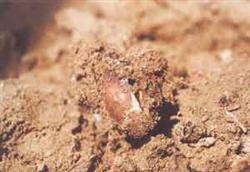
How to prevent and control seed rot after sowing spring peanuts
After sowing spring peanuts and before emergence, seed rot often occurs, with severe cases reaching a rot rate as high as 20%, causing missing plants and broken rows to varying degrees. Causes of seed rot: poor seed quality or improper storage, or too long a storage period; low-lying terrain, heavy clay soil, poor texture, and high soil water content, resulting in a long emergence time for seeds; poorly consolidated seedbed preparation, which affects the...
-
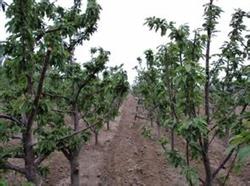
Identification and Control Methods for Common Cherry Diseases and Pests
Many of the diseases and pests affecting cherries are the same as those of other stone fruit trees, so their control methods can be used for reference. The main diseases harming cherries are shot hole disease, crown and root collar rot, and gummosis. Crown and root collar rot mostly occurs on trees in their first fruiting stage, causing the crown and root collar to decay. Control methods: mainly avoid piling soil around the root collar for long periods, and control underground pests that gnaw and wound the bark. At the same time, check frequently; when diseased plants are found, scrape and treat them promptly, and after scraping, disinfect with Bordeaux mixture or lime sulfur mixture. For severe crown and root collar rot, the aboveground growth can also be restored through spring bridge grafting. The main pests harming cherries include the red-necked longhorn beetle, the golden-line jewel beetle, the small clearwing moth, the spherical scale insect, and the phalera caterpillar. The small clearwing moth has one generation per year, and its larvae cause damage within the cortex of large branches. Control measures mainly include spraying during the peak emergence period of adults, whitewashing the branches and trunk to prevent egg laying, and promptly spraying or digging out larvae when their frass is found in the field.
-
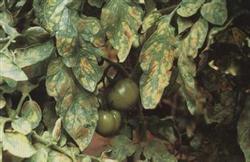
What fungicides work well for controlling tomato leaf mold?
Leaf mold is a common disease on tomatoes. Although it does not directly infect the fruit, it reduces leaf function, which in turn affects yield and quality. In practice, growers often report that leaf mold is difficult to control and that spraying shows no obvious effect. The poor control results are mainly caused by improper control methods. When applying fungicides, pay particular attention to the following...
-
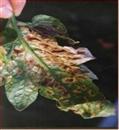
How to use pesticides to prevent and control black mold on tomatoes
Leaf mold is a common disease on tomatoes. Although it does not directly infect the fruit, it reduces leaf function and thereby affects yield and quality. In production, farmers often report that leaf mold is difficult to control and that the effect after spraying is not obvious. The main reason for poor control is improper control methods. When applying pesticides, the following points should be given special attention...
条件筛选