Sweet Cherry Pest and Disease Control Methods and Techniques
(1) Main diseases 1. Cherry brown spot disease: also known as leaf shot hole disease, it is the most important leaf disease of sweet cherry. (1) Symptoms: At the early stage of the disease, small purple spots the size of a needle tip form, then enlarge, and some join together to form round brown lesions, on which small black dots appear, namely conidia masses and perithecia. ...
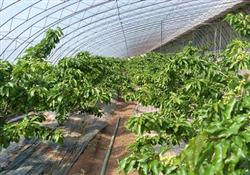 The main diseases of sweet cherry are peach bacterial shot hole disease and round spot disease, which occur severely in the three rainy months of July, August and September, damaging branches, leaves, young shoots and fruit. If not controlled in time, they can cause the whole tree to defoliate, with very adverse effects on flower bud formation, tree vigor development, and flowering and fruit set the following year. Therefore, attention should be paid to timely spraying for control. Before bud break in spring, spray 5 degrees Baume lime sulfur mixture to eliminate overwintering fungal spores and also control scale insects. After harvest in late June and late July, spray 200-fold double-strength Bordeaux mixture on the leaves to control the above diseases.
Gummosis on the branches and trunk of sweet cherry is a physiological disease. After the trunk is injured and stimulated, sap flows out. In large trees in full fruit-bearing stage, gummosis on branches and trunk is severe in July-August after fruit harvest. When red-necked longhorn beetle damage is severe, gummosis is heavy. Gummosis also occurs when branches freeze due to pruning too early. When gummosis is severe, the damage to the tree is great. Therefore, control must be carried out promptly according to the cause of the disease. Avoiding injury and stimulation to branches and trunk is the only way to prevent gummosis in large sweet cherry trees.
The main insect pest of sweet cherry is the red-necked longhorn beetle. This insect overwinters as larvae inside the branches and trunk. The peak emergence period of adults is from late June to mid-July. They lay eggs in the cracks of the bark on the main trunk. The larvae bore and feed downward from top to bottom in the xylem of the main trunk and large branches. This pest causes severe damage and is difficult to control. After the main trunk is bored and fed upon, gummosis is caused, tree vigor is severely weakened, and the whole tree may die.
Control methods
1. During the adult emergence period from June to July, manually capture adults.
2. In early June, apply trichlorfon yellow clay slurry to the trunk and large branches to prevent egg laying.
3. Inject 200-fold dichlorvos solution into the bore holes to kill the larvae inside the branches and trunk.
4. When insect frass is found on the branches and trunk, promptly dig out the newly hatched larvae feeding under the bark.
5. Adults have chemotaxis and can be trapped and killed with sugar-vinegar solution in combination with control of the pear fruit borer.