Which fungicides are effective for controlling tomato sesame leaf spot
★Symptoms: Tomato sesame leaf spot, also known as brown spot. It mainly infects leaves, and also infects petioles, fruit stalks and fruits. On leaves, grayish-brown round or nearly round spots 1-10 mm in diameter with distinct edges first appear; the diseased parts become thin and sunken, with a glossy appearance, especially obvious on the underside of the leaf, which distinguishes it from other leaf spot diseases. Large spots sometimes show concentric rings, and under humid...
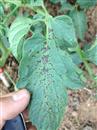
★Symptoms: Tomato sesame leaf spot, also known as brown spot. It mainly infects leaves, and also infects petioles, fruit stalks and fruits. On leaves, grayish-brown round or nearly round spots 1-10 mm in diameter with distinct edges first appear; the diseased parts become thin and sunken, with a glossy appearance, especially obvious on the underside of the leaf, which distinguishes it from other leaf spot diseases. Large spots sometimes show concentric rings, and under high humidity develop dark brown mold-like growth; when petioles and fruit stalks are infected, the spots are grayish-brown and sunken, and under high humidity produce black mold; the spots vary in size and are sometimes elongated.
★Pathogen: Helminthosporium carposaprum Pollack, called tomato long conidial fungus, belongs to the Deuteromycotina fungi. The hyphae are colorless, or yellow-brown to brown. The conidiophores are clustered and slender, with the basal few cells slightly swollen. The conidia are long cylindrical or club-shaped, pale yellow-brown, borne at the tip of the conidiophores in chains, with 0-20 septa, measuring 56.9-134.9 x 4.6-11.4 microns; on germination, germ tubes emerge from both ends of the spore.
★Transmission routes and disease conditions: It mainly overwinters in the field as mycelium with diseased plant residues. When conditions are suitable, it produces conidia, which are spread by airflow and rain splash onto host plants, invading through stomata, with an incubation period of 2-3 days. The suitable temperature for pathogen development is 25-28°C, and the suitable pH is 6.5-7.5. High temperature and high humidity, especially rainy and hot seasons, make it prone to epidemics. In addition, damp vegetable plots, weak tomato growth, overly dense planting, poor ventilation and light penetration, or insufficient fertilizer lead to severe disease.
★Control methods:
(1) Choose disease-resistant varieties. Such as Yuenong No. 2, Zaozuozuan and first-generation hybrids.
(2) Strengthen field management; for low-lying or waterlogged land, use high ridges and deep furrows for planting; do not plant too densely, and improve field ventilation and light penetration; adopt formula fertilization techniques, spray Duoxiaohao 4000 times solution, or 1.4% sodium compound nitrophenolate aqueous solution 7000 times solution, to improve plant disease resistance; after harvest, remove diseased plant residues and plow deeply in time.
(3) At the early stage of disease, spray 25% cupric ammonia complex aqueous solution 500 times solution, or 77% Kocide wettable powder 400-500 times solution, 1:1:200 Bordeaux mixture, 50% hunshaliu suspension concentrate 500 times solution, 50% duoliu suspension concentrate or thiophanate-methyl wettable powder 600 times solution, once every about 10 days, for 2-3 consecutive applications.