-
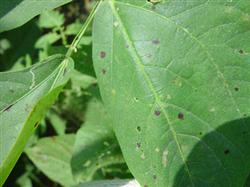
A Detailed Guide to the Main Diseases of Yardlong Beans and Their Control Methods
The main diseases of yardlong beans are leaf spot, fusarium wilt, phytophthora blight, root rot and rust; the insect pests include the legume pod borer, cutworm, thrips, leafminer and mites, and integrated pest management techniques should be used for control. The main methods for preventing and controlling diseases and pests are: choose fields that have not grown legume crops for more than two years for planting; clear weeds around the field...
-
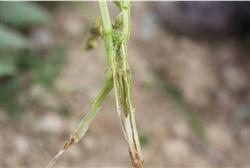
Which fungicides are effective for controlling Fusarium wilt in cowpeas (Vigna unguiculata)?
In the early stage of the disease, you can use a 1000-fold dilution of 50% carbendazim wettable powder, or a 400-fold dilution of 10% Shuangxiaoling aqueous solution, or a 1000-fold dilution of 75% thiophanate-methyl wettable powder, applying 50 to 150 grams per plant, once every 7 to 10 days, for 2 to 3 consecutive applications. Alternatively, mix 500 grams of 50% carbendazim wettable powder with 200 kg of dry soil and apply it in furrows along the sowing rows at 200 kg per mu.
-
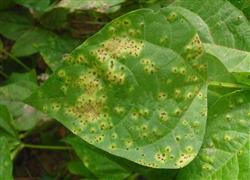
Methods and Key Technical Points for Pest and Disease Control in Oil Beans
Main symptoms: Beans can be infected by pathogens throughout the entire growth period, but resistance weakens and susceptibility increases from the beginning of flowering to the fruiting stage. The disease mainly attacks leaves. In the early stage of the disease, chlorotic yellowish-white spots appear on the leaves, and the spots gradually increase until they densely cover the entire leaf. Plants are stunted, pods are few and small, and the growth period is shortened...
-
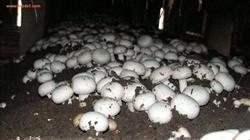
How to Control the Size of White Button Mushrooms? Detailed Explanation of Effective Measures
In recent years, the market's requirements for the quality of white button mushrooms have been continuously rising. Large mushrooms are no longer popular, and some mushroom growers, unable to keep up with market demand for commercial mushrooms of a certain specification, end up with increased production but no increased income. The following measures can be adopted to control their specifications. Replacing the strain The currently widely used strain "2796" is a large-particle type...
-
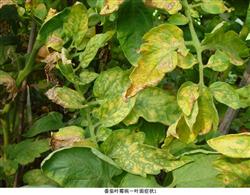
How to prevent and control leaf mold in cherry tomatoes? Detailed explanation of prevention and control methods
Cherry tomatoes grown in greenhouses are often attacked by leaf mold, and vegetable growers should pay attention to prevention and control. I. Symptoms It mainly damages leaves, and in severe cases also damages stems, flowers and fruits. When leaves are infected, irregular or elliptical light yellow chlorotic spots appear on the leaf surface, and a white mold layer first forms on the diseased part of the leaf underside, later the mold layer becomes grayish brown or...
-
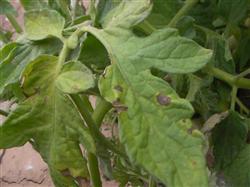
Control Methods and Technical Key Points for Early Blight in Cherry Tomatoes
Early blight is a major disease of cherry tomatoes, widely distributed and commonly occurring, mainly in open fields in autumn, and also occurring occasionally in protected cultivation. Generally 30%-50% of plants are diseased, and in severe cases 100% become diseased, with some branches and leaves necrotizing due to the disease, significantly affecting cherry tomato production. This disease mainly damages leaves, and in severe cases also infects...
-
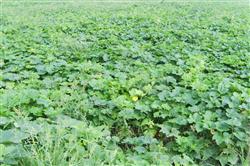
Detailed Explanation of Common Pest and Disease Control Methods for Winter Melon
Cultivation Method of Ground-Trailing Winter Melon The cultivation method of ground-trailing winter melon is: the plants grow by trailing on the ground, with relatively wide spacing between plants and rows, generally about 300 plants per mu. Management is relatively extensive, and the stems and vines are basically left to grow freely or the side vines are removed before fruiting, then allowed to grow at will after fruiting. Its advantages are less labor required and relatively low cost. The disadvantages are poor melon shape, and...
-
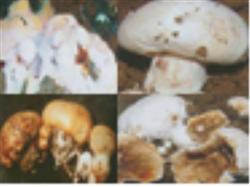
How to prevent and control wet bubble disease in button mushrooms
Disease symptoms: Wet bubble disease is also known as brown rot, white rot, wet bubble, blister disease, etc. The disease is caused by a fungus called Mycogone perniciosa. Mycogone perniciosa is a soil fungus. In button mushroom cultivation, Mycogone perniciosa is mainly introduced into the mushroom house with the casing soil, and it mostly occurs in mushroom sheds with high temperature, high humidity and poor ventilation. Temperatures above 17°C are suitable for this disease to occur.
-
How to prevent and control physiological diseases of button mushrooms during the fruiting period
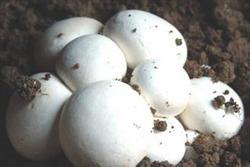
In button mushroom production, from casing soil onward until fruiting, in addition to routine management, correctly mastering and applying the following four key points on watering plays an important role in ensuring the amount and vitality of mycelium, ensuring the number and uniformity of pinheads, and ensuring the healthy growth of fruiting bodies and their commercial quality. 1. The "mycelium-pressing water" should be...
-
What Is Peach Crown Gall Disease? Symptoms and Control Methods Explained
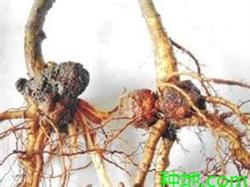
What is peach crown gall disease? How can peach crown gall disease be controlled effectively? Symptoms of peach crown gall disease: 1. Symptoms Peach crown gall disease is caused by Agrobacterium tumefaciens and is a bacterial disease. After a peach tree is infected, galls of varying sizes, spherical or flattened spherical, form on the roots or trunk. After fusing, they become irregular in shape, then gradually turn brown, with a rough, uneven surface, hardened and woody, forming irregular cavities. After seedlings are infected, their development is hindered, growth is slow, and the plants are stunted; in severe cases, the leaves turn yellow and the plants decline prematurely. When mature fruit trees are infected, the fruit is small and the tree's lifespan is shortened.
条件筛选