-
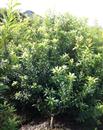
Four Cultivation Methods for Controlling Excessive Vegetative Growth of Waxberry (Chinese Bayberry) Trees
Waxberry trees planted on deep, fertile soil will, if allowed to grow naturally, develop excessive vegetative growth, causing most of the tree's nutrients to be consumed by the growth of branches and leaves, which leads to phenomena such as few or difficult-to-form flower buds, and the tree entering the fruiting stage late or producing low yields. There are four measures for controlling excessive vegetative growth of waxberry trees: 1....
-
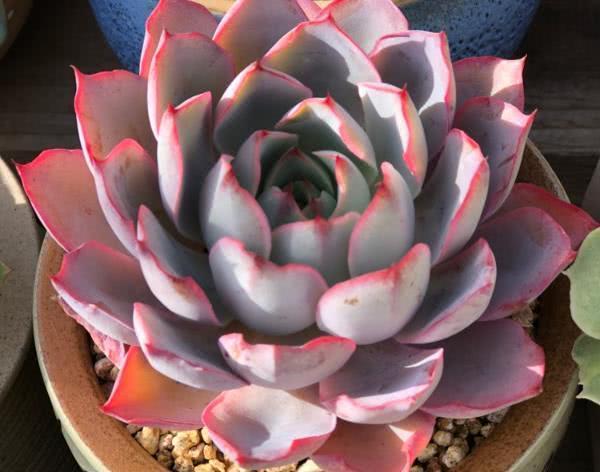
To make succulents plump, controlling water alone is not enough; you also need to ensure sufficient light.
If you want to make succulents plump, controlling water alone won't do it; you also need to ensure enough light. Some succulents will still grow leggy without light even if you control water very well. That's because more light means more photosynthesis, which allows the synthesis of what succulents need to grow...
-
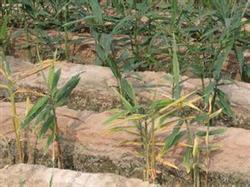
Effective control methods for ginger stem base rot
In recent years, with the continuous expansion of continuous ginger cropping areas, combined with extensive field management, ginger diseases have also shown a worsening trend, especially since June, due to high temperatures and frequent rain, ginger stem base rot is most likely to occur. Recently, Li Hualiang and Lu Changlei from Renzhao Town, Pingdu City, Shandong Province, and Yu Wanquan from Ju County and others reported that in their area...
-
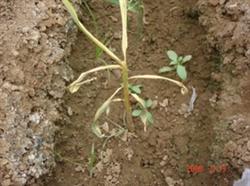
How to prevent and control ginger pests and diseases? A full analysis of practical techniques
(1) Ginger blast 1. Pathogen: a bacterial disease, Ralstonia solanacearum. 2. Symptoms of diseased plants: leaves first droop and lose their luster, then turn withered yellow from bottom to top, and finally die. The stem first becomes water-soaked at the base, turns yellow, dies, and breaks off at the base and falls over. The rhizome is water-soaked, turns brown and rots, and when squeezed a white juice flows out with a foul odor.
-
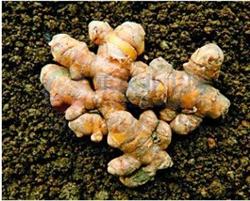
How to prevent and control ginger rot? A detailed explanation of integrated control techniques
1. Select disease-free ginger seed and disinfect seed ginger. Keep seed from disease-free land or select disease-free ginger as seed; before sowing, soak the cut seed ginger in a 800-fold dilution of 50% carbendazim wettable powder for 6 hours, or soak it in a 2000-fold dilution of xinzhiromycin for 24 hours. 2. Ginger field selection and disinfection. The pathogen can survive in soil for more than 2 years, so...
-

What are the main diseases of mung bean? Detailed explanation of control methods
When planting mung bean, chemical fertilizers cannot be used as fertilizer, and nitrogen-containing fertilizers should be avoided even more. Moreover, sowing cannot be done before rain, and when sowing, the seedlings should be even, so that balanced nutrition can be ensured. The field should be inspected in time, and areas with missing seedlings should be replanted in time, with seedlings thinned at the 4-leaf stage. In poor plots, during the seedling stage every...
-
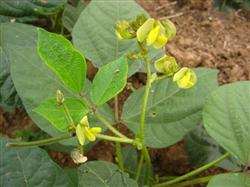
Mung bean diseases are frequent during the flowering period, and growers need to control them promptly
At present, mung beans have entered the flowering and pod-setting stage, and diseases and pests have been found in some fields, among which mung bean leaf spot, viral disease, damping-off, and soybean aphids cause relatively serious damage to mung beans. 1. Mung bean leaf spot: mainly damages leaves, with light brown or dark brown lesions appearing on the leaves, and obvious yellow halos at the edges,...
-
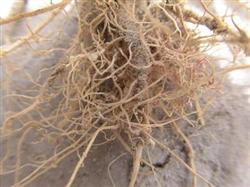
What are the technical measures for soybean pest and disease control
Soybean cyst nematode disease, commonly known as "fire dragon seedling," is a soil-borne, devastating soybean disease. The western part of our province is a severely affected area of this disease. In mild cases, yield is reduced by about 10%; in severe years, yield can be reduced by 30%-50%, and in serious cases, there may even be total crop failure. Soybean cyst nematode mainly damages soybean roots. Affected plants are stunted and poorly developed, and at the seedling stage are susceptible...
-
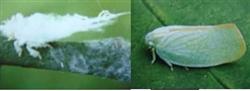
How to control the white moth planthopper and the mealybug in longan orchards
Both the white moth planthopper and the mealybug belong to the order Homoptera, the former to the family Flatidae and the latter to the family Pseudococcidae, and they mainly damage fruit trees such as citrus, longan, lychee and mango. In the past, the populations of these pests were often naturally controlled by large numbers of natural enemies and rarely reached the level of economic loss. In recent years, because some longan orchards in our region have been extensively managed, ...
-
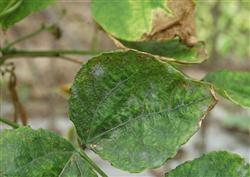
How to carry out integrated control of cowpea rust and powdery mildew in greenhouses?
At the early stage of the disease, spray 70% thiophanate-methyl wettable powder at 500 times dilution, or 40% copper oxychloride wettable powder at 600 times dilution, 50% sulfur suspension concentrate at 300 times dilution, or Fenbiqing at 150 times dilution. Spray 2 to 3 times consecutively, at 5 to 7 day intervals.
条件筛选