What fungicides work well for controlling tomato leaf mold?
Leaf mold is a common disease on tomatoes. Although it does not directly infect the fruit, it reduces leaf function, which in turn affects yield and quality. In practice, growers often report that leaf mold is difficult to control and that spraying shows no obvious effect. The poor control results are mainly caused by improper control methods. When applying fungicides, pay particular attention to the following...
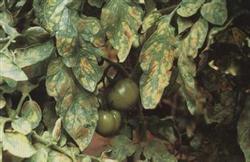
Leaf mold is a common disease on tomatoes. Although it does not directly infect the fruit, it reduces leaf function, which in turn affects yield and quality. In practice, growers often report that leaf mold is difficult to control and that spraying shows no obvious effect. The poor control results are mainly caused by improper control methods. When applying fungicides, pay particular attention to the following four points.
Match the fungicide to the problem. There are many fungicides used to control tomato leaf mold. Among them, preventive options include chlorothalonil, while curative options include carbendazim, flusilazole, difenoconazole and others, which can be selected according to need.
Prevent and treat early. Tomato leaf mold is an airborne disease. Once the pathogen infects the plant and produces lesions, the disease will spread rapidly as long as there is sufficient humidity in the greenhouse. To prevent tomato leaf mold, start from the seedling stage and spray a preventive fungicide every 10 days; during the fruit-setting stage of the first to second trusses of tomatoes, prevention should be strengthened, spraying once every 7 days. After lesions appear on the lower leaves, spray a curative fungicide as early as possible.
Where to spray. Tomato leaf mold mostly starts on the lower leaves of the plant, and usually the plants located in the southern corner of the greenhouse are affected first. Therefore, the focus of preventive spraying is the lower leaves of the plants and the plants on the south side of the greenhouse. Focus spraying on protecting the functional leaves in the middle and upper parts.
Strictly prevent phytotoxicity. Many azole fungicides have high efficacy against tomato leaf mold, but these fungicides (except difenoconazole) usually inhibit tomato growth. Therefore, during the fruit enlargement stage of tomatoes, azole fungicides must not be sprayed continuously in large amounts, so as not to inhibit fruit enlargement.