-
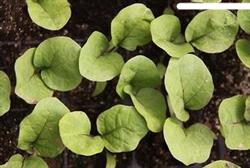
What to Do About Flower and Fruit Drop in Greenhouse Eggplants? Detailed Prevention and Control Measures
For peppers and eggplants, adopting greenhouse cold-bed seedling raising and transplanting technology is the main measure to increase early-stage yield and achieve early fruiting, early marketing, and high returns. 1. Greenhouse construction: choose a site that is sheltered from wind and faces the sun, with flat terrain, fertile soil, convenient drainage and irrigation, a low groundwater table, close to a water source, and where solanaceous vegetables have not been grown for many years...
-
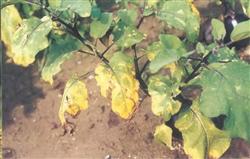
How to prevent and control Verticillium wilt in eggplant without grafting? Detailed practical measures
Verticillium wilt is a common disease of eggplant, and grafting is an effective measure to control it, but some vegetable growers have already planted eggplant seedlings that were not grafted, so how should Verticillium wilt be prevented and controlled? The symptoms of the disease and control measures without grafting are introduced here. 1. Disease symptoms. The disease mainly damages leaves, and in each...
-
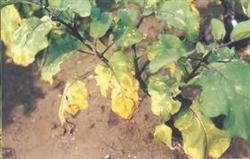
What to Do About Yellow Leaves on Eggplant? A Detailed Guide to Prevention and Control
There are mainly two causes of yellow leaves on eggplant: first, fertilizer damage. This kind of damage often occurs on cloudy days or after the weather turns sunny. It is mainly caused by using large amounts of undecomposed farmyard manure as a base fertilizer or improper application as a topdressing fertilizer, which leads to excessive accumulation of ammonia gas; combined with the lack of timely ventilation in the greenhouse, this ultimately triggers ammonia toxicity...
-
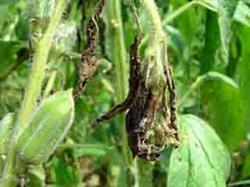
How should bacterial wilt in sesame be prevented and controlled?
I. Symptom expression Sesame bacterial wilt occurs relatively early. In the early stage of the disease, the roots turn brown, and the top of the plant wilts and droops. Afterward, dark green patches appear on the stem and gradually deepen and turn black. The leaves wilt and droop progressively from top to bottom. Diseased plants are shorter than healthy plants. The vascular bundles of the roots and stems turn brown, and finally the pith becomes hollow. Bacterial fluid oozes out both inside and outside the stem. The leaf vascular bundles are also affected, with dark green streaks on the veins. After the capsules are infected, water-soaked lesions appear and gradually develop into dark brown streaks of uneven thickness.
-
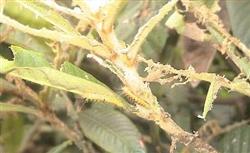
Timely Control Methods for the Loquat Yellow Hairy Caterpillar
The adult of the loquat yellow hairy caterpillar is commonly known as the "upside-down butterfly." Its larvae feed on buds and tender leaves, and during outbreaks they also damage old leaves, the bark of tender stems, flowers and fruit. On damaged leaves, only the upper epidermis and veins remain. First-instar larvae of this pest are gregarious. From the second instar they begin to disperse and cause damage, and after the third instar their food consumption increases greatly. This pest is one of the most common and serious...
-

Detailed Guide to Common Pest and Disease Control Methods for Goji Berry
Common Pest and Disease Control Methods for Goji Berry
-
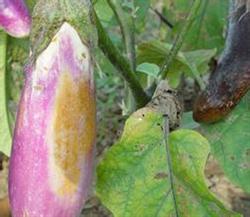
How to prevent and control eggplant Phytophthora fruit rot? These methods must be mastered
Eggplant Phytophthora fruit rot, commonly known as fruit rot and watery rot, is one of the important diseases of eggplant and occurs commonly in all regions. Eggplant can be affected at all growth stages. Losses are generally 20-30%, and more than 50% in severe cases. The peak fruiting period is also the peak disease period, and in rainy regions and years it often breaks out into disaster, causing devastating losses. 1. Disease identification...
-
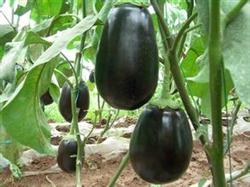
What are the control methods for stunted seedling syndrome in greenhouse eggplants?
Symptoms: In early spring crops, eggplants often show symptoms at the seedling stage such as small leaves, dark green color, thin stems, and few roots. After transplanting, such seedlings recover slowly, grow weakly, and are prone to flower and fruit drop. Causes: The disease occurs most easily when the seedbed temperature is too low (below 15°C for a long time). When using heating facilities or nutrient pots for seedling raising, water consumption is high,...
-
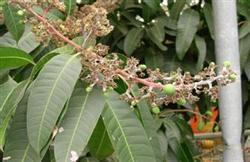
What to do if a mango tree gets sooty mold? Key points of integrated control techniques
I. Causes of mango flower and fruit drop 1. If the mango flowering period and young fruit period encounter low-temperature rainy weather (temperature below l1.5°C) and it lasts a long time, flower and fruit drop will be severe. The flower spikes are damaged and die, a large number of deformed fruits and abortive fruits appear, and they easily fall off naturally. 2. Pests and diseases damage Pests that harm mango...
-
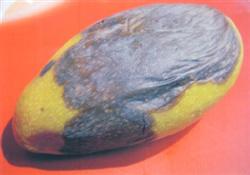
Occurrence Patterns and Control Methods of Mango Anthracnose
1. Damage symptoms: It mainly damages mango flowers, fruit, and tender shoots. After tender leaves are infected, many small round brown spots appear, surrounded by a yellow halo, and they gradually expand into round, polygonal, or irregular brown lesions, which later rupture and perforate. Wounds on leaves and young fruit caused by gall midges, leafhoppers, and other pests are also easily infected by this disease. Severely infected...
条件筛选