Barley Field Weed Control Methods and Precautions
In the coastal areas of our province, rice-barley rotation is predominant. Due to the need for crop rotation adjustment, a certain area of malting barley must be planted every year. On the basis of optimizing the variety layout, standardized cultivation measures can improve quality indicators of malting barley such as grain shape uniformity, thousand-grain weight and grain protein content. In production, the following key points need to be grasped...
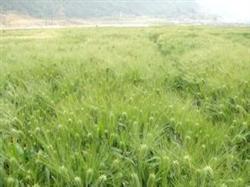 It is understood that only 3 herbicides are registered for weed control in barley fields: tralkoxydim, difenzoquat and chlorotoluron, all of which have certain efficacy against grass weeds. Among them, tralkoxydim is no longer sold on the market in our province due to problems such as certain phytotoxicity when used on barley; chlorotoluron is a soil sealing treatment agent and should mainly be used after sowing and before emergence; difenzoquat is suitable for controlling wild oat in barley fields.
Difenzoquat is a highly efficient and low-toxicity selective stem and leaf treatment agent. The drug is mainly absorbed through the ligule and base of wild oat, mostly moves toward the top, destroys cell division and elongation of the apical and internode meristems, stops growth, and forms necrotic spots on leaves until death. This herbicide has a very narrow weed-killing spectrum and is only suitable for wheat fields where wild oat grows alone. It can also be used in fields where wild oat and shortawn foxtail are mixed. Generally, the drug should be sprayed from the 3-leaf stage to the tillering stage of weeds.
Difenzoquat cannot be mixed with sodium salt and potassium salt herbicides or mecoprop, nor can it be applied immediately afterward; at least 7 days must be left between applications. When applied under conditions of high soil moisture and air humidity, the penetration effect of the drug is strengthened and efficacy is improved. Do not apply when relative humidity is below 65% or temperature is below 15°C. To ensure efficacy, there should be no rain within 4 hours after application. When difenzoquat is applied in barley fields, under high or low temperature conditions and when the dosage is too high, it also affects barley seedlings, manifesting as yellowing leaves. The more applied, the more severe the phytotoxicity. In mild cases, normal growth can recover after 20 days; in severe cases, stems shorten, heading and maturity are delayed, and yield decreases.
At present, the only difenzoquat product registered in China for barley fields is BASF SE Germany (contact phone: 010-65876608)'s 64% difenzoquat soluble powder. This product is registered for controlling wild oat in barley and wheat fields, with a recommended pure drug dosage of 750-1200 grams per hectare, equivalent to about 80-125 grams of 64% difenzoquat soluble powder per mu. Similar products include Shaanxi Nongda Delibang Technology Co., Ltd. (phone: 029-86301562)'s 400 g/L difenzoquat aqueous solution and 65% difenzoquat soluble powder (trade name Delibang), both registered for controlling wild oat in wheat fields, with a recommended pure drug dosage of 1200-1500 grams per hectare.
Difenzoquat has a very narrow weed-killing spectrum, while grass weed species in wheat fields are often numerous. Therefore, difenzoquat alone cannot be relied upon to control grass weeds in barley fields. In addition, there are few stem and leaf treatment agents suitable for controlling grass weeds in barley fields. Common herbicides suitable for stem and leaf treatment to control grass weeds in wheat fields, such as tralkoxydim and pinoxaden, cannot be applied in barley fields, otherwise phytotoxicity is likely to occur. Therefore, for grass weeds in barley fields, early control should be the foundation. Especially where the field weed spectrum is complex, it is best to use herbicides such as acetochlor, isoproturon and chlorotoluron for soil sealing treatment after sowing and before emergence, and then at the weed seedling stage use herbicides such as isoproturon for stem and leaf treatment according to the weed spectrum. The vast majority of grass weeds in wheat fields emerge after sowing and before winter, with very few emerging in winter and after spring begins. Seizing the key period from after sowing to before overwintering for application can effectively control grass weed damage.