-
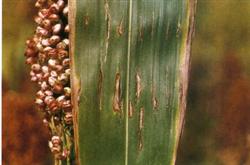
Symptoms and Control Methods of Bacterial Red Stripe Disease in Sorghum
Symptoms mainly affect leaves. Leaf spots initially appear as water-soaked, narrow, fine small stripes, which after expansion turn light reddish-brown. Some lesions have brown centers with red edges, and broad long-ovate lesions appear intermittently on the stripes. Sometimes the lesions can cover most of the leaf area. When humidity is high, small granular bacterial ooze can be seen overflowing, and after drying...
-
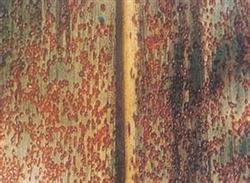
Which fungicides give good control of sorghum rust?
Symptoms Sorghum rust begins to develop around the heading stage of sorghum. Red or purple to light brown small spots form on the leaves, then as the pathogen spreads, the spots enlarge and form elliptical raised uredinia (summer spore pustules) on the leaf surface; when they rupture, they expose rice-brown powder, namely urediniospores (summer spores). Later, telia form in the original spots...
-
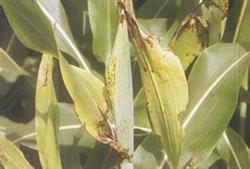
Symptom Identification and Control Methods of Sorghum Leaf Spot
Symptoms Also called spot disease. All parts of the whole plant can be affected, mainly damaging the leaves. The lesions are irregular in shape, long to spindle-shaped or semicircular, varying in size, can reach about 1cm or more, yellow-brown to gray-brown, with red-purple edges. The lesions often start from the leaf margin or leaf tip, and some also occur on the leaf surface or the upper part of the panicle...
-
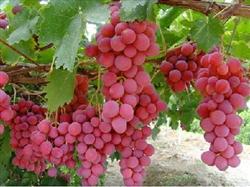
How to prevent and control grape diseases in the rainy season? A detailed guide to practical methods
The peak period for many diseases such as grape downy mildew, white rot and anthracnose is summer. The occurrence of downy mildew can cause grape leaf drop, dead branches, rotten fruit and even death. Therefore, China Agricultural Technology Network reminds you to strengthen vineyard management during the rainy summer season and to prevent and control diseases in good time. 1. Clean the vineyard: if in the vineyard...
-
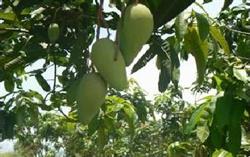
Which fungicide is effective for controlling mango stem-end rot
1 Site conditions Meizhou is located in the mountainous area of eastern Guangdong, with an annual rainfall of 1800mm, an average annual temperature of 21°C, 2031 annual sunshine hours, and an extreme minimum temperature of -2.6°C. The planting site is hillside land, sandy soil, poor and thin soil, pH 4.5, organic matter 1.65%, total nitrogen 0.083mg/kg, hydrolyzable nitrogen 112mg/kg, phosphorus pentoxide 0....
-
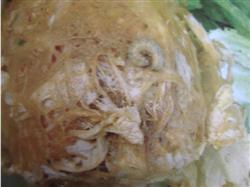
How to control root maggots in autumn cabbage? These methods you need to master
During the growth of autumn cabbage, the most dreaded pest is the root maggot (also called cabbage root maggot). It gnaws at the epidermis of the Chinese cabbage roots, allowing soil-borne pathogens to invade through the wounds, causing the cabbage to drop its outer leaves and rot. This not only reduces cabbage yield but also affects its edible value. If not controlled in time, it can damage the entire field, causing serious losses to vegetable growers...
-
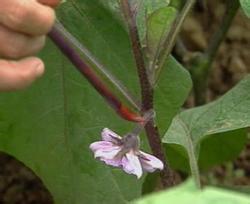
What are the control measures for eggplant flower drop in greenhouses?
There are many causes of eggplant flower drop, such as excessive vegetative growth, overly weak plant growth, humidity that is too dry or too high, and too high a temperature or insufficient light can all cause eggplant flower drop. It is suggested that vegetable growers determine the cause of flower drop based on the actual situation in the greenhouse last year, and then take corresponding measures to prevent eggplant...
-
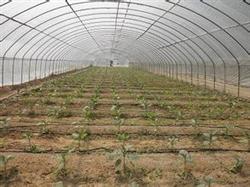
Causes of Flower Drop in Greenhouse Eggplants and Control Methods
There are many causes of flower drop in eggplants. For example, excessive vegetative growth, weak plant growth, soil that is too dry or too wet, and excessively high temperatures or insufficient light can all cause flower drop in eggplants. Control measures for excessive vegetative growth: carry out timely seedling hardening of the young plants, appropriately control water and fertilizer during the seedling hardening period, cultivate and loosen the soil...
-
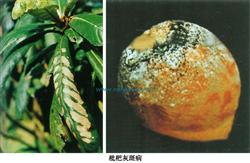
Detailed Guide to Controlling Sooty Mold Disease in Loquat
Loquat gray leaf spot mainly damages leaves and also damages fruit, and is a major disease of loquat. When leaves are affected, the initial lesions appear as pale yellow round spots, which then rapidly expand and merge into irregular large lesions with a distinct black ring at the edges. When fruit is affected, round, purplish-brown lesions form, soon become sunken, and later on the lesions grow...
-
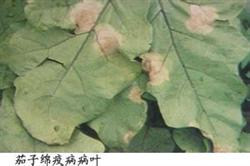
How to prevent and control cucumber blight and eggplant Phytophthora fruit rot
Disease symptoms: Cucumber blight can occur at the seedling stage and the adult plant stage. At the adult plant stage, it mainly affects the base of the stem, the tender stem nodes, leaves, and fruit. It first causes dark green water-soaked spots at the stem base and stem nodes, which then become soft, with obvious constriction and thinning of the stem nodes. The leaves above the diseased area wilt, or the entire plant dies. When leaves are infected, they produce...
条件筛选