Key Technical Points for Pest and Disease Control in Citrus in Summer and Autumn
1. Whitefly: Both adults and larvae can harm citrus leaves and fruits, sucking sap with piercing-sucking mouthparts and secreting large amounts of honeydew that contaminates leaves and fruits, causing sooty mold. Because whitefly reproduces quickly, has many hosts, and spreads easily, large-scale coordinated control is needed to achieve good results. (1) Control timing: when...
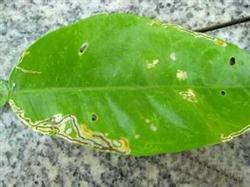
1. Whitefly: Both adults and larvae can harm citrus leaves and fruits, sucking sap with piercing-sucking mouthparts and secreting large amounts of honeydew that contaminates leaves and fruits, causing sooty mold. Because whitefly reproduces quickly, has many hosts, and spreads easily, large-scale coordinated control is needed to achieve good results. (1) Control timing: when there are more than 5 insects per young leaf on average, control should be carried out. (2) Control agents: 5% acetamiprid at 1500 times, 2.5% cyhalothrin at 2000-2500 times liquid spray.
2. Arrowhead scale: Severe outbreaks can cause dead branches and fallen leaves, and yellow-green spots form on the fruit peel with the insect bodies attached to them, affecting the appearance and quality of the fruit. The peak period of the first-generation nymphs is in mid-to-late May, the second generation in mid-to-late July, and the third generation in mid-to-late September. The third generation mainly damages the upper part of the citrus tree and the fruit. The development of the first-generation nymphs is relatively uniform, making it the key to chemical control throughout the year; because the second and third generations have a long damage period and overlapping generations, selective treatment should be adopted for control. (1) Control timing: mid-to-late July and mid-to-late September. (2) Control agents: 40% chlorpyrifos at 1200 times, 40% methidathion at 1200 times liquid spray.
3. Citrus leafminer: The larvae tunnel under the epidermis of young leaves to feed, boring irregular silvery-white tunnels, causing leaf deformity and curling, seriously affecting photosynthesis. Citrus canker bacteria easily invade leaf wounds, and outbreaks are most severe in summer and autumn. Comprehensive control measures of "removing buds to control shoots, spraying at the right time to protect shoots" can be adopted. The principle of removing buds to control shoots is to remove early ones and keep uniform ones, remove scattered ones and keep whole ones, so that shoot growth is uniform, which is conducive to spraying to protect shoots and shortens the control period. The agents can be 20% fenpropathrin at 4000 times liquid, 2.5% deltamethrin at 3000 times liquid spray. When using chemicals to protect shoots, the following must be noted: (1) combine with removing buds to control shoots; (2) spray for protection when the buds grow to the size of "one grain of rice"; (3) rotate the agents; (4) when the outbreak is severe, apply once every 4-5 days, with continuous control.
4. Citrus anthracnose: It mainly harms young leaves, young shoots, fruit stalks, and fruits, and can cause leaf drop, shoot dieback, fruit drop, and fruit rot. This disease is a fungal disease and generally occurs easily under high-temperature and high-humidity climatic conditions; high temperature and abundant rain in summer and autumn favor its occurrence. In particular, the high temperature and high humidity in September and October favor the occurrence of fruit stalk anthracnose, causing a large amount of fruit drop. (1) Control timing: late September and mid-to-late October. (2) Control agents: 25% prochloraz manganese salt at 600 times, 80% Daconil M-45 wettable powder at 600 times liquid spray.