-
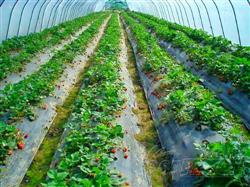
Detailed Explanation of Pollution-Free Cultivation Techniques for Strawberries in Plastic Greenhouses
(1) Variety selection: Choose varieties with early flower bud differentiation, shallow dormancy, and good cold resistance in low-temperature seasons, such as Chunxiang, Fengxiang, Lihong, Mingbao, Jingbao, Nyoho, and Hokowase. (2) Cultivating strong seedlings: 1. Carefully select mother plants. In March-April of the current year, select plants from the strawberry production greenhouse with vigorous growth, good inflorescence fruiting, few deformed fruits, well-developed root systems, and no pests or diseases as mother plants. Plant them in a dedicated seedling nursery to cultivate and propagate runner seedlings. Apply 2000-3000 kg of organic fertilizer and 10 kg of compound fertilizer per mu in the nursery. Make beds 2 m wide, with a planting row spacing of 1 m and a plant spacing of 0.3-0.4 m. After they establish, apply nitrogen fertilizer as early as possible, keep the soil moist, and remove all inflorescences that appear to promote runner growth.
-
Key Points of Pollution-Free Pest Control Techniques in Welsh Onion Fields
I. Onion thrips, also known as small white insect or tobacco thrips. Adults and nymphs use their rasping-sucking mouthparts to suck sap from within the leaves, causing many fine, dense, long yellowish-white spots to form on the onion leaves. In severe cases, the leaves turn yellow and white, twist, die, and droop, seriously affecting the yield and quality of welsh onion. 1. Occurrence pattern. Onion thrips...
-
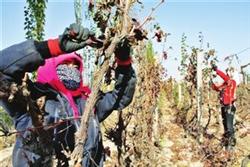
Grape Variety Introduction and Key Points of Pollution-Free Cultivation Techniques
The period for winter pruning of grapes is generally best carried out from early November to mid-February of the following year, that is, from 2 to 3 weeks after leaf fall to 3 to 4 weeks before spring bleeding occurs. Pruning too early will affect the return flow of nutrients, while pruning too late tends to cause bleeding. Bleeding often affects the sprouting of buds and impacts growth and fruiting. Now mainly...
-
How to treat gray mold in Chinese chives? Key points of pollution-free control techniques
(1) Symptoms and epidemic patterns The disease mainly affects the leaves and shows 3 types: the white-spot type, in which water-soaked grayish-white spots form on both the front and back of the leaves, oval or spindle-shaped, with pale yellow margins; later the lesions enlarge into large dead patches, causing half a leaf or the whole leaf to die. In humid conditions, a sparse gray mold layer forms. The dry-tip type occurs...
-
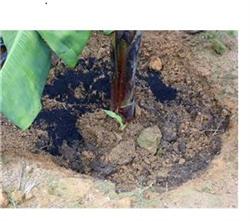
Detailed Explanation of Pollution-Free Standardized Cultivation Techniques for Bananas
The nutrient requirements of bananas generally increase as the leaf stage advances. The growth and development during the 18-40 leaf stage of bananas plays a decisive role in the yield and quality of bananas, so this period is an important fertilization period for bananas. This period can be further divided into two heavy fertilization periods: the mid-to-late vegetative growth stage and the flower bud differentiation stage. Most of the...
-
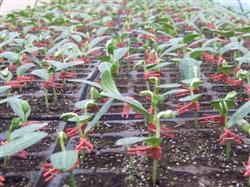
Key Technical Points for Pollution-Free High-Efficiency Cultivation of Bitter Melon in Greenhouses
I. Grafting Seedling Cultivation 1. Seedling Raising Methods The rootstock is raised in nutrient pots, and the scion is raised in sterile soil to strictly prevent soil-borne disease infection. Soak bitter melon seeds in a 75% thiophanate-methyl 800-fold solution for 12 hours, then soak in clean water for 16 hours, remove and air-dry, bury in sand for 2 days of warm germination; disinfect the nutrient soil with quintozene...
-
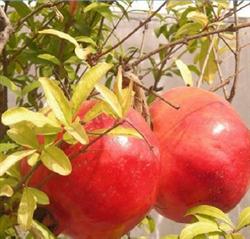
A Complete Analysis of the Key Points of Pollution-Free Pomegranate Fertilization Technology
1. Five major advantages of developing pomegranate production. (1) Strong adaptability and a wide cultivation range; it can be cultivated in mountainous areas, hills, or flat sandy land. (2) Propagation and cultivation are simple and labor-saving; seedlings can be raised by cuttings or layering and root very easily; the fruit rind is hard and thick, there are fewer pests and diseases, and bagging for protection is unnecessary. (3) Bearing...
-
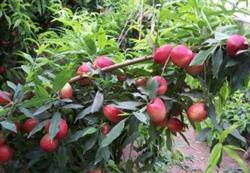
What are the pollution-free cultivation and management techniques for fresh-eating peach trees?
Pollution-free means that under specific conditions, the production environment, production techniques and product quality meet the requirements of the relevant national standards and regulations; the production environment quality meets the requirements of GB/T18407.2-2001; the production regulations of NY/T5114-2002 are implemented; during production, limited amounts of restricted chemical fertilizers, pesticides and other synthetic substances are permitted; and product quality...
-

What is the difference between green food, organic food and pollution-free food?
Summary: Are green food, organic food and pollution-free food the same thing? In daily life we often hear about "organic food", "pollution-free food", "green food" and so on, but few people can clearly distinguish them all. This...
-
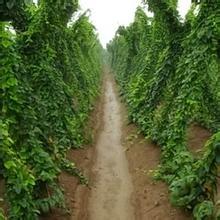
Fertilization technical specifications for pollution-free cultivation of yam
As long as several main aspects of production management are handled well, the planting benefits of yam will be greatly improved. In yam cultivation management, the key points are the application of base fertilizer, loose soil, treatment of yam seed pieces, timely topdressing, disease control, and taking measures to promote the growth of the rhizome as much as possible. 1. ...
条件筛选