Detailed Explanation of Pollution-Free Standardized Cultivation Techniques for Bananas
The nutrient requirements of bananas generally increase as the leaf stage advances. The growth and development during the 18-40 leaf stage of bananas plays a decisive role in the yield and quality of bananas, so this period is an important fertilization period for bananas. This period can be further divided into two heavy fertilization periods: the mid-to-late vegetative growth stage and the flower bud differentiation stage. Most of the...
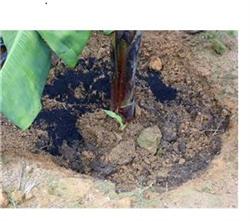 Research was conducted on pollution-free standardized cultivation techniques for bananas in Zhangzhou, and significant results were achieved. The techniques are introduced as follows:
I. Banana plantation selection: When planting bananas, it is advisable to choose broad flat land or hilly terrain with no pollution sources, convenient transportation, good drainage and irrigation, good ventilation and light transmission, deep and fertile soil layers, and neutral or slightly acidic loamy soil. Mechanical deep plowing of more than 40cm should be carried out to achieve the requirements of depth, looseness, softness, and levelness.
II. Selection of excellent varieties: According to research, the excellent banana varieties currently suitable for planting in Zhangzhou City include: medium-stem Brazilian banana, Williams 8818, Mexico No. 3, Taijiao No. 2, Zhangjiao No. 9, etc.
III. Cultivation of strong seedlings: Vigorously promote factory-based seedling cultivation, using advanced high-tech biotechnology for banana tissue culture seedling propagation and cultivation.
IV. Timely planting and rational close planting: Before planting banana tissue culture seedlings, first cultivate them in plastic bags in plastic greenhouses for 2-3 months. When the seedlings have 8-10 leaves, they can be transplanted. Generally, transplanting is done in February to March, with a planting spacing of 2.0 x 2.5m, and 1950-2100 plants per hectare.
V. Rational formula fertilization
1. Fertilization for new banana plantations: In addition to sufficient organic fertilizer as base fertilizer before planting. Starting 15 days after planting, apply diluted human manure urine every 7-10 days, and spray and drench with organic biological light fertilizer Gaolida high-potassium liquid at 1500 times dilution plus 0.3% potassium dihydrogen phosphate once each, about 4 times of fertilization in the first half of the year. After growing 25 leaves, apply heavy flower spike fertilizer 1-2 times to cultivate strong stems and large flower spikes.
2. Fertilization for old banana plantations: If the soil quality is suitable, the annual amount of slow-release fertilizer and 60% quick-release fertilizer can be applied at the end of February, and the remaining 40% quick-release fertilizer should be applied in May. The first fertilization should be before new roots emerge, combining deep plowing with mainly organic fertilizers such as dried livestock manure (dried chicken, pig, cattle, and sheep manure), cake fertilizer, soil miscellaneous fertilizer, green manure, etc., mixed with superphosphate, ammonium bicarbonate, and potassium chloride and deeply buried. The second fertilization should be during the vigorous growth period of banana plants in May to June, mainly using quick-release ternary compound fertilizer plus potassium fertilizer, combined with foliar spraying of light fertilizer Gaolida high-potassium liquid at 1500 times dilution 2-3 times.
VI. Integrated pest and disease control
1. Vigorously promote the use of virus-free tissue culture seedlings, increase the application of organic fertilizer and phosphorus-potassium fertilizer, ensure proper drainage and irrigation, and maintain ventilation.
2. During the seedling stage, use carbendazim, thiophanate-methyl, duofu, and prochloraz plus beta-cyfluthrin or cypermethrin, etc., plus light fertilizer Gaolida high-potassium liquid at 1500 times dilution, and spray alternately 3-4 times.
3. For underground pests and nematode diseases, timely apply low-toxicity and low-residue pesticides such as dichlorvos and soil insect killer to the soil 2-3 times in winter and spring.
4. During the medium-to-large seedling stage, focus on controlling pests such as weevils, Spodoptera litura, and aphids. Low-toxicity pesticides can be sprayed on the underside of leaves and poured on the pseudostem 2-3 times.
5. During the bunch emergence stage, use prochloraz, aiin, oubo, bifenazate, wanxing, fuxing, shigao, shike, cuibei, jiaowen, iprodione, banali, yibao, mengshasheng, dasheng M45, etc., plus light fertilizer Gaolida banana plumping agent at 1250 times dilution, spray alternately 2 times, then add light fertilizer Gaolida banana type at 1500 times dilution, spray alternately 2-3 times.
VII. Wind protection and bagging for fruit protection
During the medium seedling stage of bananas, insert bamboo poles 45cm deep beside the banana plants, and tie them at 2-3 points with cloth strips; after bunch emergence, promptly reinforce with nylon ropes and bamboo poles to resist wind damage.
After de-budding, spray 2-3 times with disease prevention and elongation plumping agents, then promptly bag the banana bunch with blue plastic bags for fruit protection and insulation, resulting in significant yield increase.
VIII. Scientific harvesting, storage, and transportation
Bananas can be harvested when the fruit fingers reach 70-80% maturity. After harvesting, the processing procedure for the fruit bunch is: transport harvested bunches to processing point → remove and sort hands → carefully select and grade → wash → preservative treatment → air dry → package → store and transport.