-
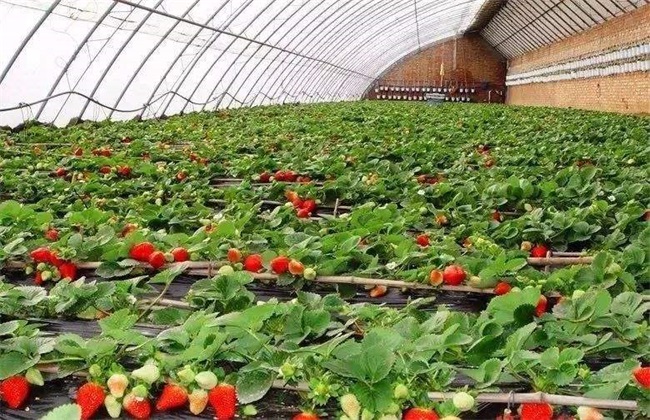
What are the production standards for pollution-free strawberries?
Production standards for pollution-free strawberries
-
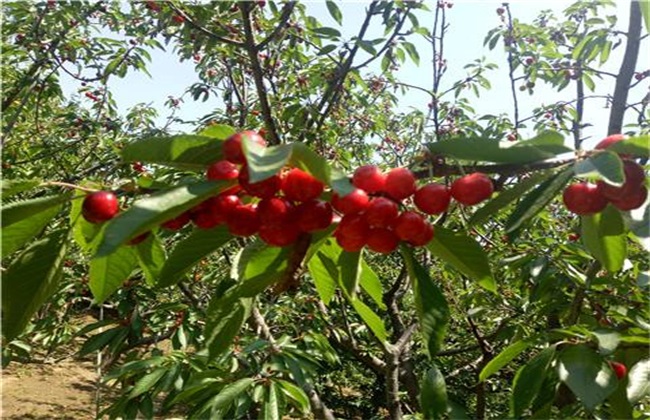
Detailed Explanation of the Key Points of Pollution-Free Fertilization Techniques for Cherries
Pollution-Free Fertilization Techniques for Cherries
-

Detailed Explanation of Key Management Techniques for Pollution-Free Peach Cultivation
Peach is a famous fruit variety in China. Because it is rich in various vitamins, it is deeply loved by the general public, and its cultivation is also relatively widespread. 1. Garden plot selection: For establishing a peach orchard, choose a site with high and dry, level terrain and deep sandy loam soil. The soil should be fertile, with high organic matter content, good aggregate structure, and abundant groundwater resources, so that it can be irrigated in drought and drained in waterlogging, with complete irrigation and drainage facilities. Avoid establishing an orchard on continuously cropped land or alkaline soil. 2. Requirements for environmental conditions: 1. Temperature: Peach trees
-
Detailed Explanation of Management Techniques for Adult Pollution-Free Pear Orchards
February to March - Bud Break and Blooming Period 1. Apply bud-break fertilizer: In mid-to-late February, before the pear trees bud, apply 1000 kg of decomposed farmyard organic fertilizer per mu, supplemented with a quick-acting multi-element compound fertilizer based mainly on nitrogen, phosphorus, and potassium to improve quality. The application amounts of nitrogen, phosphorus, and potassium account for 35%, 30%, and 15% of the annual usage respectively. In addition, add 1.5% borax to the total amount to improve flower quality. 2. Irrigation: Irrigate once each before and after blooming in a timely manner to promote budding and uniform blooming. 3. Flower and fruit preservation: (
-
Key Technical Points for Fertilization in the Production of Pollution-Free Fruit
1. The use of organic fertilizers, commercial organic fertilizers, and microbial fertilizers is encouraged. On the premise that chlorine-containing compound fertilizers and nitrate nitrogen fertilizers are prohibited, chemical fertilizers are permitted to be used according to the following two principles. (1) Chemical fertilizers must be applied in combination with organic fertilizers, and the amount of inorganic nitrogen applied should not exceed the amount of organic nitrogen used. (2) Chemical fertilizers may also be applied in combination with organic fertilizers and compound microbial fertilizers, with the formula being 1000 kg of barnyard manure, 5-10 kg of urea or 20 kg of diammonium phosphate, and 60 kg of compound microbial fertilizer; the final topdressing must be carried out 30 days before charging.
-
What are the pollution-free control methods for the jujube looper moth?
The control principle is to make use of its characteristics of overwintering under the tree and the wingless female moth, strengthen control efforts under the tree, and eliminate or stop the female moths from climbing the tree to lay eggs. Large-scale control can reduce the insect population by 80%-90%. On this basis, to eliminate the larvae that slip through the net on the tree, pollution-free pesticides can be used for control. 1. Artificial pupa digging. Before the adults emerge in spring, turn the soil within 1 m around the tree and 15 cm deep to dig out pupae, collect the pupa clumps and dispose of them in a centralized manner. You can also deep-plow the tree in autumn to destroy its overwintering sites so that it cannot
-
Detailed Explanation of Key Points of Pollution-Free Pear Bagging Technology
① Bag selection: The selection of paper bags for pear bagging should be reasonably made according to the tree growth conditions in the orchard, production goals, and economic capacity. Since the main purpose of bagging pears is to improve the smoothness and finish of the fruit surface, lower-cost single-layer bags can be chosen, such as Kaixiang bags, Tianjin bags, etc.; for those aiming to improve quality, double-layer bags with a black inner bag can be chosen. ② Bagging period: Pears should be bagged after fruit thinning is completed in early to mid-May; the best bagging time is on sunny days from 9:00 to 11:00 in the morning and from 2:00 to 6:00 in the afternoon. ③ Bagging
-
Key Technical Points for Pollution-Free Pest and Disease Control in Strawberries
Symptoms: Strawberry black mold mainly affects nearly ripe fruit. If harvested fruit is not promptly handled and packaged, it is even more susceptible to infection, causing large-scale fruit rot. When the disease first appears, the fruit surface shows light brown water-soaked lesions, which then rapidly soften and rot, producing a gray cotton-like growth, on which granular black mold develops, namely the mycelium and conidia...
-
Detailed Explanation of Pollution-Free Cultivation Techniques for Strawberries in Plastic Greenhouses
(1) Variety selection: Choose varieties with early flower bud differentiation, shallow dormancy, and good cold resistance in low-temperature seasons, such as Chunxiang, Fengxiang, Lihong, Mingbao, Jingbao, Nyoho, and Hokowase. (2) Cultivating strong seedlings: 1. Carefully select mother plants. In March-April of the current year, select plants from the strawberry production greenhouse with vigorous growth, good inflorescence fruiting, few deformed fruits, well-developed root systems, and no pests or diseases as mother plants. Plant them in a dedicated seedling nursery to cultivate and propagate runner seedlings. Apply 2000-3000 kg of organic fertilizer and 10 kg of compound fertilizer per mu in the nursery. Make beds 2 m wide, with a planting row spacing of 1 m and a plant spacing of 0.3-0.4 m. After they establish, apply nitrogen fertilizer as early as possible, keep the soil moist, and remove all inflorescences that appear to promote runner growth.
-
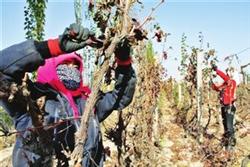
Grape Variety Introduction and Key Points of Pollution-Free Cultivation Techniques
The period for winter pruning of grapes is generally best carried out from early November to mid-February of the following year, that is, from 2 to 3 weeks after leaf fall to 3 to 4 weeks before spring bleeding occurs. Pruning too early will affect the return flow of nutrients, while pruning too late tends to cause bleeding. Bleeding often affects the sprouting of buds and impacts growth and fruiting. Now mainly...
条件筛选