-

Harvesting and Processing Techniques for Pollution-Free Honeysuckle
Honeysuckle is a perennial, semi-evergreen woody vine of the Caprifoliaceae family, Lonicera genus, also known as Erhua, Shuanghua, etc., and is a precious traditional Chinese medicinal herb. Because of its remarkable heat-clearing and detoxifying effects, as well as its role in lowering blood pressure and delaying aging, it is hailed as a traditional Chinese medicine antibiotic and an elixir of immortality. The production and development of honeysuckle have increasingly attracted people's attention. The harvesting and processing of honeysuckle are the last two "procedures" in the production chain, and also the final guarantee of "high yield, high efficiency, quality, and safety." In recent years, the Fengqiu County Agriculture Bureau of Henan Province, in order to improve
-
Pest and Disease Control Techniques for Artificial Pollution-Free Cultivation of Goji Berry
Goji berry (Lycium barbarum) is a perennial shrub, and its pests and diseases are generally mild. In production, the main diseases of goji berry are powdery mildew, rust, and root rot. A 0.2% baking soda solution can effectively control powdery mildew and rust while also avoiding pesticide residues. The main insect pests of goji berry are red spider mites and peach aphids. Fresh red chili peppers or dried red chili peppers 50g added to 50-100kg of water, boiled for about 30 minutes, and the filtrate sprayed on the plants has a very good control effect.
-
Honeysuckle: An Excellent Greening Plant That Is Both Medicinal and Pollution-Resistant
Honeysuckle is widely distributed in our country, from Liaoning in the north, Shaanxi in the west, Hunan in the south, to Yunnan and Guizhou in the southwest. It is a woody vine, evergreen, fragrant flower that grows wild in the mountains and is widely cultivated in gardens. In small courtyards, they can climb walls and reach into the air, expanding green coverage; in summer they also bring fragrance throughout the courtyard, which can ease the restlessness of summer heat. Honeysuckle belongs to the genus Lonicera in the family Caprifoliaceae. Its paired, inch-long tubular axillary flowers bloom side by side; when they first open, both stamens and petals are white, as white as jade, and after two or three days they
-
Detailed Guide to Pollution-Free Greenhouse Cultivation Techniques and Growing Conditions for Reishi Mushroom
Reishi mushroom has been regarded since ancient times as a symbol of auspiciousness, preciousness, beauty and longevity, and is known as the "immortal herb" and "auspicious herb." Traditional Chinese medicine has long regarded it as a precious Chinese herbal medicine that nourishes and strengthens the body and supports vital energy. Today, with the rapid development of the edible mushroom industry, large-scale artificial cultivation is no longer difficult. 1. Conditions required for growth and development. Reishi mushroom is a wood-rotting fungus. In artificial cultivation, broadleaf tree branch wood, sawdust, cottonseed hulls and corn cobs are used as the main materials, with wheat bran, cornmeal and rice bran added as supplements.
-
Detailed Explanation of Pollution-Free High-Yield Cultivation Techniques for Goji Berry in Greenhouses
Goji berry (Lycium barbarum) is a perennial deciduous small shrub of the genus Lycium in the Solanaceae family. Its tender shoots and leaves (also known as goji tips) are eaten as a vegetable and can be stir-fried, served as a cold dish, or used in soups. They are nutritious, delicious and refreshing, and are highly favored by consumers. Lishui County, Jiangsu Province began introducing and cultivating it in 2002. The products are mainly sold to large and medium-sized cities such as Shanghai, Nanjing and Wuxi, and demand in the market exceeds supply, achieving relatively high economic returns. The pollution-free high-yield cultivation techniques for goji berry in greenhouses are introduced as follows: 1. Variety selection: Choose the large-leaf goji. This variety has large, green, oval-shaped leaves, with leaves
-
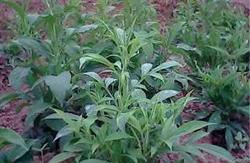
Detailed Explanation of Key Points for Pollution-Free Cultivation Techniques of Atractylodes macrocephala
Atractylodes macrocephala is distributed in the wild in Zhejiang, Jiangxi, Hunan, Hubei and Shaanxi, and can be cultivated in these provinces as well as in North China. Loose, fertile sandy loam with good water permeability is favorable for the growth of its root system and suitable for planting Atractylodes macrocephala; overly heavy, waterlogged soil or sandy soil with poor fertilizer retention is not suitable for planting it.
条件筛选