Key Points of Pollution-Free Pest Control Techniques in Welsh Onion Fields
I. Onion thrips, also known as small white insect or tobacco thrips. Adults and nymphs use their rasping-sucking mouthparts to suck sap from within the leaves, causing many fine, dense, long yellowish-white spots to form on the onion leaves. In severe cases, the leaves turn yellow and white, twist, die, and droop, seriously affecting the yield and quality of welsh onion. 1. Occurrence pattern. Onion thrips...
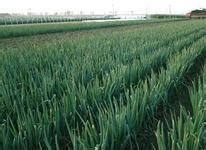
I. Onion thrips
Also known as small white insect or tobacco thrips. Adults and nymphs use their rasping-sucking mouthparts to suck sap from within the leaves, causing many fine, dense, long yellowish-white spots to form on the onion leaves. In severe cases, the leaves turn yellow and white, twist, die, and droop, seriously affecting the yield and quality of welsh onion.
1. Occurrence pattern. Onion thrips can occur throughout the year, with 3-10 generations per year. They overwinter as adults or nymphs (mainly adults) in the leaf sheaths of welsh onion, in soil cracks, and in fallen leaves, or among weeds and in onion fields covered with grass or manure. The suitable environment for damage on onion is: temperature 23-28°C, relative humidity 40-70%. Above 38°C, nymphs die successively, and damage is reduced under conditions of high temperature and high humidity. Onion thrips generally begin to reproduce and cause damage in spring, with the most severe damage from late May to early June. After July, with more rainfall, damage is lighter. Adult onion thrips are afraid of light and mainly cause damage at night, generally causing damage in shaded places during the day.
2. Control measures
(1) Clear away overwintering sites of onion thrips to reduce overwintering sources. When preparing the land before planting, promptly clear weeds in the field and the residual plants and dead leaves of the previous crop, and bury them deeply or burn them in a centralized manner to reduce overwintering sites for onion thrips. During the growth period of welsh onion, weed and cultivate frequently to reduce sites for onion thrips to inhabit and breed.
(2) Change field environmental conditions to suppress pest occurrence. During early spring drought, irrigate promptly, using the method of frequent light watering to increase field humidity and suppress damage by onion thrips.
(3) Trap and kill adults to reduce population density. Use white oil boards to trap and kill onion thrips. Method: use white cardboard, cover it with a plastic film bag, apply medicated oil on both the front and back sides (add a little zinc phoxim to the oil), position the prepared white boards at a height of 50 cm above the ground with a spacing of 7 m, and on sunny days between 9-12 a.m., fix them with the white board facing southwest. This has a very good trapping and killing effect.
(4) Chemical control. You may use 50% dimethoate emulsifiable concentrate, 50% malathion, 50% cartap wettable powder at 1000-fold dilution, and 25% mie shabi emulsifiable concentrate at 6000-fold dilution in rotation, spraying alternately. Each pesticide may be sprayed only once during one growing season of welsh onion. In addition, stop using the pesticide 10-15 days before harvest. This reduces pesticide residues in welsh onion products and brings product quality up to standard.
II. Onion leafminer
Also called leafminer fly or leaf maggot. The larvae spend their entire lives tunneling in twisting paths within the leaves, feeding on the mesophyll. On the leaf surface, winding snake-like tunnels can be seen. After the mesophyll is consumed, only two layers of white transparent leaf epidermis remain. In severe cases, one leaf is damaged by multiple larvae, and a large amount of mesophyll is consumed, seriously affecting photosynthesis.
1. Occurrence pattern. It occurs 3-5 generations per year, overwintering as pupae in damaged welsh onion leaves and in the soil. Early May is the peak period of adult occurrence. Adults lay eggs scattered within the leaf tissue of welsh onion in the evening. The eggs are white, and after 4-5 days larvae hatch and begin feeding and causing damage within the leaves. June is the peak damage period. Mature larvae pupate at one end of the tunnel, and after pupation they break through the leaf epidermis and begin emergence. Because onion leafminer larvae always cause damage within the leaves, air humidity has little effect on their growth and development, but temperature has a greater effect. In hot weather, development is poor and damage is lighter.
(1) Clean the field to eliminate pest sources. Before planting and after harvest, promptly remove residual leaves and dead leaves from the field, take them out of the field to burn or bury deeply, and deep plow and irrigate in winter to eliminate overwintering pest sources.
(2) Trap and kill adults. You may use 100 g each of brown sugar and vinegar, add 1000 g of water and boil, add 40 g of trichlorfon, stir until uniform, then evenly mix onto 40 kg of dry grass and tree leaves, and scatter into the field to trap and kill adults.
(3) Chemical control. Seize the period when spraying is most effective, during the peak egg-laying period of adults or the early larval hatching period, to kill adults and eggs. From early May, spray insecticide and ovicide once a week. Tobacco-lime water can also be used to kill eggs. Preparation method: soak 0.5 kg of tobacco leaves in 20 kg of clean water for one day and one night, then filter out the tobacco leaves and tobacco residue; then use 10 kg of water to slake 0.25 kg of quicklime into lime milk, and filter again. Before use, mix the tobacco leaf water and lime milk evenly, and it is ready for use. During the peak adult occurrence period, use 40% dimethoate emulsifiable concentrate at 1000-1500-fold dilution, 50% trichlorfon at 800-fold dilution, and 25% mie shabi emulsifiable concentrate at 6000-fold dilution in rotation, spraying alternately. Each pesticide may be sprayed only once during one growing season of welsh onion. In addition, stop using the pesticide 10-15 days before harvest.
III. Onion root maggot
1. Occurrence pattern. It occurs 3 generations per year, overwintering as pupae or larvae. The damage period of the 1st-generation larvae is in mid-May, the damage period of the 2nd-generation larvae is in mid-June, and the damage period of the 3rd-generation larvae is in mid-October. Adults are most active at noon and concentrate to lay eggs in onion and garlic fields. The egg stage is generally 6 days, and the larval stage is generally 17-20 days. Mature larvae pupate in the soil and overwinter.
2. Control techniques
(1) Fertilize to repel maggots. Onion maggots are saprophagous. Various manure fertilizers and cake fertilizers and other farmyard manures applied to the field must be fully decomposed to reduce pest gathering. Apply more river mud, kang soil, and old house soil as base fertilizer. River mud, kang soil, and old house soil have odors that onion maggots dislike and have a maggot-repellent effect.
(2) Eliminate overwintering larvae and pupae. For winter fallow plots used for cultivating early onion, perform deep plowing in late autumn to sun-dry and kill some overwintering larvae and pupae. In addition, winter irrigation can also effectively kill some overwintering pupae.
(3) Use sugar-vinegar liquid to trap and kill adults. Use 0.5 kg of brown sugar, 0.25 kg of vinegar, 0.05 kg of liquor, 0.5 kg of clean water, and add a little trichlorfon. Pour the prepared sugar-vinegar liquid into basins, keep it 5 cm deep, and place it in the field.
(4) Chemical control. During the peak adult occurrence period, spray 21% mie shabi emulsifiable concentrate at 3000-4000-fold dilution at noon; 2.5% deltamethrin emulsifiable concentrate at 3000-fold dilution; each pesticide should be sprayed once during one growing season of welsh onion, and stop using the pesticide 10-15 days before harvest. When transplanting onion seedlings, dip the roots in 75% phoxim emulsifiable concentrate at 500-fold dilution to control larval damage.