Fertilization technical specifications for pollution-free cultivation of yam
As long as several main aspects of production management are handled well, the planting benefits of yam will be greatly improved. In yam cultivation management, the key points are the application of base fertilizer, loose soil, treatment of yam seed pieces, timely topdressing, disease control, and taking measures to promote the growth of the rhizome as much as possible. 1. ...
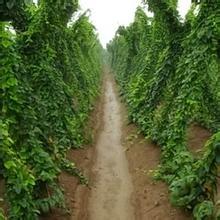 ① Propagation techniques: Yam propagation is divided into two types: sexual propagation and asexual propagation. Sexual propagation is mainly used in cross-breeding to obtain new high-yield, high-quality variety types; because it takes a long time, it is generally not suitable for use in production. Asexual propagation includes the tuber cut-piece propagation method, terminal bud propagation method, etc. Fertilizer and water management techniques are the same as those in the field.
② Field cultivation fertilization techniques: a. Land preparation and fertilization, timely planting: Yam's absorbing roots enter the soil relatively shallowly while the tubers enter the soil relatively deeply. Therefore, be sure to choose sandy loam or loam with deep, loose soil layers that has not been continuously cropped within 3 years. In the previous winter, plow more than 35 cm deep, and after spring begins, plant on high beds or in furrow ridges. Because yam's main absorbing root system is distributed in the upper soil layer, the base fertilizer should be applied shallowly in the surface soil layer, using the method of first planting the seed pieces and then turning the soil to apply fertilizer. For the base fertilizer, dried manure, plant ash, or farmyard compost mixed evenly with soil is suitable. Manure should first be decomposed. Generally apply 30000-60000 kg/ha, apply 300-375 kg/ha urea, 225 kg/ha superphosphate, and 375-525 kg/ha potassium sulfate. In areas with a relatively short frost-free period, in order to extend its field growth period and improve yield and quality, the method of raising seedlings and transplanting can be adopted, using protective facilities for seedbed seedling cultivation, and then transplanting to the field at the appropriate time. b. Skillful topdressing: In the early stage, yam mainly grows aboveground stems and leaves, the underground stem grows relatively slowly, and the fertilizer requirement is also relatively small. Therefore, from sowing or transplanting until the vines develop, a large amount of decomposed manure can be applied. Generally, from the time of full seedling emergence or after transplanting and survival, apply one application of dilute manure urine at about 15000 kg/ha. After that, apply once every 20-30 days, each time applying decomposed manure urine fertilizer at 15000-22500 kg/ha or ternary compound fertilizer at 225-300 kg/ha in furrows. After the plant buds, while the underground tuber is rapidly elongating, it also gradually enters a period of expansion, thickening, and weight gain, and the fertilizer requirement increases sharply. At this time, heavily apply a mixed liquid of relatively concentrated human manure urine and cake fertilizer at 30000-60000 kg/ha or three-element compound fertilizer at 600-750 kg/ha. This topdressing is the key fertilizer application with the greatest impact on tuber yield. Later, when the stems and vines cover the trellis, if fertilizer deficiency is found, apply fertilizer once more, with an amount smaller than the previous application. The last application is 40 days before harvest, depending on the plant's growth vigor, to supplement fertilizer once in order to improve tuber yield and quality. After Frost's Descent, when the aboveground stems and leaves turn yellow and withered, harvest promptly.