Grape Variety Introduction and Key Points of Pollution-Free Cultivation Techniques
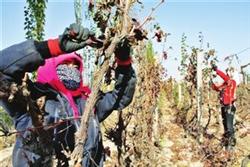
The period for winter pruning of grapes is generally best carried out from early November to mid-February of the following year, that is, from 2 to 3 weeks after leaf fall to 3 to 4 weeks before spring bleeding occurs. Pruning too early will affect the return flow of nutrients, while pruning too late tends to cause bleeding. Bleeding often affects the sprouting of buds and impacts growth and fruiting. Now mainly...
 Based on Beijing's ecological and environmental conditions and the geographical advantages of its metropolitan suburbs, this technique positions the products as high-grade (with quality as the first element), safe (based on pollution-free production, gradually transitioning to green and organic production), and achieving year-round supply (rational matching of early, mid-season, and late varieties, and developing protected cultivation to advance or delay the grape harvest period).
Core technical content (1) According to variety characteristics, select reasonable trellis types and tree forms: hedgerow trellis with regular fan-shaped training (such as Muscat Hamburg) and pergola trellis with cordon training (such as Kyoho and Red Globe); combined with tree form standardization pruning and year-round tree management measures, different varieties adopt different methods of bud thinning, topping, and lateral shoot management, and reasonably carry out fruit-bearing shoot renewal to achieve scientific high and stable yields. (2) Directed cultivation: according to variety characteristics, target yield, planting density, single cluster weight, and single berry weight, determine the number of clusters and fruits retained per plant. Scientifically thin flowers and fruits to control yield and improve fruit quality. (3) According to the orchard's function (referring to whether it is a sightseeing and picking orchard), scientifically and reasonably select planting varieties, with ecological adaptability and excellent quality as the first selection factors. (4) Rational matching of early, mid-season, and late-maturing varieties: select early, mid-season, and late-maturing varieties in a reasonable ratio of 3:4:3, with the open-field fresh fruit harvest period lasting 2.5-3 months; heated greenhouses, solar greenhouses, and ordinary plastic tunnels can advance the supply period of early-maturing varieties by 2 months, 1 month, and half a month respectively, and cold tunnel cultivation can delay the harvest period of late-maturing grapes to around New Year's Day. The overall fresh fruit supply period is extended to 6-7 months. (5) Starting with cutting disinfection and planting virus-free seedlings, based on plant quarantine and agricultural control, combined with physical control and biological control, and scientific use of chemical pesticides, effectively control the harm of diseases and insect pests.