-

Detailed Explanation of the Mimic-Wild Pollution-Free Cultivation Technique for Edible Fungi
Using rice straw or wheat straw for mimic-wild pollution-free cultivation of edible fungi requires no special equipment, no cutting or crushing, and no added supplements. Simply soak the straw in water in measured amounts, and oyster mushrooms (Pleurotus ostreatus), Phoenix mushrooms (Pleurotus sajor-caju) and other edible fungi can be cultivated on a large scale outdoors in a mimic-wild manner, giving artificially grown products the color and flavor of wild mushrooms. With this technique, 4000-5000 kg of straw can be used per mu, while the cost is only about 1000 yuan. Crops such as corn, sunflowers, melons and beans can also be appropriately interplanted in the mushroom-growing beds, giving considerable benefits and great potential for increasing yield. Raw material treatment
-
Detailed Guide to Pollution-Free Greenhouse Cultivation Techniques and Growing Conditions for Reishi Mushroom
Reishi mushroom has been regarded since ancient times as a symbol of auspiciousness, preciousness, beauty and longevity, and is known as the "immortal herb" and "auspicious herb." Traditional Chinese medicine has long regarded it as a precious Chinese herbal medicine that nourishes and strengthens the body and supports vital energy. Today, with the rapid development of the edible mushroom industry, large-scale artificial cultivation is no longer difficult. 1. Conditions required for growth and development. Reishi mushroom is a wood-rotting fungus. In artificial cultivation, broadleaf tree branch wood, sawdust, cottonseed hulls and corn cobs are used as the main materials, with wheat bran, cornmeal and rice bran added as supplements.
-
A Detailed Guide to Pollution Prevention Methods for Continuous Cultivation of Edible Mushrooms
In edible mushroom production, continuous cultivation leads to an increasing buildup of contaminant microorganisms, causing the success rate of mycelial colonization to drop sharply, and the fruiting period also becomes highly susceptible to disease infection. In mild cases this reduces yield; in severe cases it leads to total failure. So, in continuous edible mushroom cultivation, how can contamination be prevented? In edible mushroom production, the contaminant microorganisms that appear have a certain degree of host specificity. Contaminants of oyster mushroom (Pleurotus ostreatus) do not affect shiitake (Lentinula edodes), contaminants of shiitake do not affect wood ear (Auricularia heimuer), and so on; even among different varieties of the same type, cross-infection is not easy. Therefore, attention should be paid to rotating varieties.
-
Pollution-Free Control Methods and Technical Key Points for Edible Mushroom Diseases
In the process of edible mushroom production, as long as management is carried out according to the biological characteristics of the selected mushroom strain, physiological diseases will not occur. When infectious diseases occur, pesticides must be applied in accordance with pollution-free requirements, with prevention as the priority, and never use pesticides casually. Long-stemmed mushrooms and unopened caps are typical symptoms of oxygen deficiency, especially when semi-underground mushroom sheds are used for cultivation. This phenomenon occurs commonly, severely reducing mushroom quality and affecting production efficiency. Solution: strengthen ventilation management. In low-temperature seasons, open the ventilation openings and door between 10 AM and 2 PM.
-
Detailed Explanation of the Code of Practice for Pollution-Free Breeding of Domestic Fish
I. Pollution-Free Management and Cultivation of Broodstock 1. Requirements for the breeding base: no pollution from the three types of waste; the atmospheric environment must comply with the requirements of "GB3095-1996 Ambient Air Quality Standard"; the soil environment must comply with the requirements of "GB15618-1995 Soil Environmental Quality Standard"; and the aquaculture water must comply with the requirements of "NY5051-2001 Pollution-Free Food Freshwater Aquaculture Water Quality Standard". 2. Broodstock ponds should have an area of 5-15 mu and a water depth of 1.5-2.5 m. The ponds should be exposed to the sun and then strictly disinfected with quicklime and other substances before use.
-
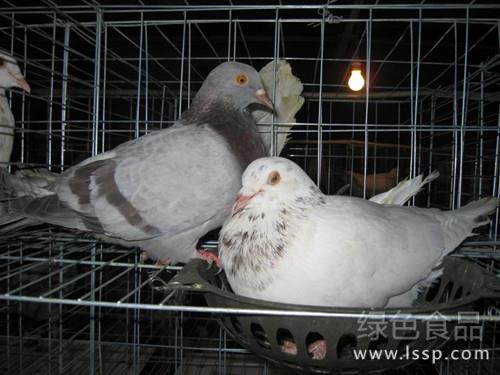
Pollution-free squab farming and management methods make green food more popular with the public
Green food is more popular with the public: pollution-free squab farming and management methods
-
Detailed Guide to Pollution-Free Cultivation Techniques for Lion's Mane Mushroom (Hericium erinaceus)
I. Site Selection. Choose an environment with a sound ecological setting, excellent water quality, no toxic or harmful gases, no various sewage or other pollution sources within 300 meters, and in compliance with NY5010 pollution-free cultivation requirements. II. Cultivation Season. Late September of the current year to early January of the following year. III. Ingredients and Bottling (Bagging) 1. Cultivation substrate formulas. ① Cottonseed hulls 55%, wheat bran, sawdust, and rice bran 10% each, cornmeal 7%, cottonseed cake 5%, superphosphate 2%, gypsum 1%; ② Corncob residue 55%, wheat bran, sawdust
-
Detailed Guide to Pollution-Free Cultivation Techniques for Lion's Mane Mushroom (Hericium erinaceus)
I. Site Selection: Choose an environment with a sound ecological setting, good water quality, no toxic or harmful gases, no various types of sewage or other pollution sources within 300 m around, and in compliance with the NY5010 pollution-free cultivation requirements. II. Cultivation Season: Late October of the current year to early January of the following year. III. Ingredient Mixing and Bottling (Bagging) 1. Cultivation substrate formulas: (1) 55% cottonseed hulls, 10% each of wheat bran, sawdust and rice bran, 7% cornmeal, 5% cottonseed cake, 2% superphosphate, 1% gypsum; (2) 55% corncob residue, 10% each of wheat bran, sawdust and rice bran,
-
Detailed Explanation of Pollution-Free High-Yield Cultivation Techniques for Goji Berry in Greenhouses
Goji berry (Lycium barbarum) is a perennial deciduous small shrub of the genus Lycium in the Solanaceae family. Its tender shoots and leaves (also known as goji tips) are eaten as a vegetable and can be stir-fried, served as a cold dish, or used in soups. They are nutritious, delicious and refreshing, and are highly favored by consumers. Lishui County, Jiangsu Province began introducing and cultivating it in 2002. The products are mainly sold to large and medium-sized cities such as Shanghai, Nanjing and Wuxi, and demand in the market exceeds supply, achieving relatively high economic returns. The pollution-free high-yield cultivation techniques for goji berry in greenhouses are introduced as follows: 1. Variety selection: Choose the large-leaf goji. This variety has large, green, oval-shaped leaves, with leaves
-
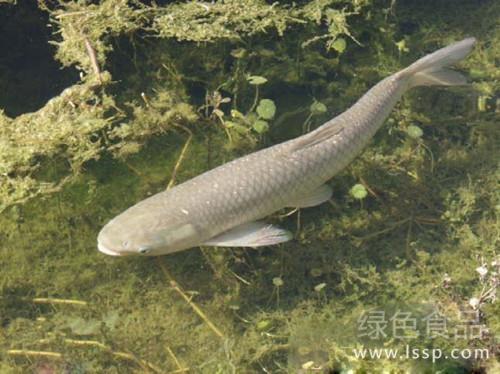
Key Technical Points for Polyculture of Grass Carp and River Snails: Fat Fish, Abundant Snails, and No Pollution
Fat Grass Carp, Abundant River Snails, and No Pollution: Key Technical Points for Polyculture of Grass Carp and River Snails
条件筛选