-
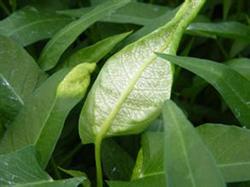
What are the key points for pollution-free control of white rust in water spinach?
Symptoms: The lesions appear on the underside of the leaves. On the upper surface of the leaves, pale yellow to yellow spots first appear, then gradually turn brown. The lesions expand, and on the underside of the leaves white raised blister-like spots form, nearly round or oval to irregular in shape, sometimes merging into larger blisters. In the later stage, the blisters rupture and release white sporangia. When the leaves are severely affected, the lesions are dense and the diseased...
-
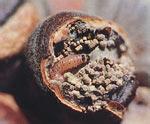
Detailed Explanation of Key Points for Pollution-Free Chestnut Cultivation Techniques
The larvae of the peach fruit borer in chestnuts bore into the nuts, filling the kernels with frass and making them unfit to eat, and also causing fruit drop, greatly affecting both yield and quality. Its hosts also include peach, plum, pear, sunflower, corn stalks, and others. Control methods: 1. Pick up fallen fruit, remove infested fruit, and destroy them. 2. Chemical control. Master the...
-
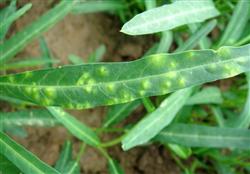
What are the key points for pollution-free control of white rust in water spinach?
Symptoms: The lesions appear on the underside of the leaves. On the upper surface of the leaves, pale yellow to yellow spots first appear, later turning brown. The lesions expand, and on the underside of the leaves white raised blister-like spots form, nearly round or oval to irregular in shape, sometimes merging into larger blisters. In the later stage, the blisters rupture and release white, non-functional sporangia. When the leaves are severely affected, the lesions are dense and the diseased...
-
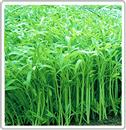
Detailed Explanation of Key Points of Pollution-Free Cultivation Techniques for Water Spinach
Water spinach, also called water convolvulus, tong cai, or rattan vegetable, is a fast-growing leafy green vegetable that has been actively introduced in various regions in recent years. Its leaves and tender stems are eaten, and it can be served cold-dressed, stir-fried, or boiled in soup. It is not only rich in nutrients but also has medicinal value such as clearing heat and detoxifying, promoting urination, and stopping bleeding. It has now become one of the specially needed vegetables for major hotels and restaurants....
-
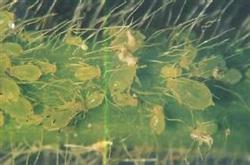
What are the pollution-free soybean diseases and their control methods?
The soybean aphid is one of the major pests of soybean, with adults and nymphs piercing and sucking sap on the top leaves, tender leaves and tender stems of the soybean plant. In severe cases they cover the stems and leaves, and can also attack tender pods, causing stunted plants, reduced fruiting branches and pod numbers, and lower 1000-grain weight; when severe at the seedling stage, the entire plant can die, and in outbreak years if not controlled in time...
-
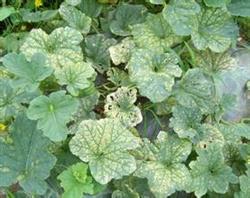
Pollution-free Disease and Pest Control Techniques for Muskmelon
The main pests harming melons include root maggots, mole crickets, cutworms, white grubs, leafminers, pumpkin beetles, aphids, and red spider mites, among others. (1) Root maggot: also called root maggot or melon maggot. It is the larva of the seed corn maggot. The body is about 5 mm long and maggot-shaped, damaging the young roots, young shoots, and tender stems of melon seedlings. Common control methods are as follows: ...
-
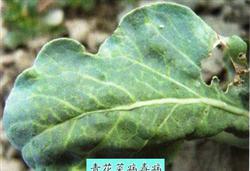
How to carry out pollution-free control of aphids on cauliflower-type vegetables
Viral disease is the main disease of broccoli, occurring commonly and severely. The disease patterns and control methods are described below: 1. Disease patterns: In areas where cruciferous vegetables are not planted in winter, the virus overwinters on stored Chinese cabbage, cabbage, radish, or overwintering spinach; where cruciferous vegetables are planted in winter,...
-
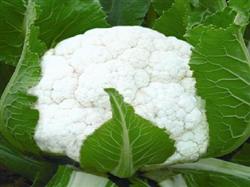
Detailed Explanation of Key Points of Pollution-Free Cultivation Techniques for Early-Maturing Cauliflower
Cauliflower has the characteristics of being palatable and delicious. Through two years of cultivation, Siyang County has mastered pollution-free cultivation techniques for early-maturing cauliflower. Variety selection: choose varieties according to local climate characteristics, such as Li Yuanfu, Shenliang Yidai, Shenlong Teda and other varieties with a growth period of 50-60 days. Sow at the appropriate time in the open...
-
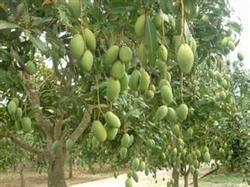
Detailed Explanation of Field Management Techniques for Pollution-Free Mango
I. It can flower and bear fruit in all four seasons of the year. The first crop flowers from late February to late March and the fruit ripens from late June to late July; the second crop flowers in late April and the fruit ripens in late July; the third crop flowers from late July to early August and the fruit ripens in late November; the fourth crop flowers in late September and the fruit ripens from March to April of the following year. II...
-
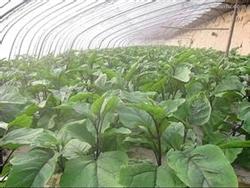
Detailed Explanation of Pollution-Free Production and Cultivation Techniques for Greenhouse Eggplant
1. Pollution-Free Cultivation Techniques for Early Spring Greenhouse Eggplant. In the Bozhou region, this crop of eggplant is raised as seedlings from early December and transplanted into early spring greenhouses in mid-February. 1.1 Selection of Excellent Disease-Resistant Varieties. The climatic characteristics of this cropping season are: weak light and low temperatures during the seedling-raising period, with temperature and light gradually...
条件筛选