-
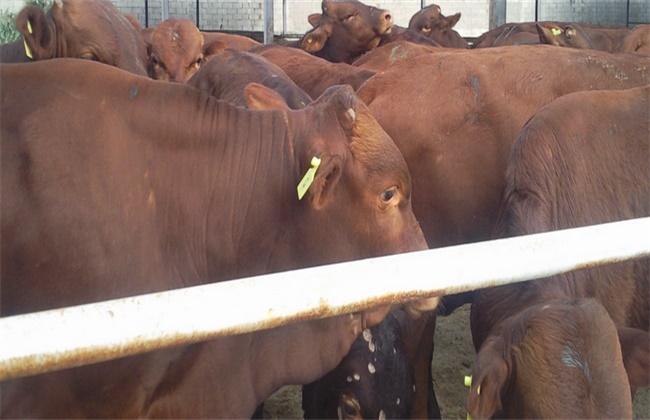
Detailed Explanation of Key Points of Pollution-Free Beef Cattle Farming Technology
Pollution-Free Beef Cattle Farming Technology
-
Pond tailwater becomes a source of aquaculture pollution, where should it go?
As environmental protection efforts intensify, higher requirements have been placed on the discharge of aquaculture pond tailwater, and with the water resource tax about to be introduced, aquaculture should explore new models,...
-

Key Points from the Seminar on Pollution-Free Fishery Product Certification
On August 14, at the 2007 National Pollution-Free Fishery Product Certification Exchange Seminar held in Shenyang, Liaoning Province, the person in charge of the Fishery Sub-center of the Agricultural Product Quality Safety Center of the Ministry of Agriculture stated: at present, China's fishery product certification rate (annual output of certified products/annual output of aquatic products) is still very low. In particular, in major fishery provinces with an annual output of more than 1 million tons, the certification rate is below 10%. China is a major fishery production country. In order to adapt to domestic and international consumption trends for fishery products and ensure the quality of fishery products
-
Pollution-Free Fish Disease Prevention and Control Methods and Technical Key Points
Animal-Plant Symbiosis: Aquatic plants and fish coexist in the same pond, and the fish rarely get sick. The aquatic plants planted in the fish pond are rice or lotus root, oriented east-west, with a wide row spacing (greater than 33 cm), occupying no more than 50% of the total water area, so that the lighting effect is good. The water depth depends on the water tolerance of the aquatic plants; rice is generally within 30 cm, while lotus root can generally reach over 50 cm. The farmed fish can be conventional or famous, special, and excellent new varieties. The farming method can be fry rearing or grow-out fish farming. Because residual bait, fish feces, and other matter deposit at the bottom of the pond, ferment, and rot, not
-
Confinement and Pollution-Free Feeding Management of Commercial Meat Donkeys
With the improvement of people's living standards, the demand for animal-based foods has gradually become more diversified and premium, and must also be green. Donkey meat and offal products are very popular. They are high in protein, low in fat, and delicious, and can be cooked into a variety of dishes. Since ancient times in China there has been a saying that "dragon meat in heaven, donkey meat on earth," which shows that people have long recognized donkey products. Donkey meat restaurants can be seen everywhere in some large, medium and small cities, but donkey meat has not yet made it onto ordinary people's dining tables. The reasons: first, resources are too few; second, very few are raised on a large scale;
-
Detailed Explanation of Key Technical Points for Pollution-Free Fish Storage and Transportation
The entire process of farmed aquatic products from pond to table is subject to safety and quality monitoring, of which storage and transportation is one of the important links. If errors occur in storage and transportation, the so-called pollution-free status will be lost at the final step. 1. The water quality used for storage and transportation shall comply with the relevant national regulations. During storage and transportation, fish should be handled gently and transported gently, avoiding squeezing and collision, and care should be taken not to let them dehydrate or lose ice. 2. Packaging containers should be non-toxic, odorless, clean, sturdy and have good drainage conditions. Live fish can be held in canvas buckets, live fish boxes or nylon bags with oxygen, while fresh fish use bamboo
-
Detailed Explanation of Research Progress on Low-Pollution Pig Diet Technology
[Abstract] Maximizing the production performance of each pig has always been a common goal pursued by producers and nutritionists. Therefore, general diet formulation gives little or no consideration to nutrient excretion, resulting in excessive nutrients (mainly nitrogen and phosphorus) being excreted with feces and urine. In recent years, public concern for the environment has grown increasingly strong. Through nutritional technology, improving the feed conversion efficiency of pigs and reducing waste (feces and urine) has become a hot topic in current swine science and nutrition research. By supplementing synthetic amino acids,
-
Pollution-free management key points for raising yellow catfish (Pelteobagrus fulvidraco) as a supplementary species in lotus ponds
Lotus ponds contain many benthic organisms, aquatic insects, plankton, and pond weeds, which can provide food for the fish, while the fish feces and leftover bait can provide fertilizer for the lotus, and the fish activity loosens the soil, providing good soil conditions for lotus growth. Because lotus leaves shade and block light, the light intensity in the lotus pond environment is relatively weak, which suits the yellow catfish's requirement for feeding and growth under low light. Pond construction. Choose a pond with abundant water sources, good water quality, fertile soil, flat terrain, convenient water intake and drainage, and strong water and fertilizer retention,
-
Key Technical Points for Disease Prevention and Control in Pollution-Free Fish Farming
Symbiosis of plants and animals: When aquatic plants and fish live together in the same pond, the fish rarely get sick. The aquatic plants planted in the fish pond are rice or lotus roots, arranged in an east-west direction, with wide row spacing (greater than 33 cm), occupying no more than 50% of the total water area so that the lighting effect is good. The water depth depends on the water tolerance of the aquatic plants; for rice it is generally within 30 cm, and for lotus roots it can generally reach more than 50 cm. The farmed fish can be conventional species or famous, special and improved new varieties. The farming method can be seedling breeding or adult fish farming. Because residual bait, fish feces and so on are deposited
-
How to determine if fish are suffering from pollution poisoning
Fish deaths can be caused by many factors such as disease, oxygen deficiency, toxic algae, mechanical injury, and pollution poisoning, and pollution poisoning is the most common type of fatal cause. Below are several methods for visually judging common types of pollution poisoning, for reference in production. Heavy metal pollution poisoning. Heavy metals refer to metals with relatively high density, such as lead, manganese, zinc, etc. The gills of poisoned fish appear grayish-white and secrete large amounts of mucus, forming flocculent deposits that block the gills and cause respiratory impairment; poisoned fish often float and swim at the water surface.
条件筛选