-
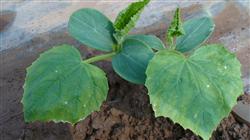
How to identify nutrient deficiencies in cucumbers from the plant itself
Cucumbers need a lot of fertilizer throughout their life. Besides applying a sufficient amount of base fertilizer (including farmyard manure and chemical fertilizer), you should also apply fertilizer in stages according to the growth of the cucumbers or the soil fertility status, and apply whatever nutrient is lacking. Some vegetable growers may rely on habit, and some may rely on experience, but actually, the simplest and fairly accurate...
-
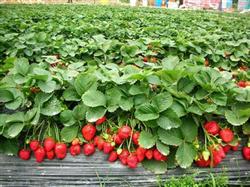
Detailed Guide to Identifying and Controlling Common Strawberry Pests and Diseases
Strawberries are grown under plastic film in greenhouses, where the high temperature and high humidity inside the greenhouse create even more favorable conditions for the occurrence of pests and diseases. The common pests and diseases of strawberry and their control measures are described below: I. Common diseases 1. Leaf spot. It mainly damages leaves, and the typical symptom is gray or grayish-brown round spots centered on the lesion, with purple...
-
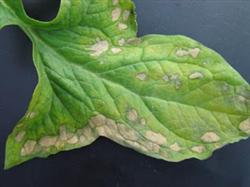
Detailed Guide to Identifying and Controlling Downy Mildew in Spinach
Downy mildew is a common disease of spinach, with severity varying from year to year. The spinach downy mildew pathogen is an obligate parasite that only infects spinach. I. Symptoms Spinach downy mildew can locally infect leaves and can also cause systemic infection. When leaves are locally infected, the affected areas first appear as pale green, water-soaked round spots, which then expand...
-
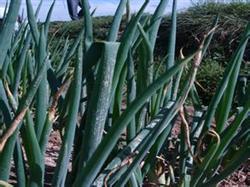
What are the main diseases of Welsh onion? A complete guide to identifying common types
Once the white pseudostem enters its vigorous growth period, the threat of pests and diseases also enters a high-incidence stage. The main pests and diseases are: purple blotch, downy mildew, soft rot, onion maggot, onion thrips, onion leaf miner, and beet armyworm. 1. Purple blotch: in the early stage of the disease, spray 75% chlorothalonil wettable powder at 500-600 times dilution, 58% metalaxyl-mancozeb...
-
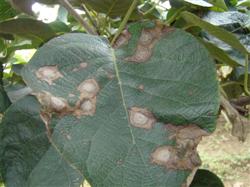
How to identify and control kiwifruit branch blight
Kiwifruit branch blight, also called water-loss branch blight, is a physiological disease caused by climatic factors. It refers to the sudden wilting and death of fruiting canes or vegetative canes when the fruit tree has not suffered artificial fertilizer damage or pesticide damage, nor pathological root rot, branch rot, canker, and other such conditions. 1. Disease symptoms...
-
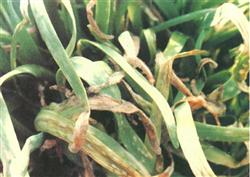
How to identify and prevent gray mold in Chinese chives? Growers, please pay attention
Gray mold is the main disease of Chinese chives in protected cultivation, seriously affecting the quality of Chinese chives marketed around the Spring Festival. Around the Spring Festival each year, the price of Chinese chives is generally at its highest of the year, and once the disease occurs it will cause relatively large economic losses to farmers. Therefore, preventing and controlling gray mold well is crucial for the production of Chinese chives in protected cultivation. 1. Onset...
-
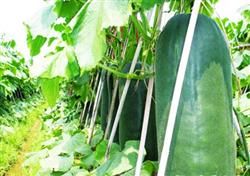
How to identify and control common diseases and pests of winter melon?
Spring-planted winter melon is rich in nutrients; every 100 grams of fresh melon contains 96.6 grams of water, 0.4 grams of protein, 19 mg of calcium, 12 mg of phosphorus, 18 mg of vitamin C and other nutrients. In recent years, demand for winter melon has been increasing in various places. Spring-planted winter melon has high yields, and some varieties can reach up to 10,000 kg, after...
-
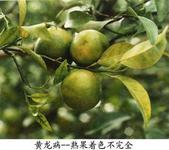
How to identify and control citrus huanglongbing (citrus greening disease)?
I. Symptoms The typical early symptom of a diseased tree is that 1-2 or several shoots with yellowing leaves appear in the deep green canopy. There are two symptom types of these yellowed shoots: one is uniform yellowing of the entire leaf, and the other is a leaf with one patch yellow and one patch green, alternating yellow and green, called the mottled type. The common feature of these two types of leaves...
-
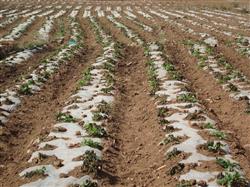
Differences Between Potato Frost Damage and Disease and How to Identify Them
Frost damage: Judging by the plant's outward appearance, after the plant is frozen, the leaves and heart leaves show no lesions, and the leaf color is dark green. When exposed to sunlight, the leaves appear wilted, as if they had been boiled. After 1 to 2 days, the leaf margins curl inward until they wither and crumble, but the new leaves growing from the heart leaf show no wilting symptoms. Disease: After the plant is affected...
-
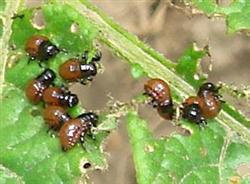
How do you identify and control Colorado potato beetle damage?
The Colorado potato beetle, also known as the Colorado potato leaf beetle, is a class I quarantine pest in China. This insect originally lived on wild solanaceous plants on the eastern slopes of the Rocky Mountains in the western United States. Because cultivated potatoes provide this beetle with good nutrition, and because potatoes are widely grown and transported around the world, ...
条件筛选