-

What to Do If a Pig Is Poisoned? Learn to Identify the Symptoms and Give Correct First Aid
How to give first aid for pig poisoning? What to do when a pig is poisoned? Which situations mean a pig has been poisoned?
-
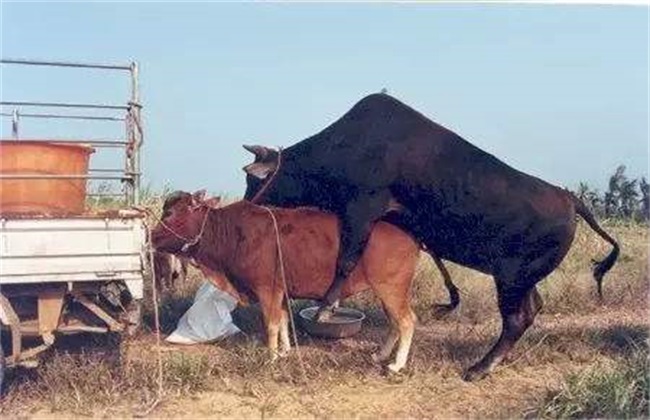
What are the signs of estrus in cows and the methods for identifying it
Signs of estrus in cows and identification methods
-
How do you identify male and female pigeons in meat pigeon farming?
In the process of farming meat pigeons, how do you identify male and female pigeons? Squab identification (1) Cloaca identification method: 4 to 5 days after the squab hatches, the upper edge of the male pigeon's cloaca covers the lower edge and protrudes slightly;...
-
How to quickly identify successful conception in sows? Practical tips for novice farmers
If you can determine early that a sow has conceived, you can take corresponding measures and management to avoid accidents. If she is not pregnant,...
-
How to Identify Wild Honey and a Detailed Explanation of the Beekeeping Process
We have kept bees for 30 years. In our hometown, Geshi, Ningyang, Tai'an, there is a base of ten thousand mu of jujube orchards. The jujube flower honey we collect has no processing or additives whatsoever. The jujube flower honey is all...
-

How to Identify the Quality of Fish Fry? Practical Aquaculture Tips
Sturdy and robust fish fry are an important foundation for increasing adult fish yields, and also one of the main conditions for improving the survival rate of fish fry. There are 5 main criteria for identifying the quality of fish fry...
-
A complete guide to aquatic plant species for crayfish farming, with pictures, to help farmers identify them
In the process of crayfish farming, the selection and care of aquatic plants is a relatively important part. Today I will briefly introduce the aquatic plants that can...
-

How do you identify centipede farming scams? Remember these five steps
Half of the companies running centipede farming scams claim in their promotional materials that investors only need to buy breeding stock and need almost no other investment. But in fact, investors...
-
How to identify fish species? Observing appearance and color is key
First, look at the size specifications of the fish species. Fish of the same species from the same pond should be uniform and even in size when harvested, with little difference in body length and weight. Conversely, poor-quality fingerlings with large individual differences and uneven sizes often result in very low overall survival rates due to competition for food, mixed genetic stock, poor rearing, and other reasons. Second, look at the body color of the fish species. High-quality fingerlings have vivid, glossy body colors. Generally speaking, high-quality silver carp fingerlings should have a silver-gray back and silvery-white sides and belly; high-quality grass carp fingerlings have a pale golden-yellow body color, with gray-black reticulated scales that are relatively prominent, and the more robust the fish, the more obvious the pale golden-yellow color; high-quality bighead carp fingerlings mostly have a pale golden-yellow body color, with black markings across the body not very prominent. If the fingerling's body color is relatively dark, or even blackish, it indicates that the fingerling is a weak fry or diseased fish; the gloss on the body surface of fingerlings is caused by the mucus layer covering the body surface, which is the fish's first barrier of defense against disease. Diseased fish or weak fry lack the mucus layer, and their body surface has no gloss.
-
What methods are there for identifying the health status of grown silkworms?
1. Smell with the nose. When entering the silkworm room, smell the odor in the room. If the room has only the fresh scent of mulberry leaves and no other strange odor, it indicates that the grown silkworms are disease-free. 2. Listen with the ears. After feeding mulberry leaves, if the sound of the silkworms eating mulberry leaves is heard like the rustling of light rain, it indicates that the grown silkworms are healthy. 3. Look with the eyes. Observe the body color of the silkworms. Healthy silkworms generally have a blue-white body color. Silkworms at the peak of feeding have tight, glossy skin and are lively in movement, raising their heads and thoraxes when resting; the dorsal vessel beats rhythmically; the group develops uniformly in size; the feces have a certain shape (except for mature silkworms),
条件筛选