Detailed Guide to Identifying and Controlling Common Strawberry Pests and Diseases
Strawberries are grown under plastic film in greenhouses, where the high temperature and high humidity inside the greenhouse create even more favorable conditions for the occurrence of pests and diseases. The common pests and diseases of strawberry and their control measures are described below: I. Common diseases 1. Leaf spot. It mainly damages leaves, and the typical symptom is gray or grayish-brown round spots centered on the lesion, with purple...
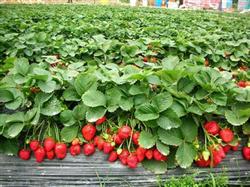
Strawberries are grown under plastic film in greenhouses, where the high temperature and high humidity inside the greenhouse create even more favorable conditions for the occurrence of pests and diseases. The common pests and diseases of strawberry and their control measures are described below:
I. Common diseases
1. Leaf spot. It mainly damages leaves. The typical symptom is gray or grayish-brown round spots centered on the lesion, surrounded by purple-brown, shaped like a snake's eye. This disease occurs easily in warm and humid conditions. Old leaves are affected first, gradually spreading to the whole plant. The disease is mild before flowering and fruiting, and breaks out in large numbers after harvest begins.
2. Powdery mildew. This disease can easily occur on the whole plant. When leaves are damaged, dark discolored spots of varying sizes appear, followed by a white powdery substance on the patches on the underside of the leaves. Later, reddish-brown lesions appear, and the leaf margins shrink and scorch. If fruits are affected early, they stop developing and dry up; if affected later, a layer of white powder forms on the surface. It can occur continuously throughout the entire growing season and causes enormous damage.
3. Gray mold. This is the main disease occurring after flowering. The pathogen first infects small fruits; the fruit surface in contact with the soil is affected first, then it spreads along the fruit stalk to the inflorescence stalk, causing dry rot and death. When it infects fruits that have already colored, water-soaked light brown patches appear and then turn dark brown, with a layer of gray mold forming on the surface, causing the fruit to become soft and rotten. The gray mold spreads with the wind to other fruits and causes disease.
4. Root rot. It starts from the lower leaves, with the leaf margins turning reddish-brown, gradually wilting upward until the plant dies. The lateral roots begin to turn black-brown in the middle and rot, and the central column of the root appears red.
5. Yellow wilt. Also known as bacterial wilt, at the initial stage of the disease the stems and leaves wilt during the day and recover in the evening. After 2-3 days they wilt and die. When the diseased stem is squeezed by hand, a cloudy white mucus flows out. The pathogen mainly overwinters in the soil with diseased plant residues and can survive for several years. When conditions are suitable, it invades through wounds on the roots or stems. Continuous cropping of strawberries or continuous cropping of vegetables and strawberries often leads to severe disease, even causing mass death and total crop failure.
II. Main control measures
1. Focus on comprehensive prevention. Strengthen field management, cultivate strong seedlings, practice 2-3 year crop rotation, transplant with soil on sunny days, avoid damaging roots and stems, cover with film and build greenhouses at the right time, manage diligently, promptly remove diseased fruits and dead old leaves, pull out diseased plants, and bury them deep or burn them in a centralized manner. Keep the strawberry plot clean and well ventilated. Pay attention to ventilation and air exchange inside the greenhouse to reduce humidity and the harm of waste gases.
2. Soil disinfection before planting. Before transplanting strawberries, pour a 600-fold dilution of 40% asparagus green powder on the bed surface, then cover with soil, level it, and transplant, so as to effectively kill pathogens in the soil, lower the base number of inoculum in the field, and reduce opportunities for infection.
3. Regular spraying for control. During the strawberry growing season, generally spray once every 10-15 days, each time using a mixture of 500-fold 40% asparagus green powder plus 150 PPM agricultural streptomycin. If disease occurs, also water the roots once, and repeat the spray after 4-5 days, spraying 2-3 times in succession. When yellow wilt occurs, add 250 PPM agricultural streptomycin. When humidity in the greenhouse is too high, do not spray; instead, fumigate with "Yixunling", and fumigate again after 7 days. If powdery mildew occurs, use a 1000-2000 fold dilution of 20% triadimefon. For gray mold, use a 1000-fold dilution of 50% procymidone alternately with the asparagus green solution for spraying, for a better effect.
III. Common pests and their control
The main pests of strawberry include aphids, red spider mites, and beet armyworm larvae. Aphids can be killed by spraying a 1000-fold dilution of 20% Yakexing; red spider mites can be controlled with a 2000-fold dilution of 2.5% Tianwangxing or 73% propargite; beet armyworm larvae can be killed by spraying a 1000-fold dilution of 5% Yitaibao.