-
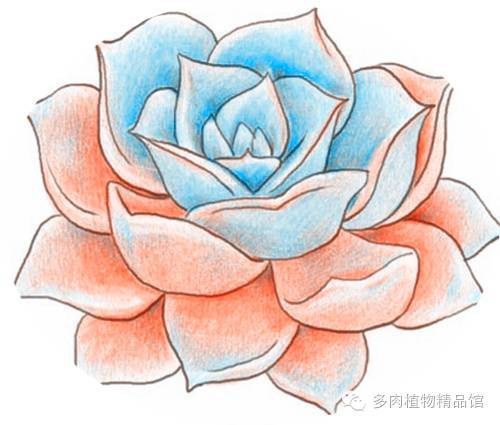
How do you tell the Echeveria elegans (Moon Shadow) succulents apart so you don't misidentify them?
Text and images: Qingmeng. Many succulent lovers have been growing Echeveria elegans (Moon Shadow) succulents for more than half a year and still cannot tell them apart. Today the editor will talk about the Echeveria elegans (Moon Shadow) line of succulents. The Echeveria elegans line is part of the Echeveria genus...
-
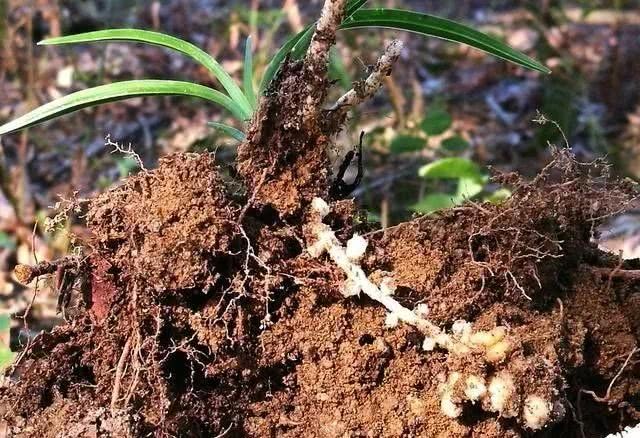
Identifying wild orchids is very simple, just remember this marker and you can't go wrong
Recently, a fellow orchid grower left a message on the platform asking: What is the difference between orchid dragon roots and dragon eggs? How are they different from ordinary orchid seedlings? Only wild orchids have dragon roots and dragon eggs. Regarding the formation of dragon eggs, the Baijiahao account Rural Search Society has a video explanation, they...
-
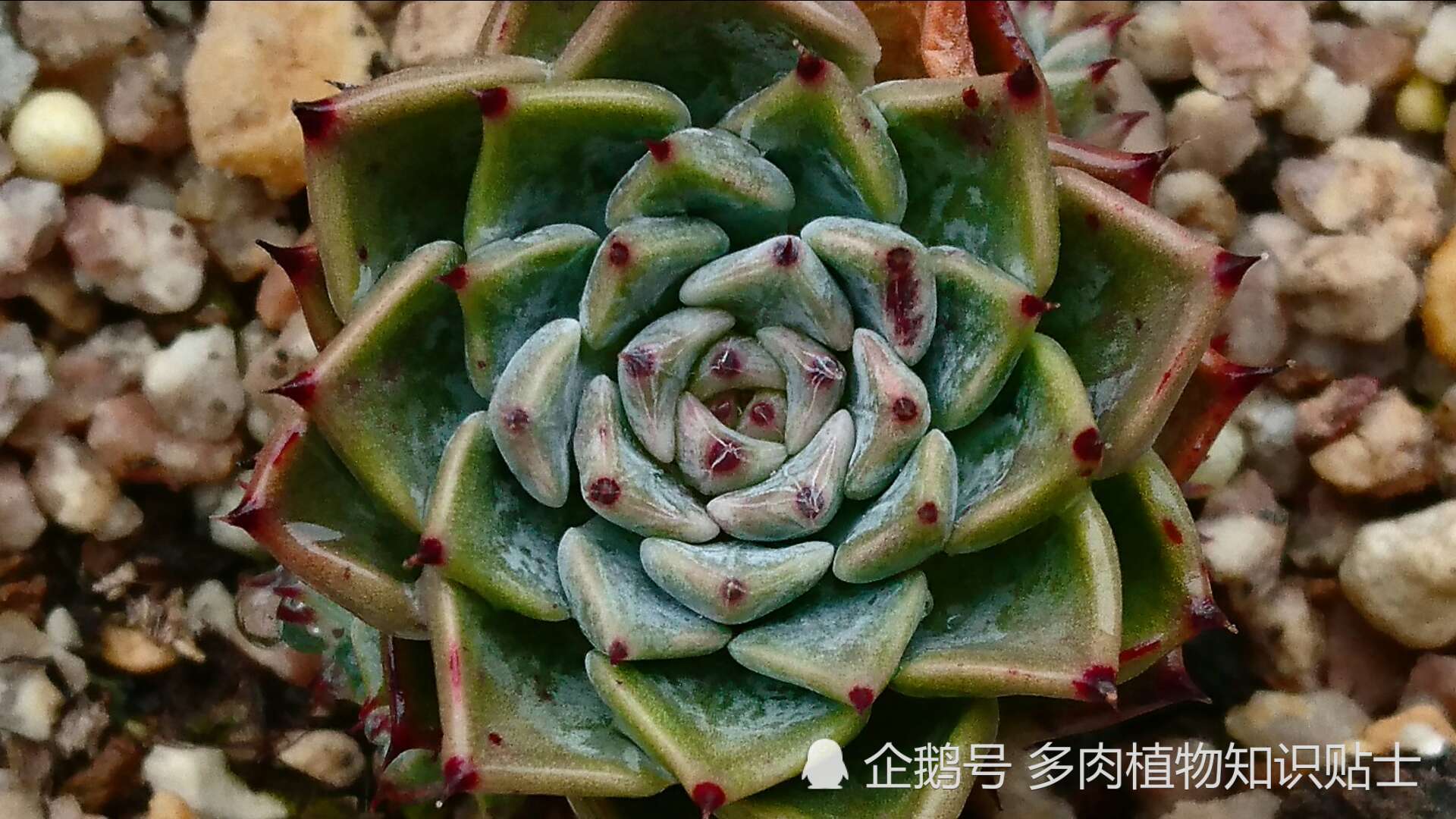
Succulent lovers, come quick - use the pictures to identify these Crassulaceae succulents
Thanks to Mashed Potato 720720 for the material. How many succulents do you recognize? How many succulents do you recognize? How many succulents do you recognize? How many succulents do you recognize? How many succulents do you recognize? How many succulents do you recognize? How many succulents do you recognize? How many succulents do you...
-

Detailed Guide to Identifying and Controlling Common Strawberry Diseases
Common Strawberry Diseases and Their Control
-

Veteran flower growers rely on this for all their plant care, identify every flower in 1 second, 100% guaranteed to keep them alive
Hello everyone, Huahua is back! Ever since our Gardening Encyclopedia APP launched, Huahua has felt everyone's enthusiasm, Every day watching fellow plant lovers exchange and discuss plant care tips in the APP, Huahua feels especially proud! ...
-
How to identify Menispermum dauricum? Detailed explanation of identification methods
Morphological identification: Menispermum dauricum is a perennial herbaceous flowering plant. The stem is relatively slender, with stripes, and the color is yellow-brown or black-brown. The small branches are slender and cylindrical, and the surface appears green. Leaf identification: The leaves are alternate, kidney-shaped or ovate, with 3 to 7 shallow lobes at the edges.
-
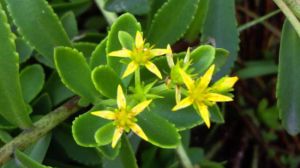
How to identify Sedum aizoon? Master these identification features
Sedum aizoon is a perennial herbaceous plant in the genus Sedum of the family Crassulaceae. Leaves: The leaves of Sedum aizoon grow opposite each other in pairs, are relatively hard, and are elliptical, some ovate, about 4-8 cm long and about 2 cm wide, with a glossy surface like leather. Flowers: The petals of Sedum aizoon are yellow, usually 5 petals, oblong, about 6-10 mm long overall; the upper inflorescence produces several flowers, with bracts below.
-
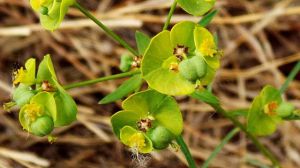
How to identify Euphorbia esula? A simple and practical identification guide
Root and stem: The root is cylindrical and can grow to more than 20cm, with a diameter of 3-6mm, and the stem can reach 30-60cm tall. Leaves: Linear to ovate, with a relatively pointed or bluntly pointed tip, no petiole, 2-7cm long. Flowers: The inflorescence is solitary, stalkless at the base, with campanulate involucral bracts.
-
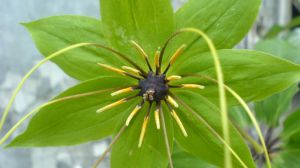
How to identify Paris polyphylla? Master these few characteristics
Morphological identification: The plant height of Paris polyphylla is 35 to 100 cm, and its color is purplish red. Leaf identification: Its leaves are oblong, elliptical, or obovate-lanceolate, and the petioles are relatively obvious. Flower identification: The outer tepals are green, the pedicel is about 5 to 16 cm long, and the inner anthers are relatively short.
-
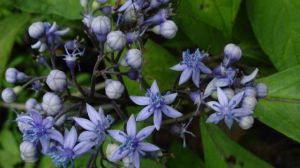
How to identify Dichroa febrifuga? Master the correct identification method
Leaves: The leaves of Dichroa febrifuga are usually elliptical, obovate, elliptic-oblong or lanceolate, with the apex gradually tapering to a point, serrated margins, and no hairs on the leaf surface. Flowers: Its flowers are terminal corymbose panicles, white or blue. Fruit: The berries are blue, usually 3 to 7 mm in diameter.
条件筛选