How to identify and prevent gray mold in Chinese chives? Growers, please pay attention
Gray mold is the main disease of Chinese chives in protected cultivation, seriously affecting the quality of Chinese chives marketed around the Spring Festival. Around the Spring Festival each year, the price of Chinese chives is generally at its highest of the year, and once the disease occurs it will cause relatively large economic losses to farmers. Therefore, preventing and controlling gray mold well is crucial for the production of Chinese chives in protected cultivation. 1. Onset...
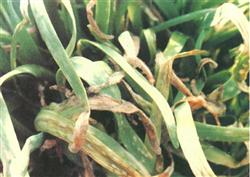
Gray mold is the main disease of Chinese chives in protected cultivation, seriously affecting the quality of Chinese chives marketed around the Spring Festival. Around the Spring Festival each year, the price of Chinese chives is generally at its highest of the year, and once the disease occurs it will cause relatively large economic losses to farmers. Therefore, preventing and controlling gray mold well is crucial for the production of Chinese chives in protected cultivation.
1. Disease symptoms
1. White spot type. Small white or grayish-brown spots form on the front and back of the leaves, developing from the leaf tip downward. The lesions are spindle-shaped or elliptical, and in the later stages of the disease they merge into patches, causing half a leaf or the whole leaf to wither and scorch.
2. Dry tip type. Rot starts from the cut stubble wound and spreads downward; it is initially water-soaked, then turns pale green, with brown concentric rings. After the lesions spread, they are mostly semicircular or "V"-shaped, and can extend downward 2-3 cm, appearing yellowish-brown, with grayish-brown or grayish-green woolly mold on the surface.
3. Wet rot type. When humidity is high, the surface of dead leaves is densely covered with gray to green woolly mold, accompanied by a moldy smell; no white spots form on the leaves.
2. Control methods
1. Choose disease-resistant varieties. Such as Zhongjiu No. 2, 791 Xuejiu, Zaofa Jiu No. 1, etc.
2. Clean the field. After harvesting Chinese chives, promptly remove diseased and residual plant material, bury it deeply or burn it, to prevent the spread of pathogens.
3. Timely ventilation to reduce humidity is the key to controlling this disease. The amount of ventilation should be determined according to the growth of the Chinese chives. For freshly cut Chinese chives or when the outside temperature is low, the ventilation amount should be small or ventilation should be delayed, and sweeping wind must be strictly prevented.
4. Cultivate strong seedlings and pay attention to maintaining the stubble. Apply organic fertilizer, and timely topdress, water, and weed, maintain the stubble well, and improve the disease resistance of the plants. Before planting, apply 5000-7000 kg of decomposed farmyard manure, 15 kg of diammonium phosphate, and 50 kg of plant ash per mu, plow deeply into the soil, irrigate heavily, and water promptly after planting. Topdress twice before frost, applying 15 kg of urea per mu each time, and water promptly after topdressing.
5. In the early stage of the disease, spray 65% methamidophos·procymidone or 5% procymidone powder or 5% iprodione dust at 1 kg per mu. In addition, you can also spray 65% methamidophos·procymidone wettable powder 1000-fold solution or 25% prochloraz emulsifiable concentrate 1000-fold solution or 40% pyrimethanil suspension concentrate 1200-fold solution, spraying once every about 10 days, for 2-3 consecutive sprays.