-

Identifying Grape Nutrient Deficiency Symptoms and Solutions
Grape Nutrient Deficiency Symptoms and Solutions
-
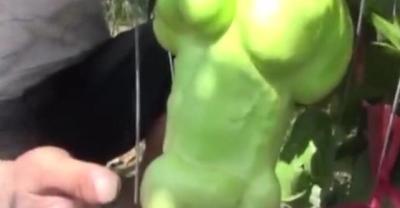
Want to identify all kinds of vegetables and melons? Come visit the planting expo
I remember that last trip to the vegetable park left a very deep impression on this editor, and I really wanted to go again. Although that never happened, the recently held Guang...
-

How to identify artificially ripened melons and fruits? Teach you one trick to tell easily
One trick to identify artificially ripened melons and fruits "Jiangnan Leather Factory, Jiangnan Leather Factory..." Sorry about that, wrong scene. "Cherries, watermelons, cherry tomatoes...
-

Detailed Guide to Identifying and Controlling the Green Peach Aphid
The green peach aphid (Myzus persicae) causes extremely widespread damage. Adults and nymphs gather in groups on the undersides of leaves and on tender shoots to suck sap. Infested leaves curl irregularly toward the underside, which affects the growth of new shoots on peach trees and spreads viruses. The green peach aphid can damage more than 300 species of plants, making it one of the most difficult pests to control. Winged viviparous females are green or yellow-green; brown and reddish-brown forms also occur, with colors varying according to the host; wingless viviparous females are green, yellow-green, apricot-yellow, and reddish-brown; nymphs are small and pale red; eggs are mostly laid on the host's shoot tips, bud axils, and small branch forks
-
How to identify and control jujube witches' broom? The methods explained clearly in one article
Jujube witches' broom, commonly known as "male jujube tree", is a devastating disease of jujube trees. In severe cases, it can cause mass death of jujube trees and even destroy the entire orchard. 1. Symptom identification (1) The initial symptoms appear after flowering, manifested as degeneration of floral organs and abnormal sprouting of buds; the leaves that grow out are narrow and small, forming clustered branches and leaves, and the young leaves show vein clearing, yellowing and curling into a spoon shape. (2) The leaves of diseased trees show obvious pathological changes after flowering: first the mesophyll turns yellow, then gradually the entire leaf yellows, the edges curl upward, and later the leaves become hard and brittle, dull and lusterless. (3) On the current-year vegetative shoots of diseased plants, the normal buds and
-
Detailed Guide to Identifying and Controlling Peach Aphids on Peach Trees
The peach aphid, also known as the peach red aphid, cabbage aphid, or greasy bug, among other names. Its main hosts include broccoli, purple cabbage, cauliflower, Chinese cabbage, radish and other cruciferous vegetables as well as other vegetables. Adults and nymphs pierce and suck sap on the leaves, causing the leaves to curl and deform, affecting head formation. They damage the tender stems, tender leaves, flower stalks and tender pods of seed-producing plants, causing the flower stalks to twist and become deformed, so they cannot bolt, flower and set seed normally. In addition, aphids also transmit a variety of viral diseases. Occurrence characteristics: generation overlap is extremely severe. In heated greenhouses, they reproduce parthenogenetically on vegetables throughout the year. In the open field: in late April of the following spring
-

Detailed Guide to Identifying and Controlling Common Strawberry Diseases
Common Strawberry Diseases and Their Control
-
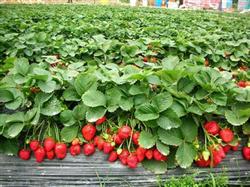
Detailed Guide to Identifying and Controlling Common Strawberry Pests and Diseases
Strawberries are grown under plastic film in greenhouses, where the high temperature and high humidity inside the greenhouse create even more favorable conditions for the occurrence of pests and diseases. The common pests and diseases of strawberry and their control measures are described below: I. Common diseases 1. Leaf spot. It mainly damages leaves, and the typical symptom is gray or grayish-brown round spots centered on the lesion, with purple...
-
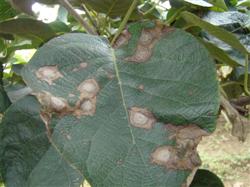
How to identify and control kiwifruit branch blight
Kiwifruit branch blight, also called water-loss branch blight, is a physiological disease caused by climatic factors. It refers to the sudden wilting and death of fruiting canes or vegetative canes when the fruit tree has not suffered artificial fertilizer damage or pesticide damage, nor pathological root rot, branch rot, canker, and other such conditions. 1. Disease symptoms...
-
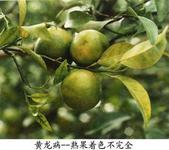
How to identify and control citrus huanglongbing (citrus greening disease)?
I. Symptoms The typical early symptom of a diseased tree is that 1-2 or several shoots with yellowing leaves appear in the deep green canopy. There are two symptom types of these yellowed shoots: one is uniform yellowing of the entire leaf, and the other is a leaf with one patch yellow and one patch green, alternating yellow and green, called the mottled type. The common feature of these two types of leaves...
条件筛选