-
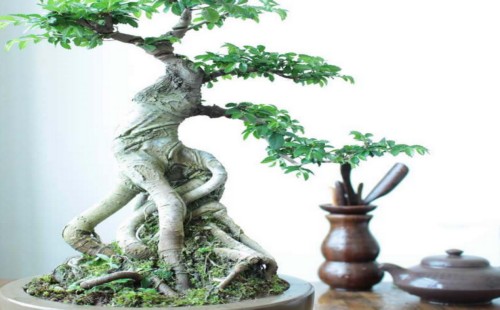
How often should you water a Chinese elm bonsai in summer?
The Chinese elm bonsai is fairly drought-tolerant but not waterlogging-tolerant, and its root system is well developed with strong water-absorbing capacity, yet its dense branches and leaves mean it also loses water quickly through evaporation. During the spring and autumn growing seasons, watering thoroughly once a week is generally enough to meet its growth needs, but in practice you should water only after the potting soil has dried out.
-
When to propagate Chinese Bird Plum (Sageretia thea) by cuttings? A detailed guide to timing and methods
Since ancient times, Sageretia thea has been an excellent material for making bonsai, especially suitable for Sageretia stumps, and is one of the important tree species for making stump bonsai. It is also one of the 5 famous trees in Lingnan bonsai. Sageretia bonsai has high ornamental value and good economic benefits, so it has always been well received by the market.
-
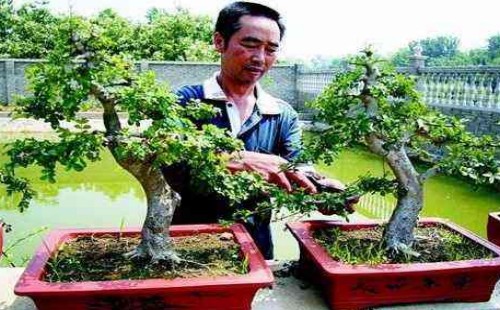
Handling of branches during the shaping of Chinese ash bonsai
Pruning is one of the most commonly used methods in tree bonsai shaping, and how to prune branches to better meet aesthetic standards has always been worth exploring for bonsai creators. However, for different creators, their creative personality, thinking, temperament, cultivation, and preferences are often not the same
-
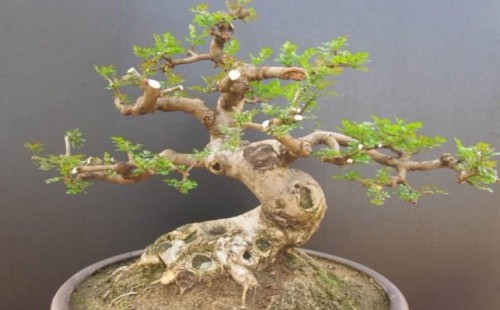
How to prune a Chinese ash bonsai? A detailed guide to the correct pruning method
A beautiful bonsai work inevitably has a distinctive shape, and creating that shape is often inseparable from pruning, and pruning techniques play a very important role in the bonsai shaping process. Because whether the branches are pruned well or not will directly affect the beauty of the bonsai's shape and its ornamental effect. The same is true for the Chinese ash bonsai
-
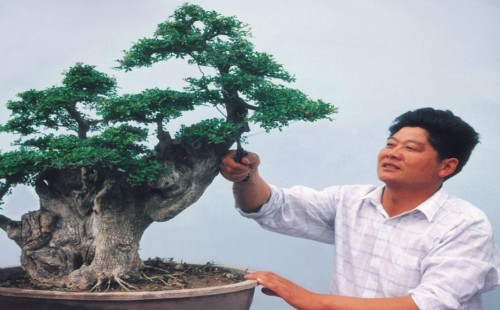
Bonsai pruning techniques for Chinese fringe tree (Chionanthus retusus): easily maintain a beautiful shape
The Chinese fringe tree bonsai is a work created through deliberate processing by people. Although it undergoes long-term pruning to maintain a perfect shape, it has not lost its vitality and often continues to grow. Conversely, if pruning is not carried out in time during normal care, as new branches keep sprouting and growing
-
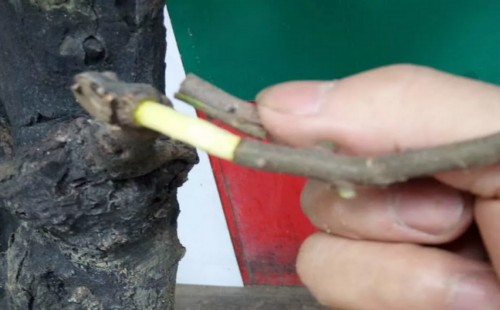
How long does it generally take for Chinese sweet plum (Sageretia thea) air layering to root?
Air layering is a very efficient means of obtaining small bonsai stock. For tree species like Chinese sweet plum (Sageretia thea) when cultivating raw stock, it often achieves twice the result with half the effort. This is mainly because propagating small Chinese sweet plum bonsai stock through air layering has a very fast rooting speed, making it easy to obtain stock that can be transplanted into pots. So
-
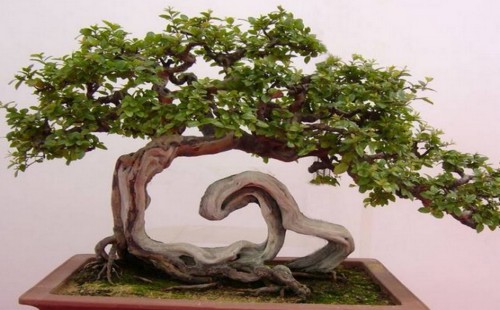
How to bend a Chinese plum (Sageretia thea) bonsai? Detailed explanation of the correct methods and techniques
The ornamental value of the Chinese plum bonsai is very high, mainly reflected through its perfect styling design. For tree bonsai, bending is a commonly used technique in the styling process, which can shape the branches and trunk of the bonsai tree into various graceful and vivid styling effects. But bending must be done according to the material, and should not be done blindly
-
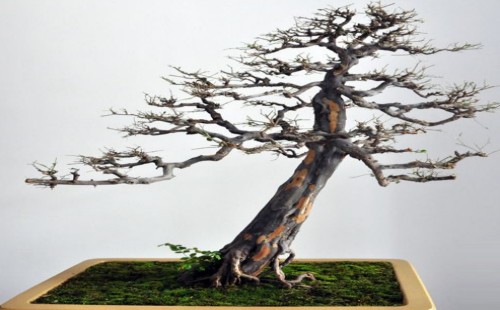
When Is the Best Time to Defoliate a Chinese Elm Bonsai?
There are many types of bonsai trees suitable for defoliation, and the Chinese elm (Sageretia thea) is one of them. For tree bonsai, defoliation naturally has its benefits: it not only makes new leaves grow smaller and more pleasing to view, but also lets the bonsai display several different ornamental states throughout the year. Of course, though we call it defoliation
-
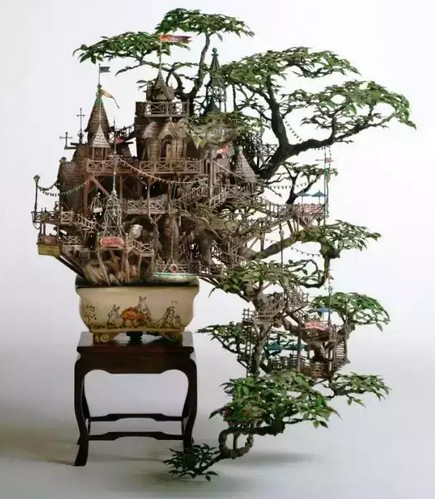
The Sichuan style of penjing is an important school of Chinese penjing art
Penjing is an art form that uses plants and rocks as its basic materials to present natural landscapes within a pot, and is called a three-dimensional painting and a silent poem. Chinese penjing originated from potted plants 7000 years ago; by the Han Dynasty, the "foujing" (pot landscape) appeared; during the Northern and Southern Dynasties, landscape penjing began to emerge; and by the Tang Dynasty, it shifted toward poetic and picturesque expression
-
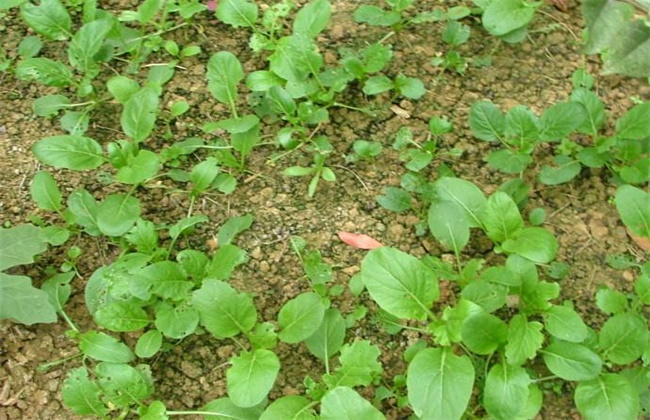
Detailed explanation of the key points of flowering Chinese cabbage seedling cultivation technology, easily master the method of cultivating strong seedlings
Flowering Chinese cabbage seedling cultivation technology
条件筛选