Detailed explanation of the key points of flowering Chinese cabbage seedling cultivation technology, easily master the method of cultivating strong seedlings
Flowering Chinese cabbage, also known as choy sum, is eaten for its tender stalks and is a variety of bok choy. It is one of the vegetables commonly eaten by people in China. When planting flowering Chinese cabbage, the seedling transplanting method is mostly used, which helps improve yield and quality. So how should flowering Chinese cabbage be grown from seedlings? Let's find out together.
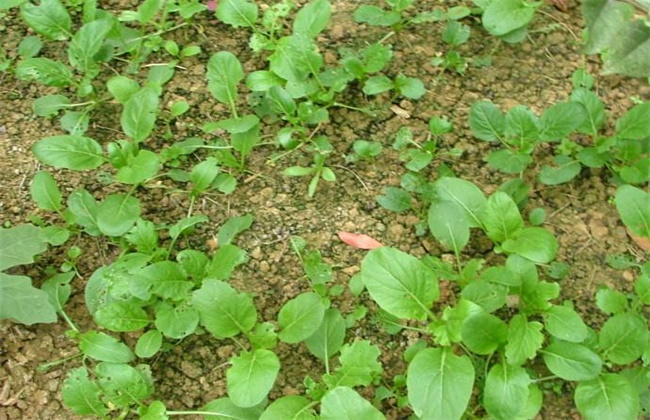
1. Seedling preparation
First is the choice of soil. Flowering Chinese cabbage has a short main root, well-developed fibrous roots, and a shallow root system. Its roots have strong regeneration ability and do not have strict requirements for soil depth, but they have higher requirements for soil quality. Sandy loam with good drainage and irrigation and rich organic matter is best. In terms of variety selection, different types of flowering Chinese cabbage have strict requirements for sowing time, and different varieties should be sown in different seasons. Early-maturing varieties are sown from May to September, mid-maturing varieties are sown from September to October or April to May, and late-maturing varieties are sown from November to March of the following year. If sowing is too early, it will lead to flowering Chinese cabbage plants that are too small, thin leaves, slender stalks, poor quality, and low yield; if sowing is too late, there may be no bolting or very slow bolting, and leaf growth may be too vigorous, reducing market value.
2. Sowing methods
Direct seeding cultivation sows seeds directly in the field without transplanting seedlings, only thinning 1-2 times and replanting once, maintaining a certain density until harvest. This method saves time and labor and allows earlier harvest, but the quality is lower, land utilization is low, and the amount of seed used is large. Seedling transplanting, by contrast, involves raising seedlings in a seedbed for 20-25 days, then transplanting them to the field when the seedlings have produced large and small leaves. This method occupies the land for a short time, can improve land utilization, and the seedlings grow neatly, bolt uniformly, have a concentrated harvest period, and the stalks are of good quality. It can also save the amount of seed used, but it is time-consuming and labor-intensive and has high technical requirements.
3. Spraying for weed control
Weeds are quite harmful to flowering Chinese cabbage. Herbicides can be used to eliminate weeds, save costs, and increase the yield of flowering Chinese cabbage. Spraying can be done after the seedbed surface is leveled and sowing is completed or before transplanting. First wet the seedbed surface, then spray. After spraying, the surface soil should not be loosened, so as to avoid failure of the chemical layer. Before sowing, a germination rate test should be carried out. First select large, fresh seeds, which have a high germination rate and good germination vigor, and the seedlings grown are also relatively strong. After confirming the seed germination rate, sowing and seedling cultivation can begin.
4. Sowing and seedling cultivation
Before sowing, water first to make the soil moist, then evenly scatter the seeds on the seedbed surface. After sowing, cover with rice straw or plant ash, burned soil, etc., then water again, so that the seeds and soil are in close contact. Sowing during high temperatures can easily cause excessive leggy growth, so sowing can be appropriately thinned; in autumn and winter, sowing can be appropriately denser. Generally, sprouts appear 1-2 days after sowing. In winter, when temperatures are low, sprouting takes longer, so seeds can be pre-germinated before sowing to shorten the seedling period. After emergence, the soil should often be kept moist. During drought, water once each in the morning, noon, and evening. When watering, pay attention to the amount of water, and the water stream should be fine so as not to wash away the seedlings. After 10-15 days of sprouting, cake fertilizer can be applied, and thereafter fertilize once every 5 days. During the seedling period, fertilizer is generally applied about 3 times. When the seedlings grow 1-2 true leaves, carry out the first thinning, removing overly dense seedlings, diseased seedlings, tall-legged seedlings, etc. When 3-4 true leaves have grown, carry out the second thinning, combined with replanting, so that the plants grow uniformly.
The above is an introduction to flowering Chinese cabbage seedling cultivation technology. I hope it can help you. To learn more related knowledge, please follow us.