-
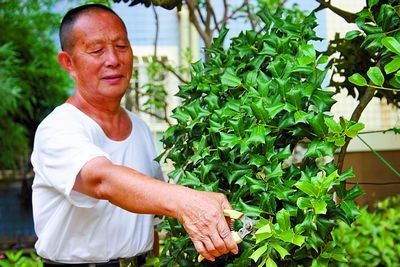
Detailed Explanation of the Key Techniques for Styling Chinese Holly (Ilex cornuta) Bonsai
Chinese holly (Ilex cornuta) has dense branches and leaves, a graceful tree form, and a spreading crown; it is an excellent species for tree planting and afforestation, and is also a good material for making bonsai, with very high ornamental value. If placed in the home, it can effectively enhance the quality of the living space. The price range of Chinese holly trees is quite wide, which is closely related to their size.
-
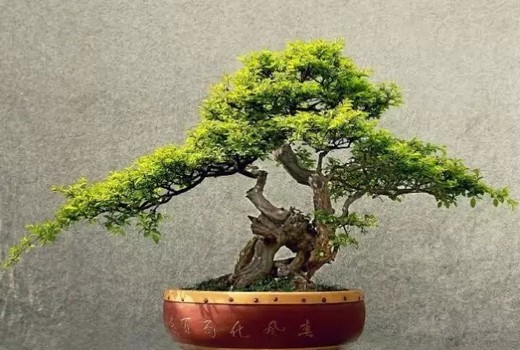
How to fertilize a Chinese elm (Sageretia thea) bonsai? Keep these principles in mind
Sageretia thea is one of the seven sages of bonsai and is very popular among bonsai enthusiasts. To grow a Sageretia thea bonsai well, you mainly need to pay attention to five aspects: water, fertilizing, potting soil, pruning and pest and disease control, among which fertilizing is a very key aspect. Fertilizing a Sageretia thea bonsai must be done with care: too much fertilizer causes excessive leggy growth of branches and leaves, while a lack of fertilizer makes the branches thin and weak
-
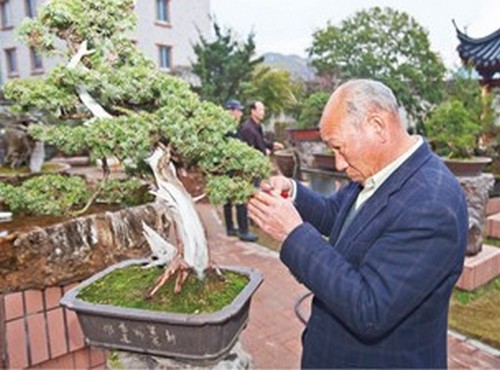
How to shape a Chinese juniper bonsai? A detailed guide to shaping methods
So-called Chinese juniper shaping means, through processes such as tying, binding, twisting, pinching, pulling, thinning and pruning, turning an ordinary Chinese juniper into a vivid living shape, such as animal shapes like lions and tigers; architectural shapes like pavilions and towers; and educational shapes like airplanes and rockets. These shapes range from about a foot tall to several meters tall
-
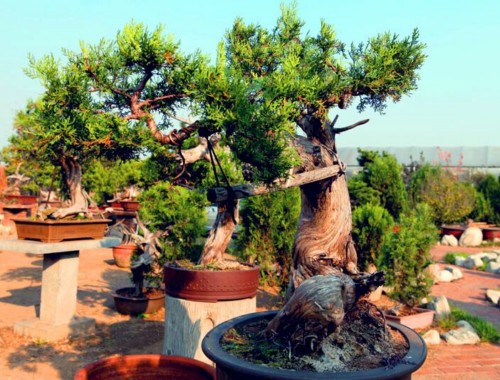
Essential Techniques and Styling Methods for Creating Chinese Arborvitae (Platycladus orientalis) Bonsai
Tip pinching and shari (deadwood) are important techniques that must be mastered in creating Chinese arborvitae bonsai. Tip pinching is essentially leaf pinching. Because the young branches of Chinese arborvitae develop from scale-like small leaves, removing the tender shoots and leaves can control rampant growth. At the same time, the tips are also the only choice for organizing the crown form, standardizing the tree's appearance, and beautifying the landscape.
-

Branch selection and shaping methods for Chinese ash (Fraxinus hupehensis) bonsai stumps
Fraxinus hupehensis belongs to the Oleaceae family, genus Fraxinus. Native to Jingshan in western Hubei, it is a deciduous tree reaching over 30 m in height. Young and middle-aged trees have smooth, pale grayish-green bark, while middle-aged and old trees have vertical dark gray furrows. The new shoots that sprout in the first year should be handled according to the vigor of sprouting and branch growth of each stump. For vigorous trees
-
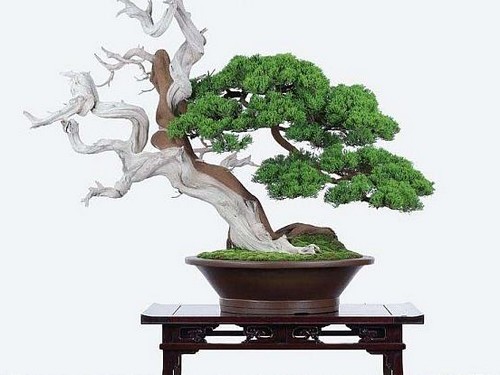
A Complete Guide to the Styling Methods and Techniques of Chinese Swamp Cypress Bonsai
The Chinese swamp cypress (Glyptostrobus pensilis) is hailed as a "living plant fossil." It is a deciduous or semi-deciduous tree of the genus Glyptostrobus in the family Taxodiaceae; the genus contains only this 1 species. It is a relict plant of the world and a tree species endemic to China. It first appeared in the Mesozoic Era more than 100 million years ago, in the same era as the dinosaurs. According to botanists, in coastal areas such as Fujian, being able to find even a few or even a single Chinese swamp cypress is already extremely rare.
-
Detailed Explanation of the Key Techniques for Pruning and Shaping Chinese Hackberry (Celtis sinensis) Bonsai
Chinese hackberry is commonly found growing wild beside hillside streams and valleys in the hilly and low-mountain areas of the Yangtze River basin and regions to its south. Ancient, curiously shaped old sprout-origin stumps that have been cut back for many years can be collected and grown on to develop their root system. Through pruning, root development is encouraged and new shoots are stimulated, after which the tree is shaped and cultivated; after 12 years, it is then potted up and worked on further.
-
What are the cultivation methods for Chinese hackberry (Celtis sinensis) bonsai?
Chinese hackberry (Celtis sinensis) is widely distributed across many regions nationwide, including the Huai River basin, the Yellow River basin, south of the Qinling Mountains, Guangdong, and Guangxi, and mostly grows scattered at village entrances, by riversides, at field corners, and on hillsides in plains and low mountain areas. Because Chinese hackberry material is widely available and highly adaptable, easy to propagate from seed, long-lived, with a rugged tree form, and aged, ancient, and uniquely elegant
-
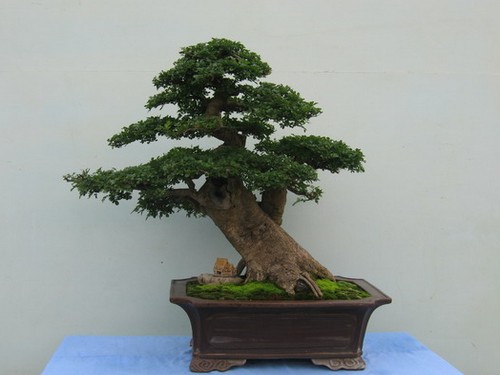
Four-Season Water Management Methods for Chinese Ash Bonsai
Chinese ash (Fraxinus chinensis) grows slowly, has a long lifespan, a beautiful tree form, and gnarled, intertwined roots. It is the finest among landscaping, bonsai, and root-carving varieties, and is hailed as a "living fossil" and the "king of bonsai." In daily water management work, the water regimen for Chinese ash bonsai can be summed up as "heavy watering." Heavy watering: there must be sufficient moisture, and slightly wet is better than dry. Water more in spring.
-
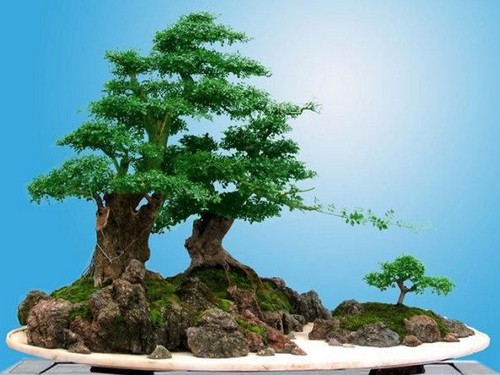
A Detailed Guide to Scientific Fertilization Methods for Chinese Ash (Fraxinus chinensis) Bonsai
During the growing season, apply light fertilizer frequently. To facilitate absorption by the tree and avoid wasting fertilizer solution, it is best to apply once every 5-7 days. Fertilization is generally carried out on a sunny afternoon when the potting soil is on the dry side, and after application, water to rinse the leaves. On rainy days when the potting soil is wet, the tree roots cannot breathe well, and after fertilization the roots do not absorb it easily; in strong sun: even in the hottest days of the dog days of summer
条件筛选