-
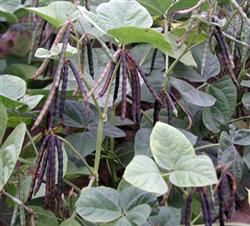
High-Yield Mung Bean Cultivation Techniques, Part Two: Detailed Explanation of Key Planting Points
V. Timely Hoeing and Ridging, and Topdressing. Currently, mung bean production involves low input and extensive management, resulting in relatively low yields, so field management should be strengthened. Especially during the seedling stage, mung beans grow slowly and are easily overwhelmed by weeds, which affects their growth and development, making timely management even more important. During the growth period, generally before flowering and pod setting, 3 rounds of inter-row cultivation and weeding should be carried out (three hoeings...
-
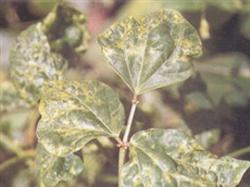
Detailed Explanation of Summer Direct Seeding Cultivation Techniques for Mung Bean
Symptoms: This disease mainly occurs during the rainy season in summer and autumn. After the leaves are infected, brown round to irregular blister-like spots appear on the leaves, initially water-soaked, later becoming gangrenous, and in severe cases becoming suberized. Multiple lesions can often be seen clustering together to form large gangrenous-type lesions. Brown small spots or streak-like spots also appear on petioles and pods when infected...
-
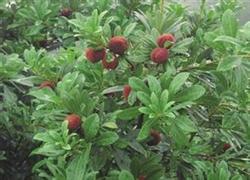
Organic Bayberry Cultivation Techniques, Lecture 2: Detailed Explanation of Cultivation Methods
V. Fertilization 1. Fertilization timing and amount: According to the age of the bayberry tree, growth vigor and soil conditions, adopt scientific formula fertilization. 2. For young trees, focus on "promoting" growth, emphasizing the application of quick-acting fertilizers, with a nitrogen, phosphorus, potassium ratio of about 1:0.8:0.8, to promote shoot growth...
-
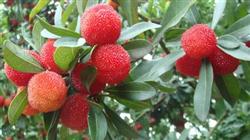
How to Grow Organic Bayberry? Planting Techniques, Lesson One
Bayberry is the most distinctive subtropical ecological and economic tree species. It has wide adaptability, and can grow and perform well in most parts of the south, especially in slightly acidic and acidic soils. 1. Orchard Establishment: Bayberry prefers moisture and tolerates shade, has a large canopy and a widely distributed root system. An organic bayberry orchard is required to be built at an altitude of...
-
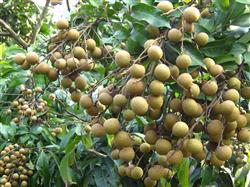
Management Techniques for Lychee and Longan After Fruit Harvest
The use of potassium chlorate to promote flowering in longan was first pioneered in Taiwan, China, and its commercial application for off-season longan cultivation began in Thailand. In recent years, longan-producing areas across our province have also been experimenting with potassium chlorate to promote flowering for off-season longan cultivation. Some have achieved certain economic benefits, but most orchards have seen poor or even no...
-
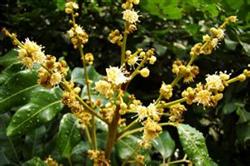
Detailed Explanation of Key Techniques for Artificial Pollination of Lychee and Longan
Lychee and longan both bear unisexual flowers and are insect- and wind-pollinated, relying on insects and wind for pollination and fertilization. In production, when bee sources are lacking or adverse weather occurs, artificial pollination is an important measure to increase the fruit-setting rate. However, artificial pollination must be done with proper technique, mainly including two aspects: pollen collection and pollination methods....
-
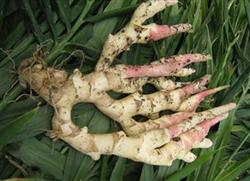
Key Management Techniques for High-Quality and High-Yield Ginger
1. Site selection: Choose sandy soil with deep, loose, fertile soil and convenient irrigation and drainage for planting; avoid continuous cropping. 2. Land preparation and basal fertilizer application: Before sowing, apply 1000-1500 kg of farmyard manure, 50 kg of calcium magnesium phosphate fertilizer, and 20 kg of compound fertilizer per mu as basal fertilizer, then plow and harrow thoroughly. Divide into beds and open furrows, each bed 1...
-
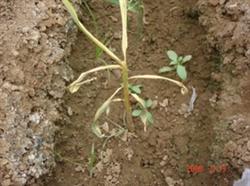
How to prevent and control ginger pests and diseases? A full analysis of practical techniques
(1) Ginger blast 1. Pathogen: a bacterial disease, Ralstonia solanacearum. 2. Symptoms of diseased plants: leaves first droop and lose their luster, then turn withered yellow from bottom to top, and finally die. The stem first becomes water-soaked at the base, turns yellow, dies, and breaks off at the base and falls over. The rhizome is water-soaked, turns brown and rots, and when squeezed a white juice flows out with a foul odor.
-
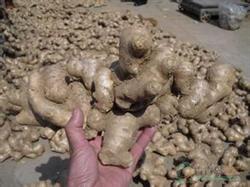
Detailed explanation of ginger storage techniques, master the correct storage method
Ginger is a perennial herbaceous plant of the Zingiberaceae family. It is not only a commonly used traditional Chinese medicinal material, but also an important export vegetable for earning foreign exchange in our country. Because ginger has a wide range of uses and a large demand, and because it prefers warmth and fears cold, and prefers moisture and fears dryness, doing a good job in ginger storage and preservation is especially important. 1. Before storage...
-
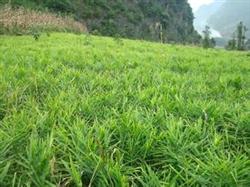
Detailed Explanation of High-Yield Formula Fertilization Techniques for Ginger
Ginger has a long growth period and a high fertilizer requirement. Under medium fertility conditions, to produce 2500 kg of ginger per mu, 25-40 kg of nitrogen, 10-22 kg of phosphorus (P2O5), and 30-50 kg of potassium (K2O) are needed. The absorption ratio of nitrogen, phosphorus, and potassium is 11:1:16 or 1:0.5:2. In addition, calcium, magnesium, boron, zinc, iron, and other medium and trace...
条件筛选